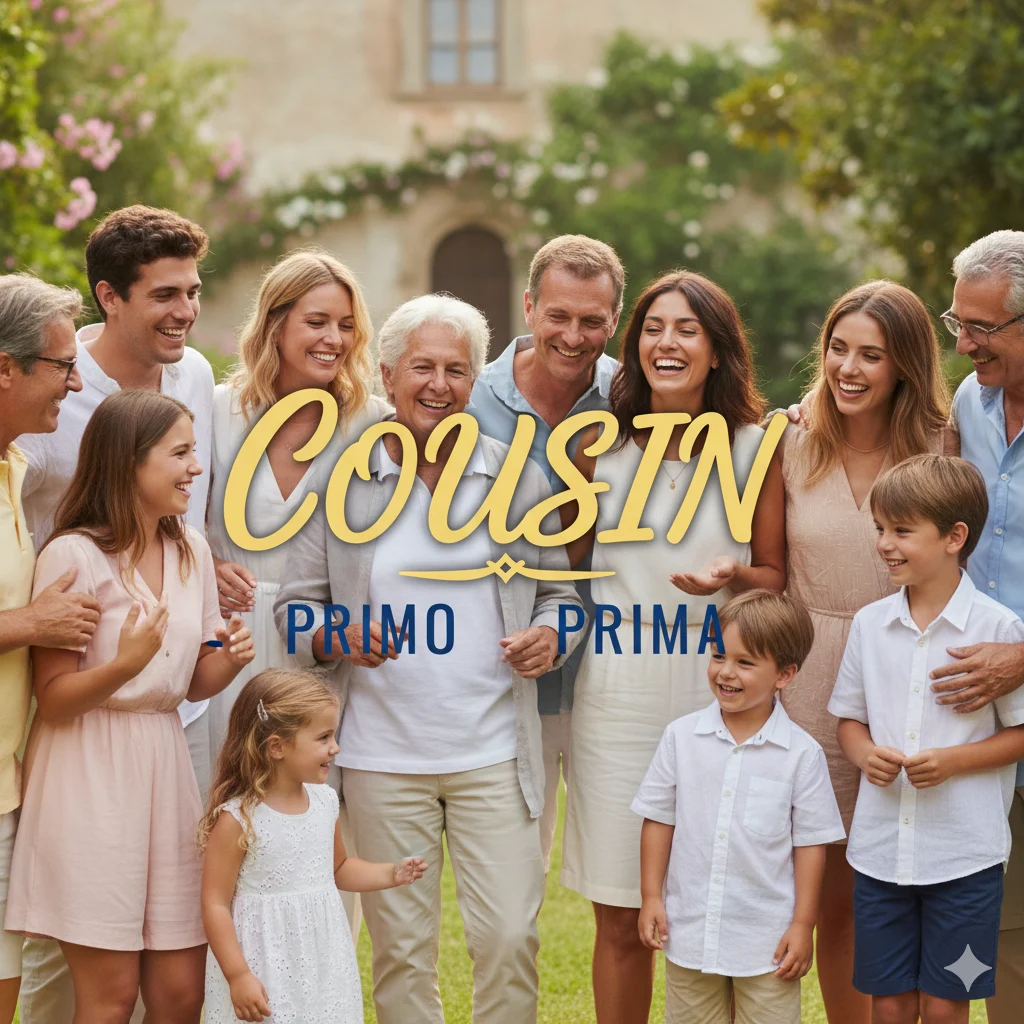
Every family gathering has that one cousin — your partner in laughter, your secret-keeper, your first best friend. Cousins remind us that family isn’t just about blood; it’s about shared stories, traditions, and childhood memories.
When I first visited Spain, I learned that the Spanish word for cousin is “primo” (for a male) or “prima” (for a female). But soon, I discovered it wasn’t just a word — it was a feeling. Spanish families use “mi primo” or “mi prima” with pride, affection, and warmth.
Learning how to say cousin in Spanish opens a door not just to language, but to culture — to a world where family ties are celebrated with joy, humor, and closeness.
Let’s explore how this beautiful word connects people across borders and how other cultures express the same bond.
🗺️ Table of Family Terms Around the World
| Language | Word/Phrase for “Cousin” | Cultural Insight |
|---|---|---|
| Spanish | Primo / Prima | “Primo” (male) and “Prima” (female); used affectionately for close cousins. |
| English | Cousin | Gender-neutral; can describe any cousin relationship. |
| French | Cousin / Cousine | Distinguishes gender; often used with “mon” or “ma” (my). |
| Italian | Cugino / Cugina | Reflects Italy’s large family networks. |
| Portuguese | Primo / Prima | Similar to Spanish; emphasizes familial affection. |
| German | Cousin / Cousine | Borrowed from French; formality varies by region. |
| Arabic | Ibn ‘amm / Bint ‘amm | Specifies paternal side; family structure is detailed. |
| Hindi | Cousin / Bhai / Behen | Often replaced with “brother/sister” to show closeness. |
| Mandarin Chinese | 表兄弟姐妹 (biǎo xiōngdì jiěmèi) | Words differ depending on maternal or paternal side. |
| Japanese | いとこ (Itoko) | Gender-neutral; shows modest affection. |
| Swahili | Binamu | Used widely in East Africa; often extended to close friends. |
| Zulu | Mzala | Reflects strong kinship and extended family ties. |
| Maori | Whanaunga | Means “relative”; shows deep community connection. |
| Hawaiian | Kaikunāne / Kaikuaʻana | Used for cousins and siblings, reflecting shared ancestry. |
| Turkish | Kuzen | Modern term, but warmth and respect remain core. |
🇪🇸 How to Say Cousin in Spanish
In Spanish, the word for cousin is:
- Primo (for a male cousin)
- Prima (for a female cousin)
Pronunciation:
- PREE-mo (male)
- PREE-ma (female)
You can say:
- “Mi primo” → My male cousin
- “Mi prima” → My female cousin
Cultural Insight:
In Spanish-speaking countries, cousins are often treated like siblings. Family gatherings are lively — cousins share meals, laughter, and even family traditions across generations. Calling someone “mi primo” is often a gesture of affection, even for close friends who feel like family.
Fun Fact:
In Latin America, it’s common to hear people affectionately greet a friend as “¡Hola primo!” — even if they’re not related! It’s a friendly way to say, “you’re like family to me.”
🇪🇺 European Languages: Family in Words
Across Europe, family terms like “cousin” reveal how cultures value kinship.
- France — Cousin / Cousine: French families are often close-knit; terms emphasize gender and formality.
- Italy — Cugino / Cugina: Italian cousins are like siblings, sharing meals and family holidays.
- Germany — Cousin / Cousine: Borrowed from French, often used in modern urban families.
- Portugal — Primo / Prima: Deep family bonds make cousins lifelong friends.
- Greece — Xaderfos / Xaderfi: Family ties often extend into daily life and community.
European languages reflect the importance of family lineage and connection — every cousin is a piece of shared history.
🌏 Asian Languages: Respect and Relationship
Asia’s family structures are deeply respectful and hierarchical, and that reflects in how cousins are named.
- Arabic — Ibn ‘amm / Bint ‘amm: Differentiates between father’s and mother’s side.
- Hindi — Bhai / Behen / Cousin: Often replaced by “brother” or “sister” — showing emotional closeness.
- Mandarin — 表兄弟姐妹: Complex system based on age, gender, and parent’s lineage.
- Japanese — Itoko: Neutral and respectful, used for both male and female cousins.
- Korean — Sajok: Reflects detailed family lineage and hierarchy.
- Tagalog — Pinsan: Gender-neutral, used warmly across the Philippines.
- Thai — Phee Nong: Literally “older-younger,” extends to cousin-like relationships.
- Turkish — Kuzen: A simple modern word, yet deeply affectionate.
In Asia, cousins aren’t just extended relatives — they’re woven into the heart of the family unit.
🌍 African Languages: Community and Kinship
African cultures often extend family beyond bloodlines — cousins, neighbors, and friends may all be part of the same family circle.
- Swahili — Binamu: Refers to a cousin; often used with warmth.
- Zulu — Mzala: Describes both cousins and close relatives.
- Yoruba — Arákùnrin / Arábìnrin: Indicates gender and respect.
- Amharic — Wedaj: Means relative or close companion.
- Akan — Nua: Covers siblings and cousins equally.
- Somali — Eedo / Abti: Specifies maternal or paternal relationships.
- Shona — Mudzimai / Mukoma: Denotes extended family kinship.
In many African societies, a cousin isn’t distant — they are family in every sense.
🌺 Indigenous & Island Languages: Family as Unity
In island and indigenous cultures, cousins often play vital roles — as caretakers, storytellers, and lifelong allies.
- Hawaiian — Kaikunāne / Kaikuaʻana: Sometimes used interchangeably for siblings or cousins.
- Maori — Whanaunga: Means “relative,” representing shared ancestry and tribe.
- Samoan — Uso / Tuafafine: Literally means brother or sister, showing deep connection.
- Cherokee — Wadohi: Implies extended kinship within the tribe.
- Tahitian — Tamaiti o te metua tāne / vahine: Describes cousins by parental side.
- Fijian — Tavale: Symbol of strong family unity.
- Guaraní — Jaryi: Used to express extended family relationships.
In these cultures, family is not defined by distance but by heart — cousins are part of one shared soul.
💬 Cultural Insights: What “Cousin” Means Beyond Language
The concept of a cousin is as old as humanity itself.
While “primo” and “prima” describe family relations in Spanish, across the world, cousins symbolize shared memories, love, and loyalty.
In many societies, cousins were once seen as potential allies, future family leaders, or even marriage partners. Over time, they’ve become symbols of friendship that lasts a lifetime.
So whether you say “primo,” “cousin,” “itoko,” or “mzala,” you’re celebrating one of life’s most beautiful bonds — family beyond boundaries.
🌸 Proverbs About Family and Cousins
- Spanish: “La familia es donde la vida comienza y el amor nunca termina.” — “Family is where life begins and love never ends.”
- English: “Cousins are those childhood playmates who grow up to be forever friends.”
- Swahili: “Udugu ni zaidi ya damu.” — “Kinship is more than blood.”
- Chinese: “家和万事兴” — “When family lives in harmony, all prospers.”
- Arabic: “Al-usra hiya al-asas.” — “Family is the foundation.”
Family is a universal truth — it grounds us, shapes us, and reminds us that we belong.
❓ FAQs
Q1: How do you say cousin in Spanish?
“Cousin” in Spanish is primo (for males) and prima (for females).
Q2: How do you pronounce primo and prima?
Both are pronounced PREE-mo and PREE-ma, with a light roll on the “r.”
Q3: What’s the plural form of cousin in Spanish?
- Primos → male cousins or mixed group
- Primas → female cousins
Q4: Can “primo” mean something else in Spanish?
Yes! In slang, “primo” can also mean a friend — especially in Latin America, where it conveys affection.
Q5: Why do some cultures use “brother” or “sister” instead of cousin?
In many Asian and African societies, the concept of cousinhood overlaps with siblinghood — reflecting closeness and equality.
❤️ Conclusion: A Family Word That Crosses Borders
Whether you call them primo, prima, cugino, or binamu, cousins remind us of who we are — reflections of shared laughter, roots, and love.
So next time you meet your cousin, say:
“¡Hola, primo!” or “¡Hola, prima!”
And remember — you’re not just speaking Spanish, you’re speaking the language of family.
💬 Now it’s your turn!
How do you say “cousin” in your language? Comment below and share how family is celebrated where you’re from. Let’s build a global family of words and warmth! 🌎