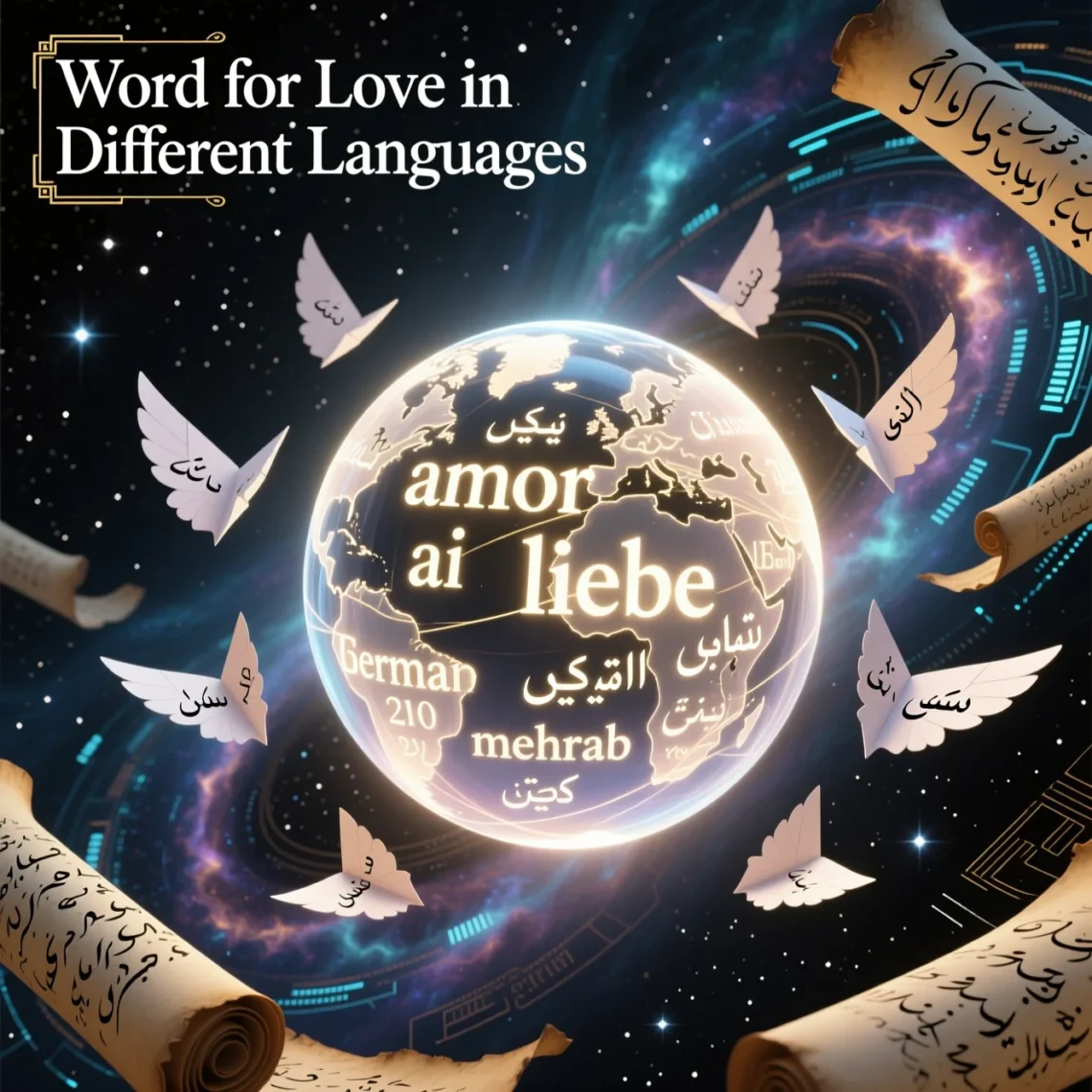
Picture a quiet evening in Rome, where a couple whispers “amore” under a starlit sky. That single word, “love,” holds a universe of emotion, resonating across cultures. Whether it’s “ishq” echoing in a Delhi marketplace or “aloha” shared on a Hawaiian beach, the word for “love” captures humanity’s deepest connection, shaped by each culture’s unique lens. Let’s embark on a global journey to explore how people express “love” in different languages and what these words reveal about their societies.
Reference Table: “Love” in Different Languages
| Language | Word/Phrase | Cultural/Linguistic Insight |
|---|---|---|
| French | Amour | Evokes romance, tied to France’s poetic traditions. |
| Spanish | Amor | A passionate term, used for romantic and familial love. |
| Italian | Amore | Suggests deep emotion, central to Italy’s expressive culture. |
| German | Liebe | Conveys both romantic and platonic love, versatile in use. |
| Mandarin | Ài (爱) | Emphasizes selfless devotion, rooted in Confucian values. |
| Hindi | Pyar/Ishq | “Pyar” is everyday love; “ishq” is intense, poetic passion. |
| Japanese | Ai (愛) | Reflects deep, often understated, emotional commitment. |
| Korean | Sarang (사랑) | A tender term, used in romantic and familial contexts. |
| Arabic | Hubb (حب) | Means “deep love,” used across 20+ countries with poetic flair. |
| Swahili | Upendo | Implies active love, used in East Africa for all relationships. |
| Zulu | Uthando | A warm term for love, often tied to community in South Africa. |
| Yoruba | Ìfẹ́ | Represents love and goodwill, central to Nigerian culture. |
| Maori | Aroha | Encompasses love, compassion, and empathy in New Zealand. |
| Hawaiian | Aloha | A multifaceted term for love, peace, and affection. |
| Cherokee | Gvgeyu | A deep term for love, used in Native American communities. |
European Languages: Romance in Every Word
European languages express “love” with terms that blend passion and tradition. For instance, in French, “amour” is synonymous with romance, whispered in Parisian cafés and celebrated in literature. Meanwhile, Spanish uses “amor,” a versatile word for romantic, familial, or even divine love, heard in lively Latin American festivals. Additionally, Italian’s “amore” carries a dramatic flair, reflecting Italy’s expressive culture where love is openly celebrated. In German, “Liebe” is used for both romantic and platonic bonds, showcasing Germany’s practical yet heartfelt approach. Thus, these terms reveal Europe’s spectrum of love, from poetic French to grounded German, each shaped by cultural values.
Asian Languages: Depth and Devotion
Asia’s linguistic diversity offers profound expressions of “love.” For example, in Mandarin, “ài” reflects selfless devotion, rooted in Confucian ideals of care and duty, often used quietly but meaningfully. In Hindi, “pyar” is everyday love, while “ishq” evokes intense, poetic passion, immortalized in Bollywood songs. Similarly, Japanese’s “ai” signifies deep commitment, often understated in keeping with cultural restraint. In Korean, “sarang” is tender, used for romantic or familial love, heard in Seoul’s heartfelt confessions. Finally, Arabic’s “hubb,” used across over 20 countries like Egypt and Lebanon, carries a poetic intensity, rooted in the region’s literary heritage. These terms highlight Asia’s range, from subtle devotion to passionate declarations.
African Languages: Love as a Communal Bond
In African languages, “love” often ties to community and connection. For instance, Swahili, spoken in over 20 countries like Tanzania and Kenya, uses “upendo,” a term for active, inclusive love, from romantic to neighborly bonds. In Zulu, “uthando” is a warm expression in South Africa, often shared in communal celebrations. Similarly, Yoruba’s “ìfẹ́” in Nigeria encompasses love and goodwill, reflecting a culture where relationships strengthen communities. These terms, used in vibrant markets or family gatherings, emphasize love as a shared, uplifting force across African societies.
Indigenous & Island Languages: Love in Harmony
Indigenous and island languages express “love” with warmth and unity. For example, Maori in New Zealand uses “aroha,” encompassing love, compassion, and empathy, often tied to communal rituals. In Hawaiian, “aloha” is more than love—it’s a way of life, embodying peace and affection in island greetings. Similarly, Cherokee’s “gvgeyu” signifies deep love, used in Native American communities to express intimate bonds. In Samoan, “alofa” reflects selfless love, often shared in Pacific family gatherings. Across these cultures, from New Zealand to the Cherokee Nation, “love” is a unifying force, celebrated through tradition and connection.
Cultural Insights: The Evolution of Love’s Language
Words for “love” have evolved with cultural histories. For instance, Latin’s “amor” (1st century BCE) influenced Romance languages like French and Spanish. In Arabic, “hubb” traces back to medieval poetry, shaping its use across the Middle East. Moreover, in African traditions, terms like “upendo” reflect communal values, often tied to spiritual rituals. In Asia, words like “ài” and “sarang” have shifted with modern romance, emphasizing personal choice over arranged bonds. These terms carry centuries of meaning, from European chivalry to Pacific communal ceremonies, showing love’s timeless role in human connection.
Proverbs and Sayings: Wisdom of Love
- French: “L’amour triomphe de tout.” (Love conquers all.) – Reflects romance’s enduring power.
- Hindi: “Pyar dil se dil tak jata hai.” (Love travels from heart to heart.) – Emphasizes emotional connection.
- Swahili: “Upendo ni nguvu ya maisha.” (Love is the strength of life.) – Ties love to vitality.
- Japanese: “Ai wa kokoro o tsunagu.” (Love binds hearts.) – Highlights emotional unity.
- Yoruba: “Ìfẹ́ ni ohun ti o mu ayọ wa.” (Love brings joy.) – Links love to happiness.
FAQs
Why do some words for “love” sound similar?
Shared linguistic roots, like Latin’s influence on Romance languages, and cultural exchanges, like Arabic’s impact on Swahili, create similarities.
What’s the oldest term for “love”?
Latin’s “amor” (circa 1st century BCE) is among the earliest recorded, influencing many modern languages.
How do cultures shape the term’s use?
Collectivist cultures (e.g., African, Indigenous) emphasize love as a communal bond, while individualistic cultures (e.g., European) focus on personal passion.
Conclusion
From “amor” in Spain to “upendo” in Tanzania, the word for “love” weaves a universal thread through human hearts. Each term, whether the poetic “hubb” in Arabic or the compassionate “aroha” in Maori, reflects cultural values while celebrating our shared capacity for connection. Consequently, these words remind us that love, in all its forms, unites people across the globe. How do you say “love” in your language, and what does it mean to you? Share your stories below—we’re eager to hear your voice!