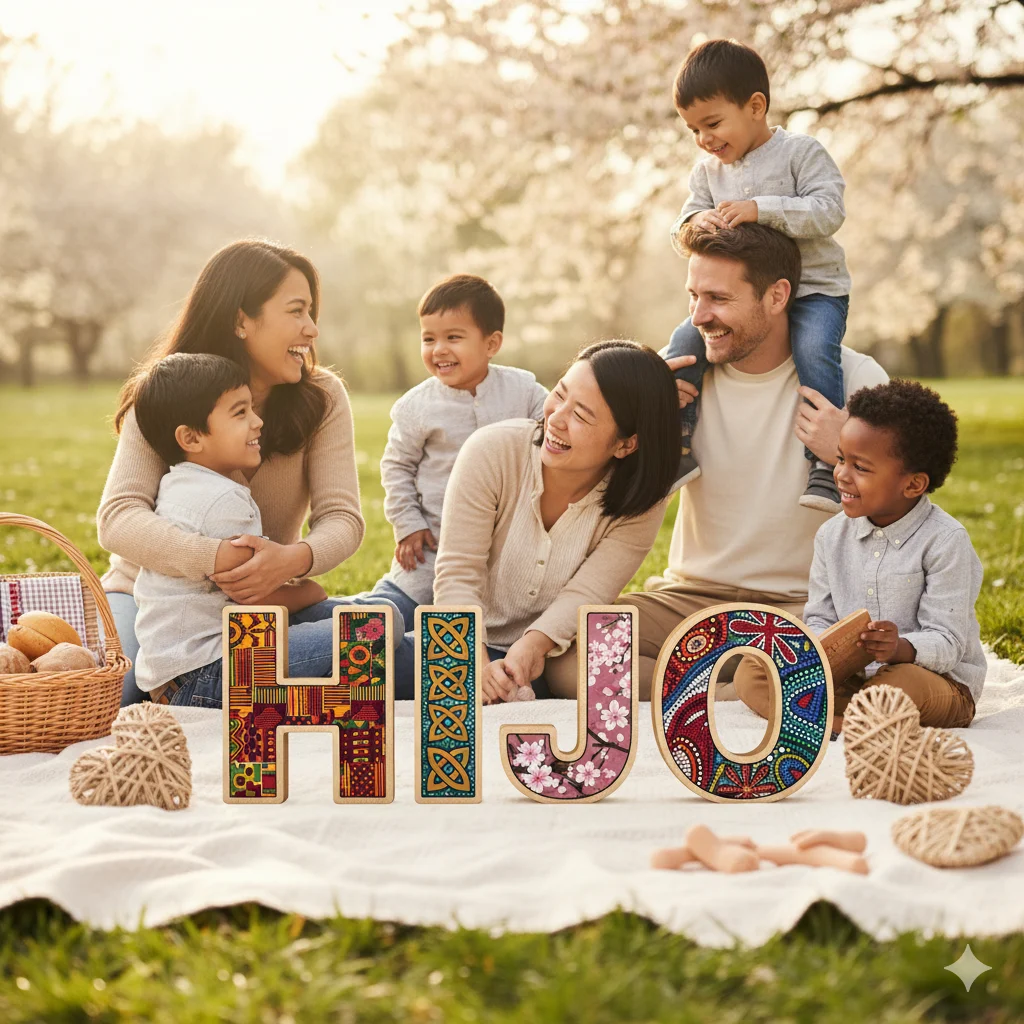
When my Spanish friend María proudly introduced her child, she said, “Este es mi hijo.” Her voice softened, her eyes sparkled — it wasn’t just a word, it was love in motion.
That’s when I realized something profound: the word “son” isn’t just a label for a child. Across cultures, it represents hope, legacy, and deep emotional connection. Whether whispered in Spanish as “hijo,” spoken in Turkish as “oğul,” or said in English as “my son,” this word carries generations of affection and pride.
Let’s explore how to say “son” in Spanish and how the same idea echoes across the world — from Europe to Asia, Africa, and the Pacific islands.
🗺️ Table of “Son” in Different Languages
| Language | Word/Phrase for “Son” | Cultural Insight |
|---|---|---|
| Spanish | Hijo | Expresses pride and affection; often used lovingly by parents. |
| English | Son | Represents lineage, pride, and deep emotional bond. |
| French | Fils | Used formally and poetically; also appears in surnames. |
| Italian | Figlio | Symbol of family honor and love. |
| German | Sohn | Denotes strong family roots and generational ties. |
| Arabic | Ibn / Walad | “Ibn” often used in names (e.g., Ibn Sina); denotes lineage. |
| Turkish | Oğul | Associated with family pride and heritage. |
| Hindi (India) | Beta (बेटा) | Used affectionately even beyond family — a cultural expression of care. |
| Mandarin (Chinese) | Érzi (儿子) | Reflects filial values central to Chinese culture. |
| Japanese | Musuko (息子) | Formal term; humility and respect are key in usage. |
| Swahili | Mwana / Mtoto wa kiume | Represents both child and continuity of the family line. |
| Zulu | Indodana | Rooted in tradition and strength. |
| Greek | Gios (Γιος) | Commonly used with endearment; family unity is central. |
| Korean | Adeul (아들) | Deeply respectful; family hierarchy is honored. |
| Hebrew | Ben (בן) | Means “son”; found in biblical names (e.g., Ben-David). |
🇪🇸 How to Say Son in Spanish
The Spanish word for son is “hijo” (pronounced EE-ho).
It’s one of the most beautiful words in the Spanish language — simple, yet emotionally powerful. In everyday life, parents use it with tenderness:
“Mi hijo está creciendo tan rápido.” (My son is growing so fast.)
Cultural Insight:
In many Spanish-speaking countries, “hijo” is not only biological — it’s emotional. Older people often call younger ones “hijo” or “hija” (daughter) as a form of affection, even if they’re not related. It’s a reflection of Latin warmth and community spirit.
The phrase “mi hijo” (my son) embodies love, pride, and continuity — connecting families across generations.
🇪🇺 How to Say Son in European Languages
Across Europe, family terms carry emotional weight and cultural heritage.
- France — Fils: Symbolizes continuity; also appears in historical names like de Gaulle fils.
- Italy — Figlio: Deeply affectionate; Italian parents often say “Caro figlio mio.” (My dear son.)
- Germany — Sohn: A strong, straightforward word representing family legacy.
- Portugal — Filho: Used with warmth and pride, reflecting Portugal’s close-knit families.
- Greece — Gios: A term of love and identity; Greek families value sons as carriers of tradition.
European languages show how love and lineage intertwine — the son as both heir and heart.
🌏 How to Say Son in Asian Languages
Asia’s family values are rooted in respect, hierarchy, and affection.
- Arabic — Ibn / Walad: “Ibn” is often used in formal contexts or names, such as Ibn Battuta. “Walad” is used more casually for “boy” or “son.”
- Turkish — Oğul: Represents family honor; used in poetry and literature.
- Hindi — Beta: One of the most common and loving words in Indian households. It’s used even for non-family members as a gesture of care.
- Chinese — Érzi: Central to Confucian values — sons represent the family’s future and responsibility.
- Japanese — Musuko: Respectful and formal; reflects the politeness embedded in Japanese family dynamics.
- Korean — Adeul: Reflects traditional family hierarchy and affection.
- Thai — Luk chai: Literally “male child”; emphasizes love and duty.
- Persian — Pesar: Often used affectionately; also part of many Iranian surnames.
Each Asian language treats the word “son” as a blend of love, respect, and moral duty — an emotional bond beyond words.
🌍 How to Say Son in African Languages
In Africa, the word “son” often symbolizes community, ancestry, and blessing.
- Swahili — Mwana / Mtoto wa kiume: “Child” or “male child”; both terms carry deep cultural respect.
- Zulu — Indodana: Represents pride and masculinity.
- Yoruba (Nigeria) — Omo okunrin: Literally “male child”; important in lineage discussions.
- Amharic (Ethiopia) — Lij: Used with warmth; also means “child of.”
- Akan (Ghana) — Ba barima: Connects family identity to masculinity and tradition.
- Shona (Zimbabwe) — Mwanakomana: Symbol of continuity and protection.
- Somali — Wiil: Commonly used with pride; family titles are integral to Somali culture.
- Hausa — Da: Used in familial contexts; reflects kinship importance.
- Berber — Aghilas: A poetic word used in Amazigh communities.
- Lingala — Mwana mobali: Means “male child”; carries warmth and love.
African greetings and family terms often extend beyond blood ties — “son” can represent anyone young, loved, and guided.
🌺 How to Say Son in Indigenous & Island Languages
Island and indigenous cultures express family through spirit, not just biology.
- Hawaiian — Keiki kāne: “Male child”; reflects a sacred bond between family and land.
- Maori — Tama: Represents both son and male lineage.
- Samoan — Atalii: Means “son”; symbolizes pride and family legacy.
- Cherokee — Usdi agehya (for young boy): Rooted in kinship and identity.
- Fijian — Goneyalewa tagane: Means “male child”; ties to village ancestry.
- Tahitian — Tamaroa: Represents strength and family unity.
- Guaraní — Ta’yra: Means “beloved son”; reflects love and respect.
- Haitian Creole — Pitit gason: Literally “boy child”; affectionate and familial.
- Inuit — Irniq: A precious name passed through generations.
- Tagalog — Anak na lalaki: “Male child”; conveys closeness and care.
In these communities, sonship extends beyond family — it’s a shared link between ancestors, land, and identity.
💬 Cultural Insights: The Meaning Behind “Hijo”
Language and love are deeply intertwined.
In Spanish culture, “hijo” represents warmth, protection, and legacy. It’s often used in songs, prayers, and literature — as in “Hijo mío, siempre serás mi niño.” (“My son, you’ll always be my little boy.”)
Throughout history, this word symbolized not just family, but faith and hope — the idea that every son carries the family’s dreams forward.
🌸 Proverbs About Sons in Different Cultures
- Spanish: “De tal palo, tal astilla.” — “Like father, like son.”
- Turkish: “Baba oğul gibidir.” — “A father is like his son.”
- Chinese: “The son inherits the father’s shadow.”
- African proverb: “A son who honors his father brings peace to his home.”
- Italian: “Chi ha un figlio, non muore mai.” — “He who has a son never dies.”
Proverbs remind us that across the world, sons represent continuity and legacy.
❓ FAQs
Q1: How do you say son in Spanish?
The Spanish word for “son” is hijo, pronounced EE-ho.
Q2: What does “hijo” mean in Spanish culture?
It means “son” but also carries emotional depth — expressing love, pride, and family connection.
Q3: What is the feminine version of “hijo”?
The feminine form is “hija,” meaning “daughter.”
Q4: Is “hijo” used informally in Spanish?
Yes. Elders often call younger people “hijo” or “hija” affectionately, even without a family bond.
Q5: What’s the origin of the word “hijo”?
It derives from the Latin filius, meaning “child” or “descendant.”
❤️ Conclusion: “Hijo” — A Word That Speaks the Language of Love
No matter where you’re from, the word “son” — whether hijo, son, ben, or musuko — carries the same heartbeat of love and pride.
In Spanish, “hijo” isn’t just a word; it’s a legacy of affection and family unity that transcends generations.
💬 Now it’s your turn!
How do you say “son” in your language? Share your version in the comments below — and let’s build a global family of words, love, and connection. 🌎