Colors have their own language — and among them, red speaks the loudest.
It’s the color of sunsets, roses, and hearts. It symbolizes passion, love, and even courage.
When I first heard someone say “rojo” in Spanish, it felt different from the English “red.” It rolled off the tongue with warmth and energy — like a spark of life.
Learning how to say red in Spanish isn’t just about vocabulary. It’s about understanding how color, culture, and feeling blend into one word. In every language, red tells a story — of emotion, beauty, and human connection.
🗺️ Table of “Red” in Different Languages
| Language | Word for Red | Cultural Insight |
|---|---|---|
| Spanish | Rojo | Symbolizes love, energy, and revolution in Spanish culture. |
| English | Red | Associated with passion, alertness, and power. |
| French | Rouge | Evokes elegance and romance — seen in fashion and art. |
| Italian | Rosso | Represents love and passion, especially in Italian design. |
| German | Rot | Used in idioms like “rot sehen” (to be angry). |
| Portuguese | Vermelho | The color of warmth and expression in Portuguese culture. |
| Arabic | Ahmar (أحمر) | Symbol of beauty, love, and life across Arab nations. |
| Japanese | Aka (赤) | Represents vitality and celebration. |
| Mandarin (Chinese) | Hóng (红) | The color of luck, joy, and prosperity. |
| Hindi (India) | Laal (लाल) | Deeply tied to marriage, festivals, and sacredness. |
| Swahili | Nyekundu | Represents strength and bravery. |
| Zulu | Bomvu | Symbol of power and vitality. |
| Turkish | Kırmızı | National color of pride, seen on the Turkish flag. |
| Greek | Kokkino (Κόκκινο) | The color of Easter eggs and love. |
| Russian | Krasnyy (Красный) | Historically meant “beautiful”; tied to strength and pride. |
🇪🇸 How to Say Red in Spanish
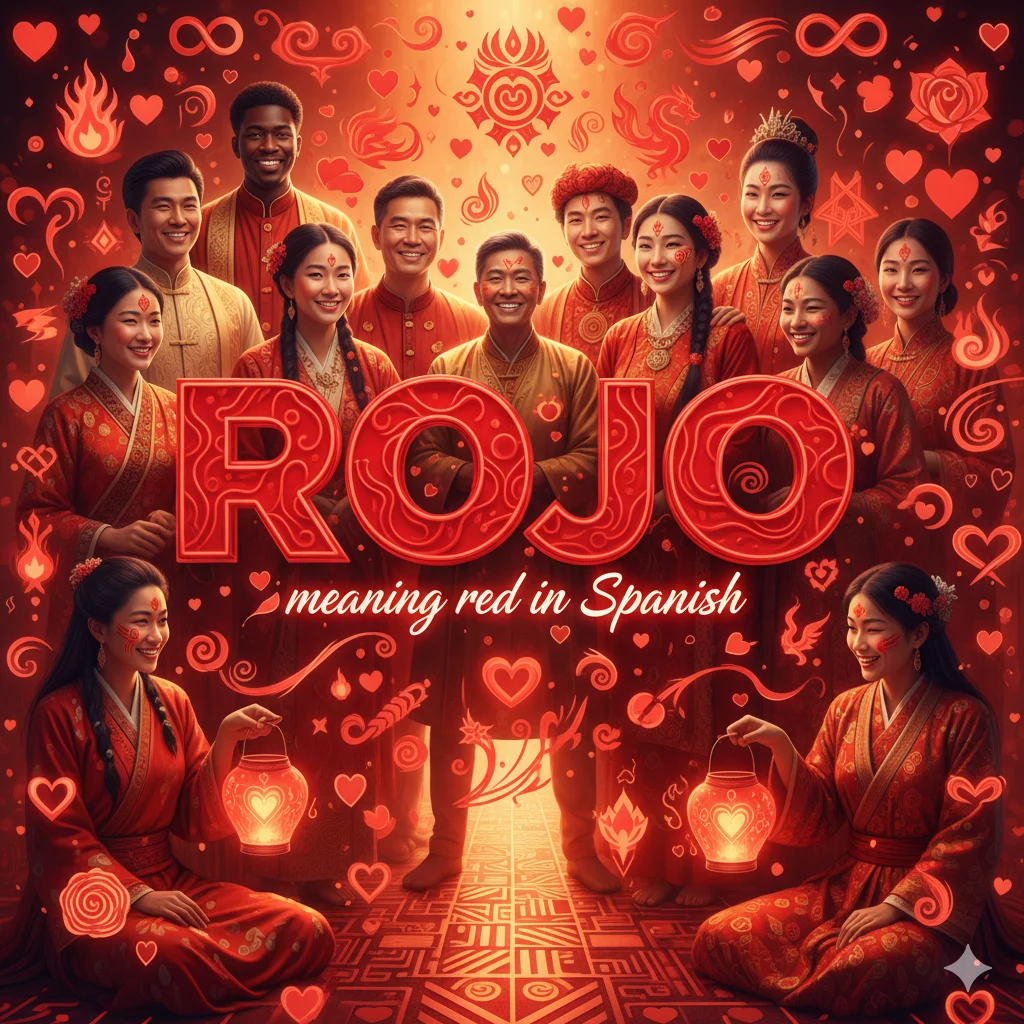
The Spanish word for “red” is rojo (pronounced roh-ho).
It’s a vibrant word that carries the energy of fire and the warmth of the heart.
Cultural Insight:
In Spanish-speaking countries, rojo is more than a color — it’s an emotion.
It appears in festivals, flamenco dresses, bullfights, and national flags. In Latin American art, “rojo” represents courage and life force.
In Spain, the phrase “la roja” (the red one) is affectionately used for the national football team — a symbol of pride and unity.
When you learn how to say red in Spanish, you’re learning a color that paints emotion itself.
🇪🇺 How to Say Red in European Languages
Europe’s languages give “red” distinct shades of meaning:
- French — Rouge: Sensual and sophisticated, like a glass of red wine or lipstick.
- Italian — Rosso: Symbol of passion and romance, essential in Italian art.
- German — Rot: Represents strength; used in warnings and national symbols.
- Portuguese — Vermelho: A warm, expressive color tied to love and festivals.
- Greek — Kokkino: Symbolizes joy and rebirth; used in Easter celebrations.
Across Europe, red is the color of emotion — it speaks of love, strength, and revolution.
🌏 How to Say Red in Asian Languages
Asia gives red its deepest spiritual and cultural significance.
- Chinese — Hóng (红): The color of happiness and prosperity; worn during Lunar New Year.
- Japanese — Aka (赤): A sacred color linked to life and vitality.
- Indian — Laal (लाल): Symbol of purity, love, and marriage; brides wear red sarees.
- Arabic — Ahmar (أحمر): Represents beauty and passion, often used in poetry.
- Korean — Bulgeun (붉은): Once associated with power and sacred rituals.
- Turkish — Kırmızı: Central to Turkish identity — seen in art, flags, and culture.
- Thai — Si daeng (สีแดง): The color of Sunday and the god Surya.
- Vietnamese — Đỏ: Brings good luck and happiness during festivals.
- Filipino — Pula: Represents bravery and nationalism.
In Asia, red is not just seen — it’s felt in every celebration and symbol of life.
🌍 How to Say Red in African Languages
In Africa, red speaks of courage, unity, and the life force of the land.
- Swahili — Nyekundu: Symbolizes struggle, strength, and independence.
- Zulu — Bomvu: Connected with power and protection.
- Yoruba — Pupa: Represents vitality and spiritual energy.
- Amharic — Qey: A bright red used in traditional Ethiopian dress.
- Shona — Tsvuku: Tied to earth and ancestors.
- Somali — Cas: Symbol of determination.
- Hausa — Ja: Used in clothing and art to signify celebration.
- Lingala — Mboloko: A vivid shade representing courage.
- Berber — Azegzaw: A historical color symbol in North Africa.
Red, across the African continent, is the heartbeat of tradition — a color of unity and life.
🌺 How to Say Red in Indigenous & Island Languages
In indigenous and island cultures, red is sacred — representing life, blood, and earth.
- Hawaiian — ʻUlaʻula: The color of royalty and spiritual strength.
- Maori — Whero: Symbolizes mana (authority) and courage.
- Samoan — Mumu: Used in dances and rituals as a mark of power.
- Cherokee — Adaneli: Represents success and triumph.
- Tahitian — ʻUra: The color of sacred offerings.
- Fijian — Vulavula: Associated with community and celebration.
- Haitian Creole — Wouj: A sign of life and resilience.
- Guaraní — Pyta: Symbol of fire and strength.
- Inuit — Kaviak: Represents survival and warmth in the cold.
- Tagalog — Pula: The color of love and courage in Filipino symbolism.
For these cultures, red is not only a hue — it’s a spiritual essence.
🔥 Cultural Insights: The History of the Color Red
The story of red is as old as humanity itself.
Ancient cave paintings used red ochre to depict life and hunting.
In Rome, warriors wore red to symbolize victory.
In Asia, red became sacred — the color of life and celebration.
In Latin America, red marks revolution and freedom.
The Spanish word rojo connects to the Latin russus, meaning “red-haired” or “ruddy.” From fire to flags, it continues to burn in every culture.
🏮 Proverbs About “Red” Around the World
- Spanish: “Verlo todo rojo” — “To see everything red,” meaning to be very angry.
- Chinese: “Hong yun dang tou” (红运当头) — “Good luck is at your head.”
- Arabic: “Her cheeks are red like the morning sun” — used to describe beauty.
- Italian: “Essere al rosso” — “To be in the red,” meaning to have no money.
- African proverb: “Red earth gives birth to strong roots.”
Red is not just seen — it’s lived in language, emotion, and spirit.
❓ FAQs
Q1: What is the word for red in Spanish?
The Spanish word for red is rojo, pronounced roh-ho.
Q2: What does “rojo” symbolize in Spanish culture?
“Rojo” represents love, passion, revolution, and energy.
Q3: Are there variations of red in Spanish?
Yes — rojo claro (light red), rojo oscuro (dark red), and rojo pasión (passion red).
Q4: What’s the origin of the word “rojo”?
It comes from Latin russus or rubeus, meaning “red or ruddy.”
Q5: Why is red important in global culture?
Red unites people — it symbolizes life, strength, and love in nearly every civilization.
❤️ Conclusion: The Universal Power of “Rojo”
Whether you say rojo, rouge, aka, or pula, the color red carries emotion in every language.
It’s the color of hearts and fire, of love and power.
Learning how to say red in Spanish connects you to a universal truth — that emotion has no borders, only colors.
🎨 Now it’s your turn!
What does red mean in your culture or language? Share your version in the comments — and let’s paint the world in every shade of rojo together. ❤️