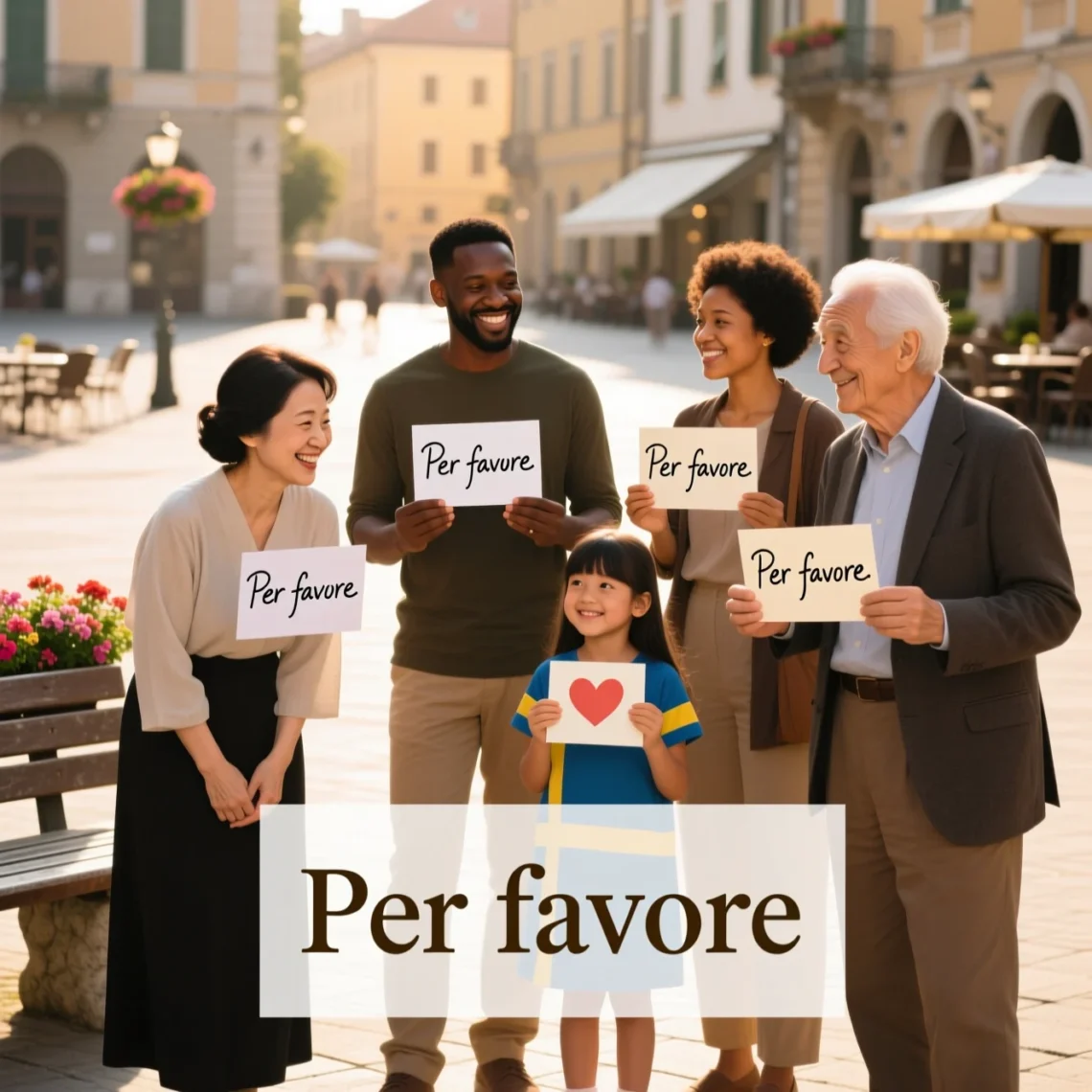
When I first visited Rome, a barista handed me a steaming cappuccino with a smile. As I replied, “Per favore,” his grin widened — not because I spoke perfect Italian, but because I tried.
That tiny word bridged the gap between stranger and friend.
It reminded me that politeness is a universal language.
Learning how to say please in Italian goes beyond mastering vocabulary — it’s learning the Italian way of showing respect, warmth, and gratitude. And when we explore how other cultures say “please,” we uncover something profound: the human desire to connect with kindness.
🗺️ Table of “Please” Around the World
| Language | Word/Phrase for “Please” | Cultural Insight |
|---|---|---|
| Italian | Per favore | Literally “for favor”; conveys respect and appreciation. |
| English | Please | Derived from “if it pleases you”; polite request form. |
| French | S’il vous plaît | Means “if it pleases you”; used widely with elegance. |
| Spanish | Por favor | Similar to Italian; used frequently to soften speech. |
| German | Bitte | Means both “please” and “you’re welcome”; context matters. |
| Portuguese | Por favor | Formal, used to show courtesy and gratitude. |
| Arabic | Min fadlak / Min fadlik | “If you please”; used with gender distinction (male/female). |
| Japanese | Onegaishimasu (お願いします) | Deeply respectful; used when asking for help or a favor. |
| Mandarin (Chinese) | Qǐng (请) | Literally “to invite”; a mark of good manners. |
| Hindi (India) | Kripya (कृपया) | Formal, often used in writing or polite speech. |
| Swahili | Tafadhali | Common across East Africa; signals humility. |
| Zulu | Ngiyacela | Literally “I am asking”; expresses sincerity. |
| Russian | Pozhaluysta (Пожалуйста) | Means both “please” and “you’re welcome.” |
| Korean | Juseyo (주세요) | Used after a verb to politely request something. |
| Turkish | Lütfen | Derived from Arabic “ لطفاً ” meaning “with kindness.” |
🇮🇹 How to Say Please in Italian
The Italian word for “please” is Per favore (pronounced pehr fah-VOH-reh).
It literally means “for favor,” showing that you’re asking someone kindly for help or service. Italians use it everywhere — from cafes and shops to family dinners.
Example Sentences:
- Un caffè, per favore. → “A coffee, please.”
- Mi passi il sale, per favore? → “Can you pass me the salt, please?”
Cultural Insight:
In Italy, courtesy is an art form. Saying Per favore is not just polite — it’s part of the Italian rhythm of respect and grace. Tone and expression matter just as much as the word itself.
Learning how to say please in Italian helps you blend into the warm and respectful social fabric of Italian culture — where words carry music, and manners are melody.
🇪🇺 How to Say Please in European Languages
Europeans value politeness deeply, but every country expresses it uniquely:
- France — S’il vous plaît / S’il te plaît: Formal vs. informal forms reflect France’s social hierarchy and refinement.
- Spain — Por favor: Warm and rhythmic, often said with passion and sincerity.
- Germany — Bitte: Versatile word meaning both “please” and “you’re welcome.”
- Greece — Parakaló: Means “I invite you”; expresses genuine goodwill.
- Portugal — Por favor: Similar to Spanish but with softer pronunciation.
In Europe, “please” is more than a word — it’s a reflection of cultural values like dignity, kindness, and social respect.
🌏 How to Say Please in Asian Languages
Asian cultures often use context and tone more than literal translation to express politeness.
- Japan — Onegaishimasu: Deeply humble; often used when requesting a favor or service.
- China — Qǐng: Literally “invite”; conveys courtesy and respect.
- Korea — Juseyo: A polite form that softens requests naturally.
- India — Kripya: Common in formal contexts and written instructions.
- Arabic — Min fadlak / Min fadlik: Means “if you please”; emphasizes humility and respect.
- Thailand — Karuna: Used as a soft request; often said with a smile.
- Vietnam — Làm ơn: Literally “do grace”; humble and respectful.
- Indonesia — Tolong: “Please help”; used in sincere requests.
- Philippines — Pakiusap: A blend of kindness and courtesy.
- Turkey — Lütfen: Derived from “kindness”; polite and commonly used.
In Asia, politeness forms the backbone of language — a cultural reflection of harmony and mutual respect.
🌍 How to Say Please in African Languages
African greetings and polite phrases often reflect community and empathy.
- Swahili — Tafadhali: Used warmly in both casual and formal speech.
- Zulu — Ngiyacela: “I am asking”; a sincere, heartfelt request.
- Yoruba — E jọ̀ọ́: Expresses apology and politeness simultaneously.
- Amharic — Ebakih: “Please” in a gentle tone of respect.
- Hausa — Don Allah: Literally “for God’s sake”; deeply humble expression.
- Somali — Fadlan: Derived from Arabic, used commonly for requests.
- Lingala — S’il te plaît / S’il vous plaît: Borrowed from French; polite and friendly.
- Berber — Tafukt: “Light”; poetic in use.
- Shona — Ndapota: Polite and respectful; used across Zimbabwe.
- Afrikaans — Asseblief: From Dutch “alstublieft”; integral in every polite exchange.
Across Africa, “please” is not just courtesy — it’s an affirmation of unity and community spirit.
🌺 How to Say Please in Indigenous & Island Languages
Indigenous and island cultures embed respect deeply within their communication.
- Hawaiian — E kala mai: Means “excuse me” or “please forgive”; rooted in harmony.
- Maori — Tēnā koa: Used politely when making a request.
- Samoan — Fa’amolemole: Reflects humility and grace.
- Fijian — Kere kere: Literally “request” or “beg kindly.”
- Cherokee — Tla yagoligv: Polite request used in conversation.
- Tahitian — Fāri’ira’a: Indicates patience and goodwill.
- Guaraní — Iporã: Carries a tone of respect and appreciation.
- Haitian Creole — Tanpri: Friendly and heartfelt; used in daily interactions.
- Inuit — Ikkajunga: A simple and respectful form of request.
- Tagalog — Pakiusap: Reflects courtesy, often paired with a gentle tone.
Each of these expressions shows how “please” reflects empathy, not authority — a shared human value.
🕰️ Cultural Insights: The History and Meaning of “Please”
The English word “please” originates from the phrase “if it pleases you,” dating back to medieval Europe. Over time, languages across the world evolved their own forms — all carrying the essence of gratitude, humility, and grace.
The Italian Per favore beautifully captures this: a simple request that honors the other person’s kindness.
Across cultures, “please” is the universal key that opens hearts.
🌸 Proverbs About Politeness Across Cultures
- Italian: “La cortesia è la chiave di ogni porta.” — “Courtesy is the key to every door.”
- Japanese: “A polite word can warm three winters.”
- Arabic: “Kindness is a language the deaf can hear and the blind can see.”
- Turkish: “A kind word is a gift to the soul.”
- African Proverb: “He who greets politely, eats twice.”
Every culture agrees — politeness brings warmth, opportunity, and respect.
❓ FAQs
Q1: What does “Per favore” mean in Italian?
It means “please” — literally “for favor,” used to show respect and kindness.
Q2: How do you pronounce “Per favore”?
Pronounced pehr fah-VOH-reh.
Q3: Are there other ways to say “please” in Italian?
You can also say per piacere (for pleasure) or per cortesia (for courtesy) in more formal contexts.
Q4: Why is “please” important in Italian culture?
Because Italians value harmony, respect, and positive communication — politeness is part of daily life.
Q5: Is “Per favore” used in all situations?
Yes, it’s suitable for both formal and casual interactions — from ordering food to asking for directions.
❤️ Conclusion: The Beauty of “Per Favore”
Saying “Per favore” isn’t just about asking nicely — it’s about showing heart.
Whether you’re in a café in Florence or chatting with a new friend online, this phrase carries centuries of respect and grace.
So next time you need to ask for something, remember:
A sincere “please” can turn any request into an act of kindness.
💬 Now it’s your turn:
How do you say “please” in your language? Drop your word below and let’s create a world map of politeness together 🌍