There’s something universal about mornings. The quiet sunlight, the smell of fresh coffee, and that first greeting that sets the tone for the entire day.
When I first landed in Madrid, I walked into a small café and said, “Hola.” The barista smiled and replied, “¡Buenos días!” It wasn’t just a word — it was a melody of warmth, optimism, and kindness.
That’s when I understood that learning how to say morning in Spanish isn’t just about translation; it’s about embracing a culture that celebrates the start of every day with gratitude.
Across the world, morning greetings carry emotion — they are small rituals that connect hearts before the day begins.
🗺️ Table of Morning Greetings Around the World
| Language | Word/Phrase for “Good Morning” | Cultural Insight |
|---|---|---|
| Spanish | Buenos días | Literally “good days,” used from sunrise until noon with warmth and positivity. |
| English | Good morning | Universal greeting, polite and cheerful, often the first phrase in daily conversation. |
| French | Bonjour | Means “good day”; used from morning until evening. |
| Italian | Buongiorno | Expresses brightness and good wishes for the day. |
| German | Guten Morgen | Formal yet friendly; often used with a smile or handshake. |
| Portuguese | Bom dia | Common in Portugal and Brazil; warm and rhythmic greeting. |
| Turkish | Günaydın | Means “the day is bright”; emphasizes positivity and new beginnings. |
| Japanese | Ohayō gozaimasu (おはようございます) | Polite and respectful; used until around 10 a.m. |
| Mandarin (Chinese) | Zǎo ān (早安) | “Morning peace”; reflects calm and respect. |
| Hindi (India) | Shubh Prabhat (शुभ प्रभात) | “Auspicious morning”; used in formal or poetic contexts. |
| Swahili | Habari ya asubuhi | “How is your morning?”; conversational and caring. |
| Arabic | Sabah al-khayr (صباح الخير) | “Morning of goodness”; often answered with “Sabah an-nur” — “morning of light.” |
| Zulu | Sawubona ekuseni | “I see you this morning”; rooted in acknowledgment and presence. |
| Hawaiian | Aloha kakahiaka | “Good morning” — filled with love, peace, and warmth. |
| Maori | Ata mārie | Means “peaceful morning”; symbolizes calm and renewal. |
🇪🇸 How to Say Morning in Spanish (Buenos Días)
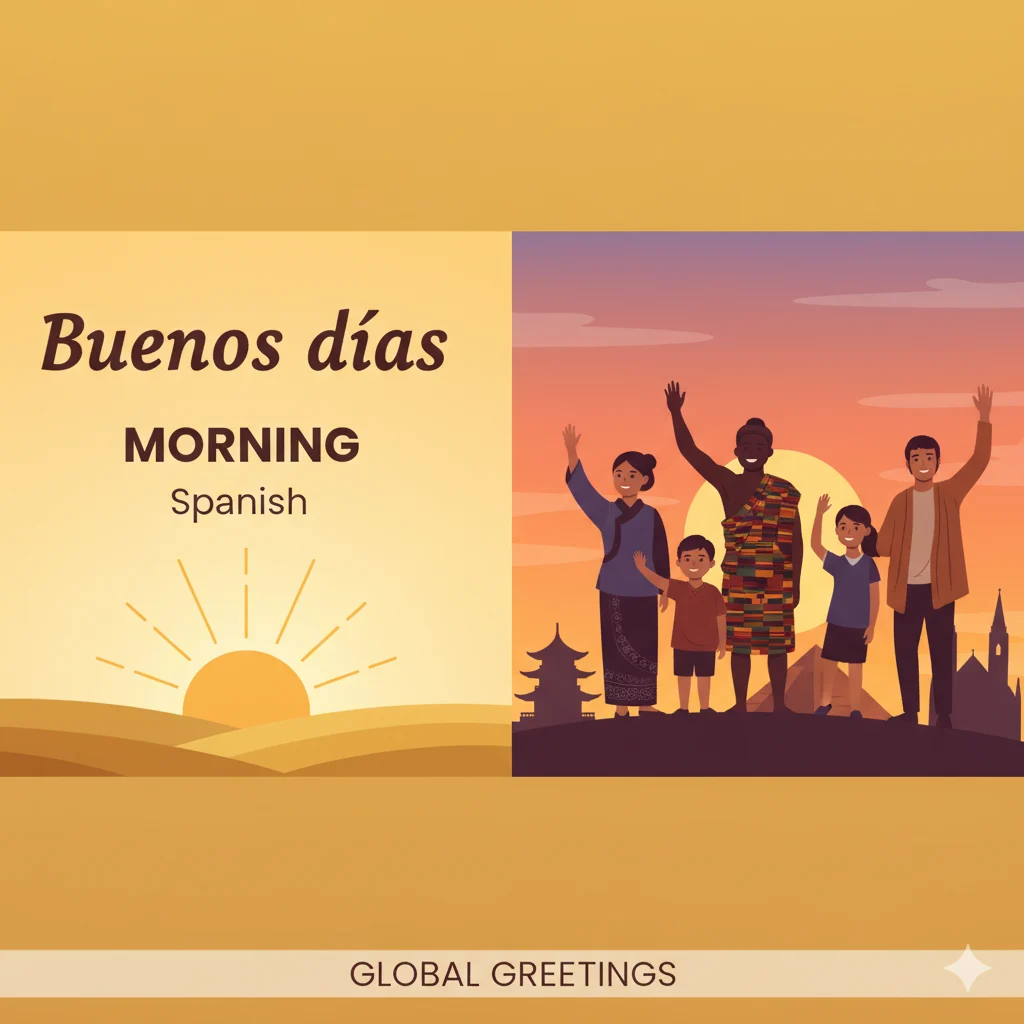
The Spanish phrase for “morning” — when greeting someone — is “Buenos días.”
It literally means “good days”, but in daily life, it’s the equivalent of “good morning.”
Pronunciation: BWEH-nos DEE-ahs
Used from sunrise until noon, “Buenos días” reflects Spain’s cheerful culture and love for conversation. Whether in Madrid, Mexico City, or Buenos Aires, it’s often paired with a smile, a nod, or even a friendly “¿Cómo estás?” (“How are you?”).
In Spain and Latin America, greetings like “Buenos días” go beyond politeness — they express energy, optimism, and respect for the day ahead.
🇪🇺 How to Say Good Morning in European Languages
Europeans greet the morning in a thousand tones — from soft to formal, but all filled with connection.
- French — Bonjour: Used throughout the day, but it begins every morning interaction.
- Italian — Buongiorno: Literally “good day,” reflecting Italy’s sunny, expressive nature.
- German — Guten Morgen: Firm yet friendly, symbolizing punctuality and politeness.
- Portuguese — Bom dia: Spoken with rhythmic joy, especially in Brazil’s vibrant mornings.
- Turkish — Günaydın: Means “the day is bright” — a poetic celebration of new beginnings.
- Greek — Kaliméra: “Beautiful morning,” showing appreciation for life’s small blessings.
In Europe, morning greetings are often tied to courtesy — a daily act of respect and cheer.
🌏 How to Say Good Morning in Asian Languages
Asia’s morning greetings reflect balance, gratitude, and mindfulness.
- Japanese — Ohayō gozaimasu (おはようございます): Used formally; “Ohayō” alone works for friends.
- Mandarin — Zǎo ān (早安): A peaceful way to wish someone a calm start.
- Hindi — Shubh Prabhat (शुभ प्रभात): A rare but elegant greeting, especially in literature and traditional gatherings.
- Korean — Annyeong haseyo (안녕하세요): Commonly used even in the morning, meaning “are you at peace?”
- Arabic — Sabah al-khayr (صباح الخير): “Morning of goodness”; a blessing-filled greeting used across the Arab world.
- Thai — Sawasdee ton chao: Means “good morning”; often paired with a graceful bow.
- Vietnamese — Chào buổi sáng: Literally “hello in the morning,” simple and heartfelt.
- Indonesian — Selamat pagi: “Safe morning,” expressing care and goodwill.
These greetings reveal how Asian cultures greet the day with mindfulness, harmony, and gratitude.
🌍 How to Say Good Morning in African Languages
Africa’s greetings celebrate life, community, and hope at sunrise.
- Swahili — Habari ya asubuhi: “How is your morning?” emphasizes conversation and care.
- Zulu — Sawubona ekuseni: “I see you this morning,” a beautiful expression of presence.
- Yoruba — E kaaro: “Good morning”; a gesture of respect for elders.
- Hausa — Ina kwana?: “How was your night?” showing concern for well-being.
- Amharic — Endet aderk?: “How did you wake?” used warmly among Ethiopians.
- Shona — Mangwanani: “Good morning”; carries happiness and gratitude.
- Somali — Subax wanaagsan: “Blessed morning”; a sign of peace.
- Lingala — Mbote ya ntongo: “Morning hello,” often sung in tone.
- Tswana — Dumela: A common morning greeting that means “I greet you.”
- Akan (Ghana) — Maakye: Literally “I greet you this morning.”
For many African cultures, greeting the morning isn’t just routine — it’s a ritual of acknowledgment, care, and joy.
🌴 Indigenous & Island Morning Greetings
Islands and indigenous cultures treat mornings as sacred beginnings — times of light, gratitude, and connection.
- Hawaiian — Aloha kakahiaka: A gentle “good morning” with the soul of love.
- Maori — Ata mārie: “Peaceful morning,” wishing serenity.
- Samoan — Manuia le taeao: “Blessed morning”; said with genuine affection.
- Cherokee — Osiyo nigada: “Good day, everyone”; inclusive and communal.
- Tahitian — Ia ora na i te poipoi: “Good morning,” literally “may you live in the morning.”
- Fijian — Bula ni mataka: “Life in the morning”; symbolizes vitality.
- Inuit — Ullaakkut: Means “good morning” — used warmly across Arctic regions.
- Haitian Creole — Bonjou: “Good morning” — cheerful and rhythmic.
- Tagalog — Magandang umaga: “Beautiful morning”; reflects Filipino optimism.
- Guaraní — Mba’éichapa ndepyhareve: “How is your morning?”; warm and sincere.
Each of these greetings reflects gratitude for a new day — a gift shared with others.
💬 Cultural Insights: Morning as a Symbol of Renewal
Across languages and centuries, morning greetings symbolize renewal, hope, and connection.
“Buenos días” in Spanish and “Günaydın” in Turkish both celebrate the light — a metaphor for life and opportunity.
Historically, morning greetings were blessings, often linked to spiritual traditions. In rural Spain and Latin America, “Buenos días” wasn’t just “hello”; it was a heartfelt wish for a day filled with goodness and protection.
🌸 Proverbs About Morning Greetings
- Spanish: “Al que madruga, Dios lo ayuda.” — “God helps the early riser.”
- Swahili: “Asubuhi njema huanza na salamu.” — “A good morning begins with a greeting.”
- Turkish: “Her sabah bir şanstır.” — “Every morning is a chance.”
- Japanese: “Asa wa shin no hajimari.” — “Morning is the beginning of truth.”
- English: “Morning shows the day.”
These proverbs remind us that morning words carry the power to shape our day — and our mindset.
❓ FAQs
Q1: How do you say morning in Spanish?
The Spanish word for morning is “mañana”, but when greeting someone, you say “Buenos días” (good morning).
Q2: When should I use “Buenos días”?
From sunrise until around noon. After that, switch to “Buenas tardes” (good afternoon).
Q3: What is the literal meaning of “Buenos días”?
It literally means “good days,” a plural expression of goodwill and positive energy.
Q4: How do Latin Americans use “Buenos días”?
It’s a friendly greeting, often said with a smile, and followed by small talk or blessings.
Q5: Why is greeting important in Spanish culture?
Because it reflects respect, warmth, and connection — values central to Hispanic societies.
❤️ Conclusion: The Sunshine in “Buenos Días”
Every “Buenos días” is more than a phrase — it’s a promise of kindness, optimism, and togetherness.
When you greet someone in Spanish, you’re not just saying “good morning”; you’re sharing light — acknowledging that each day is a fresh start to connect, care, and smile.
So wherever you are — whether you say Buenos días, Günaydın, or Good morning — remember that every sunrise carries the same message: hope begins with hello.
💬 Now it’s your turn:
How do you say “good morning” in your language? Share it in the comments below — and let’s build a sunrise of greetings from around the world! ☀️