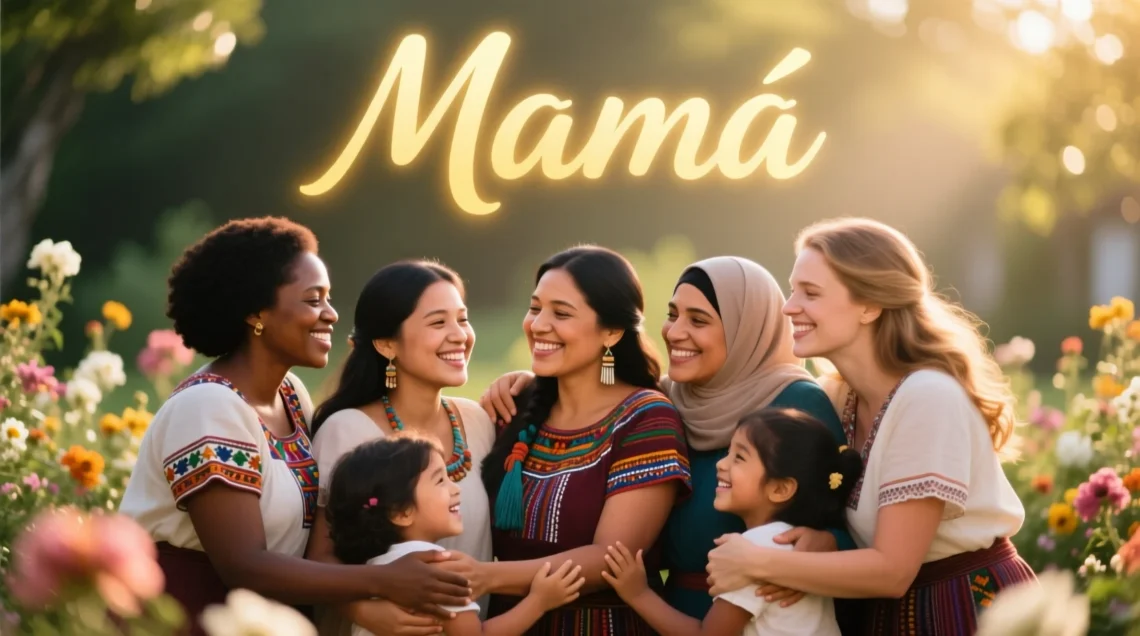
The first word many of us ever speak is “mom.” It’s soft, familiar, and filled with safety.
I still remember my first trip to Mexico. I heard a little girl running to her mother, shouting “¡Mamá!” — her voice carried joy, love, and a sense of belonging. That simple word transcended language.
Learning how to say mommy in Spanish isn’t just a language lesson — it’s an emotional connection to one of the most universal bonds in human life: a child’s love for their mother.
Let’s explore how this gentle word — “mamá” — echoes through languages and cultures across the globe.
🗺️ Table of Motherly Love Around the World
| Language | Word/Phrase for “Mommy” | Cultural Insight |
|---|---|---|
| Spanish | Mamá | Used lovingly by children; warm and affectionate. |
| English | Mom / Mommy | Everyday term expressing closeness and care. |
| French | Maman | Soft and tender; used widely by children. |
| Italian | Mamma | Reflects deep affection; often used by adults too. |
| German | Mama / Mutti | “Mama” for casual love; “Mutti” is more traditional. |
| Portuguese | Mamãe | Expresses sweetness and emotional warmth. |
| Turkish | Anne / Annecim | “Annecim” adds affection, meaning “dear mom.” |
| Arabic | Ummi / Mama | “Ummi” is formal; “Mama” is loving and universal. |
| Hindi (India) | Maa / Mummy | “Maa” is sacred, often used in songs and prayers. |
| Mandarin (Chinese) | Māma (妈妈) | Same sound as in many languages — shows universality. |
| Swahili | Mama | A sign of respect and love; also used for elder women. |
| Zulu | Umama | Expresses both biological and community motherhood. |
| Japanese | Okaasan / Mama | “Okaasan” is polite; “Mama” used by little children. |
| Korean | Eomma (엄마) | Deeply emotional, used by children affectionately. |
| Hawaiian | Makuahine | Sacred term for “mother”; symbolizes care and nature. |
🇪🇸 How to Say Mommy in Spanish
The Spanish word for mommy is Mamá (pronounced mah-MAH).
It’s warm, intimate, and emotionally powerful — used by children, adults, and even in songs to express love and gratitude.
In many Spanish-speaking cultures, “mamá” goes beyond family — it’s a symbol of nurture, protection, and respect.
Cultural Insight:
Latin American families often use variations like mami, mamita, or madrecita, adding layers of affection. These forms express tenderness, humility, and endless love — the emotional heartbeat of Hispanic culture.
🇪🇺 How to Say Mommy in European Languages
In Europe, “mommy” has hundreds of sweet variations — yet they all share the same love.
- France — Maman: Soft and lyrical, a word that melts the heart.
- Italy — Mamma: So universal that “la mamma” symbolizes family love itself.
- Germany — Mama / Mutti: Germans keep affection in simplicity.
- Portugal — Mamãe: Delicate and emotional, often sung in lullabies.
- Greece — Mama: Same word and same emotion; proof of shared human roots.
Across Europe, mothers are seen as the soul of the family — the center of care and stability.
🌏 How to Say Mommy in Asian Languages
Asia reflects motherhood with reverence and poetry.
- Turkey — Anne / Annecim: “Annecim” means “my dear mother.”
- India — Maa: Revered in both homes and temples.
- China — Māma (妈妈): The tone must rise on the first “ma” — just like a baby’s voice.
- Japan — Okaasan / Mama: “Okaasan” is formal; “Mama” for small kids.
- Korea — Eomma (엄마): Soft, emotional, and tender.
- Arabic Countries — Ummi / Mama: “Ummi” carries deep respect; “Mama” is warm and familiar.
- Philippines — Nanay / Mama: “Nanay” symbolizes care; “Mama” is more modern.
- Vietnam — Mẹ: A simple, sacred word used with devotion.
- Thailand — Mae: Central to Thai values of family and gratitude.
- Indonesia — Ibu / Mama: “Ibu” is both “mother” and “respected woman.”
In Asian languages, motherhood is not just biological — it’s spiritual and cultural, a foundation of life and respect.
🌍 How to Say Mommy in African Languages
In Africa, “mother” represents strength, unity, and ancestral love.
- Swahili — Mama: Used widely, showing respect and affection.
- Zulu — Umama: Both a greeting and a sign of deep love.
- Yoruba — Iya: Symbol of nurturing energy.
- Amharic — Enat: A term of deep respect and reverence.
- Akan (Ghana) — Eni: Sacred title for “mother.”
- Somali — Hooyo: Gentle and nurturing, often used in songs.
- Hausa — Uwa: Represents life-giver and caretaker.
- Shona — Mai: Symbol of honor and wisdom.
- Lingala — Mama: Common across Central Africa, used affectionately.
- Berber — Tamghart: Carries maternal authority and respect.
African greetings for “mommy” are filled with honor — mothers are seen as life’s first teachers and guardians of tradition.
🌺 How to Say Mommy in Indigenous & Island Languages
Indigenous and island cultures often tie motherhood to nature and creation itself.
- Hawaiian — Makuahine: Sacred feminine energy tied to the earth.
- Maori — Whaea: Means both “mother” and “teacher.”
- Samoan — Tinā: Symbolizes the heart of the family.
- Cherokee — Agitsi: Represents care and ancestral love.
- Tahitian — Māmā: Same sweet sound as Spanish — global proof of love.
- Fijian — Tinā: Revered in family and spirituality.
- Inuit — Anaana: Literally means “the one who gives life.”
- Haitian Creole — Manman: Gentle and affectionate.
- Tagalog — Nanay: Rooted in family respect and deep warmth.
- Guaraní — Sy: Ancient word connecting motherhood with life.
Across these cultures, the word for “mommy” reflects creation, continuity, and emotional strength.
💬 Cultural Insights: The Universal Language of Mothers
It’s no coincidence that so many words for “mommy” sound like ma, mama, or maa. Linguists believe it comes from babies’ first sounds — simple, comforting, and natural to say.
From Mamá in Spanish to Mama in Swahili and Maa in Hindi — the sound of love is shared across humanity.
No matter the culture, the mother figure represents compassion, sacrifice, and unconditional love.
🌸 Proverbs About Mothers Across Cultures
- Spanish: “Madre hay una sola.” — “There is only one mother.”
- Turkish: “Cennet annelerin ayakları altındadır.” — “Heaven lies beneath mothers’ feet.”
- Swahili: “Mama ni moyo wa nyumba.” — “Mother is the heart of the home.”
- Chinese: “Only one mother in the world.”
- English: “A mother’s love knows no bounds.”
These proverbs remind us that across every border, the word for “mom” means love itself.
❓ FAQs
Q1: What is the word for “mommy” in Spanish?
The Spanish word is Mamá — pronounced mah-MAH — used by both children and adults.
Q2: Is “Mami” also used in Spanish?
Yes! “Mami” or “Mamita” are affectionate versions, often expressing deep tenderness.
Q3: Why do so many languages use similar sounds like “ma” for mother?
Because babies naturally make the “ma” sound early in speech — it became a universal term for the nurturing figure.
Q4: What’s the difference between “madre” and “mamá”?
“Madre” is more formal (“mother”), while “mamá” is warm and emotional (“mommy”).
Q5: How do cultural values shape the word for mother?
In every culture, the word carries respect, love, and emotional connection — reflecting how societies honor motherhood.
❤️ Conclusion: The Word That Lives in Every Heart
Whether you say Mamá, Maman, Mama, or Eomma, every version of “mommy” tells the same story — love that nurtures, protects, and never fades.
Learning how to say mommy in Spanish connects us to a world where family and affection speak louder than any border or accent.
💬 Now it’s your turn:
How do you say “mommy” in your language? Share your word below — let’s celebrate mothers around the world together! 🌎💐