There’s something magical about lunch. It’s not just a meal — it’s a pause, a gathering, a reason to slow down and connect.
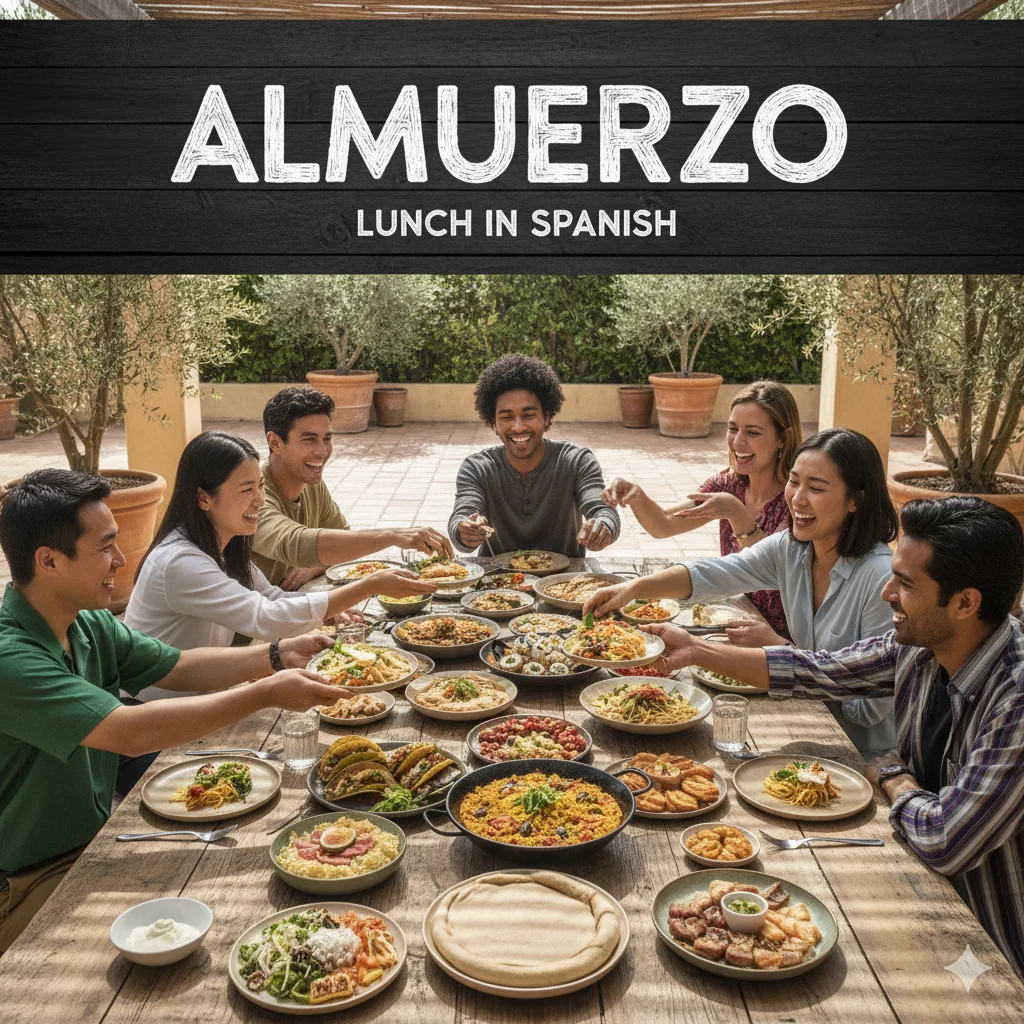
When I first visited Madrid, I was invited by a local family for almuerzo, which means lunch in Spanish. The table was full — laughter, bread, olive oil, stories, and warmth. But what stayed with me wasn’t the food; it was the rhythm of togetherness that surrounded it.
Learning how to say lunch in Spanish opens a window into one of the world’s most social and joyful mealtimes. And as we’ll see, lunch carries deep meaning in every culture — from the bustling streets of Mexico to the serene rice fields of Japan.
🗺️ Table of Words for “Lunch” Around the World
| Language | Word for “Lunch” | Cultural Insight |
|---|---|---|
| Spanish | Almuerzo | A mid-day meal often shared with family, especially in Spain and Latin America. |
| English | Lunch | A quick, casual meal during work or school hours. |
| French | Déjeuner | Literally “to break the fast”; typically light but elegant. |
| Italian | Pranzo | Central to Italian life, often long and shared with family. |
| German | Mittagessen | “Midday eating”; a hearty, traditional main meal. |
| Portuguese | Almoço | Similar to Spanish “almuerzo,” full of flavor and family connection. |
| Arabic | Ghadan (غداء) | A generous, often shared meal that brings family together. |
| Hindi (India) | Dopahar ka khana (दोपहर का खाना) | Literally “afternoon food”; part of India’s rich culinary diversity. |
| Mandarin (Chinese) | Wǔfàn (午饭) | Lunch is an important break between morning and afternoon work. |
| Japanese | Hirugohan (昼ごはん) | Usually includes rice, soup, and side dishes; beautifully balanced. |
| Swahili | Chakula cha mchana | A communal meal symbolizing unity and sharing. |
| Zulu | Isidlo sasemini | Literally “meal of the day”; enjoyed as a family event. |
| Greek | Mesimeriano | A leisurely meal, often followed by a nap (“siesta”). |
| Russian | Obed (Обед) | The main meal of the day, hearty and filling. |
| Turkish | Öğle yemeği | Midday meal often shared with colleagues or family, followed by tea. |
🇪🇸 How to Say Lunch in Spanish
The Spanish word for lunch is “almuerzo” (pronounced ahl-mwer-so).
In Spain and Latin America, almuerzo is more than just eating — it’s an event.
- In Spain, lunch is usually the largest meal of the day, served between 2 p.m. and 4 p.m.
- It’s followed by the famous siesta — a short rest to recharge before the evening.
- In Latin America, almuerzo brings families together, often including soup, rice, meat, and dessert.
So when you say “almuerzo”, you’re not just saying “lunch” — you’re speaking the language of warmth, connection, and joy.
🇪🇺 How to Say Lunch in European Languages
Europe takes lunch seriously — from quick bites in London to long, wine-filled afternoons in Italy.
- France — Déjeuner: A symbol of elegance and timing; often two courses and dessert.
- Italy — Pranzo: A feast that can last hours; Italians treat lunch as sacred family time.
- Germany — Mittagessen: A balanced meal with meat, potatoes, and salad.
- Greece — Mesimeriano: Typically eaten after noon, full of olive oil, bread, and laughter.
- Portugal — Almoço: Similar to Spain’s almuerzo — long, flavorful, and family-centered.
In Europe, lunch isn’t just nourishment; it’s a cultural ritual of togetherness.
🌏 How to Say Lunch in Asian Languages
Asia’s midday meal traditions reflect harmony, respect, and gratitude.
- Japan — Hirugohan: Usually rice, fish, and miso soup; beautifully balanced for health.
- China — Wǔfàn: A quick but complete meal; often eaten with coworkers.
- India — Dopahar ka khana: Rich in spices and variety; often a tiffin-style meal.
- Korea — Jeomsim (점심): A communal affair, typically shared with friends or colleagues.
- Thailand — Aahaan thiang: Often street food enjoyed outdoors, vibrant and flavorful.
- Vietnam — Bữa trưa: Simple and refreshing, with rice and vegetables.
- Philippines — Tanghalian: A hearty, rice-based lunch enjoyed with family.
- Indonesia — Makan siang: A joyful, flavorful break in the middle of the day.
Asian lunches are about balance — of nutrition, community, and peace.
🌍 How to Say Lunch in African Languages
African lunches are warm, social, and deeply rooted in family tradition.
- Swahili — Chakula cha mchana: Literally “food of the afternoon,” often shared in groups.
- Zulu — Isidlo sasemini: Prepared with care, reflecting love and hospitality.
- Yoruba — Ounje osan: A family meal filled with variety and generosity.
- Amharic — Meskot: A time for sharing and storytelling.
- Hausa — Abincin rana: A social meal eaten after morning work.
- Akan (Ghana) — Adidie awia: Part of the country’s strong communal eating culture.
- Lingala — Biloko ya nzanga: Shared food that symbolizes unity.
- Berber — Agdud: Traditionally eaten outdoors, connecting people to nature.
- Somali — Qado: A social meal that often includes rice, meat, and banana.
Across Africa, lunch is a celebration of community and gratitude.
🌺 How to Say Lunch in Indigenous & Island Languages
Lunch in island and indigenous cultures often reflects harmony with nature.
- Hawaiian — ʻAina awakea: Literally “midday meal”; part of the sacred connection to food.
- Maori — Tina kai: A meal shared with laughter and community.
- Samoan — Taumafataga: Communal eating as an act of love.
- Cherokee — Unadoda: Shared during gatherings and storytelling.
- Fijian — Kana ni siga: Meals cooked over open fire, enjoyed with family.
- Tahitian — Tama’a avatea: Midday nourishment, slow and communal.
- Guaraní — Karu asaje: Reflects the bond between people and the earth.
- Inuit — Ubluliaq: A simple meal during the Arctic daylight hours.
- Tagalog — Tanghalian: Reflects Filipino warmth and togetherness.
- Haitian Creole — Manje midi: A joyful midday meal often shared outdoors.
For these cultures, lunch is a sacred pause — a time to honor food, people, and place.
🍽️ Cultural Insights: Lunch Through History
The concept of lunch evolved over centuries — from Roman feasts to modern lunch breaks.
- In ancient Spain, almuerzo started as a small morning snack before evolving into the main midday meal.
- Industrial revolutions introduced quick “working lunches,” but Mediterranean cultures preserved the art of slow eating.
- Today, “lunch” reflects the world’s diversity — from the fast food counter to the family table.
No matter where you are, lunch is love served on a plate.
🌸 Proverbs About Lunch and Sharing
- Spanish: “Con pan y vino, se anda el camino.” — “With bread and wine, the road is easier.”
- Italian: “A tavola non si invecchia.” — “At the table, one does not grow old.”
- Turkish: “The guest is God’s friend.”
- Chinese: “When eating, never forget those who farmed.”
- African proverb: “He who eats alone, dies alone.”
Meals unite us — across borders, languages, and time.
❓ FAQs
Q1: What does “almuerzo” mean in Spanish?
“Almuerzo” means “lunch,” the midday meal in Spanish-speaking countries.
Q2: How do you pronounce almuerzo?
Pronounced ahl-mwer-so, with a soft “r” roll.
Q3: Is almuerzo the same in all Spanish-speaking countries?
Mostly, yes. In some Latin American regions, “comida” also means lunch.
Q4: What time is lunch in Spain?
Usually between 2:00 p.m. and 4:00 p.m., followed by a siesta.
Q5: How do Spanish lunches differ from others?
They’re longer, social, and often multi-course — emphasizing conversation and connection.
❤️ Conclusion: A Universal Meal that Brings Us Together
Learning how to say lunch in Spanish — almuerzo — is a step into a culture that treasures connection.
It reminds us that, wherever we are, sharing food is sharing life.
So next time you sit down for lunch, pause, smile, and remember:
You’re part of a timeless tradition that feeds both body and soul.
🍽️ Now it’s your turn!
How do you say “lunch” in your language? Share it in the comments below — let’s create a table of global flavors and friendship!