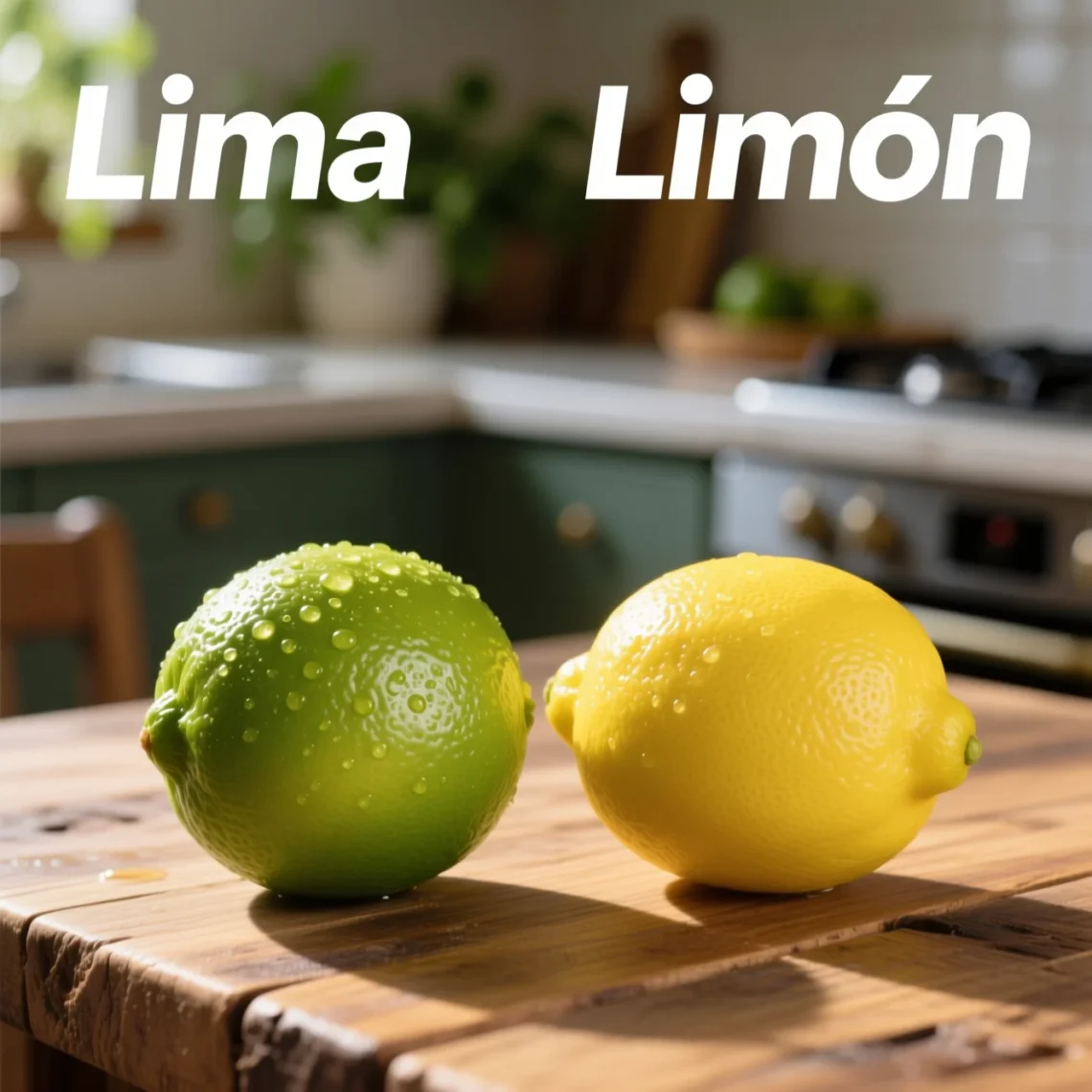
It’s funny how one small green fruit can create so much confusion — and connection — across the world.
When I first visited Mexico, I ordered a drink and asked for some “lime.” The waiter smiled, nodded, and brought… lemons. I was puzzled until I learned that in many Spanish-speaking countries, lime and lemon are both called “limón.”
That’s when I realized that learning how to say lime in Spanish isn’t just about vocabulary — it’s about understanding culture, color, taste, and history.
Just as the zesty lime brightens every dish it touches, words about it carry flavor, emotion, and regional identity. Let’s dive into how Spanish speakers around the world name and celebrate this citrus treasure — and how other cultures do too.
🍋 Table: How to Say “Lime” Around the World
| Language | Word/Phrase for Lime | Cultural or Linguistic Insight |
|---|---|---|
| Spanish (Spain) | Lima | Refers to the green lime; “limón” is for the yellow lemon. |
| Spanish (Mexico) | Limón | Refers to lime; lemons are rare, and both fruits are called “limón.” |
| English | Lime | Comes from the Arabic “limun,” shared with Spanish and Persian. |
| French | Citron vert | Literally “green lemon”; distinguishes it from “citron” (lemon). |
| Italian | Lime / Limetta | Borrowed directly from English or Latin roots. |
| Portuguese (Brazil) | Limão | Refers to both lemon and lime depending on region and color. |
| Turkish | Limon / Misket limonu | “Limon” for lemon; “misket limonu” for lime. |
| Hindi (India) | Nimbu (नींबू) | One word used for both lime and lemon; context decides. |
| Mandarin (Chinese) | Qīng níng (青柠) | Literally “green lemon.” |
| Arabic | Laimūn (ليمون) | Common for both lemon and lime; Arabic is the origin of “limón.” |
| Swahili | Limu | Shared root with Arabic; used for lemon and lime. |
| Thai | Ma-nao (มะนาว) | Refers to lime; essential in Thai cuisine. |
| Japanese | Raimu (ライム) | Borrowed from English, used for the Western lime. |
| German | Limette | Refers specifically to lime, “Zitrone” for lemon. |
🇪🇸 How to Say Lime in Spanish (and Why It’s Tricky)
If you’re wondering how to say lime in Spanish, here’s the truth: it depends on where you are.
- In Spain, the word “lima” means lime, and “limón” means lemon.
- In Mexico, “limón” usually means lime, and lemons are called “limón amarillo” (yellow lemon).
- In Argentina, Chile, and Colombia, both words may be used interchangeably, depending on context and availability.
So, when in doubt, remember this golden rule:
👉 Spain = “lima” (lime)
👉 Latin America = “limón” (lime)
Cultural Note:
In Mexican culture, lime (limón) is essential — it’s sprinkled on tacos, added to soups, squeezed into drinks, and even used in medicine. It’s more than a fruit; it’s part of daily life.
🇪🇺 European Languages: Lime’s Journey Across the Continent
Across Europe, the lime has traveled through trade, language, and taste.
- French: “Citron vert” literally means “green lemon,” emphasizing its color and similarity to lemons.
- Italian: Uses “lime” or “limetta,” borrowed from English and Latin origins.
- Portuguese: “Limão” is the go-to term for both lemon and lime — color is what makes the distinction.
- German: “Limette” clearly defines lime; precision is key in the German language.
Europe’s lime vocabulary mirrors its culinary history — from British gin and tonics to French tarts and Italian marinades, each country gives this fruit its own twist.
🌏 Asian Languages: Lime as a Symbol of Freshness
In Asia, lime carries layers of meaning — flavor, health, and even spirituality.
- India (Hindi): “Nimbu” can mean both lime and lemon, depending on color. It’s used in rituals and Ayurvedic medicine.
- Thailand: “Ma-nao” gives Thai dishes their signature tang, especially in soups and salads.
- China: “Qīng níng” means “green lemon,” often used in drinks and desserts.
- Japan: “Raimu” is an English loanword, used mainly for imported limes.
- Arabic-speaking countries: “Laimūn” is used for both lime and lemon — showing shared linguistic roots with Spanish “limón.”
In Asia, lime often symbolizes purity, health, and renewal — a fruit of freshness and flavor.
🌍 African & Caribbean Cultures: Lime as Life and Health
- Swahili (East Africa): “Limu” — used for lemon and lime; adds freshness to seafood and teas.
- West Africa: Limes are vital in cleansing rituals and traditional drinks.
- Caribbean nations: Spanish influence blends with Creole — “limón” or “lime” are both common, depending on island.
In tropical climates, lime isn’t just a garnish — it’s a way of life, valued for its cooling, cleansing, and healing properties.
🌺 Indigenous & Island Languages: Lime and the Land
Across islands and native cultures, lime plays an ecological and cultural role.
- Hawaiian: “Laima” (from English “lime”) is used in modern contexts.
- Maori: Often described as “rēmana kākāriki” — literally “green lemon.”
- Samoan: “Tipolo lanumeamata” — green citrus, deeply tied to food and ceremony.
- Tahitian: “Tipolo” is common, blending local and colonial influence.
For these island communities, citrus fruits symbolize abundance, sunlight, and life by the sea.
🍃 Cultural Insights: The History Behind the Word “Lime”
The Spanish word “limón” and “lima” both trace back to the Arabic “laimūn”, which itself came from the Persian “limu.”
During the Moorish period, Arabic greatly influenced the Spanish language — and the word traveled across oceans during colonization.
Today, the linguistic “lime vs. lemon” confusion actually reflects centuries of trade, colonization, and culinary evolution.
So when you say “lima” or “limón” in Spanish, you’re speaking a word that’s over 1,000 years old — carrying history in every syllable.
🌸 Proverbs About Lime and Freshness
- Spanish Saying: “Al mal tiempo, buena cara y un poco de limón.” — “In bad times, keep a good face… and a bit of lemon.”
- Indian Proverb: “A drop of lime can change the flavor of life.”
- Thai Saying: “Ma-nao sharpens not only food but also the mind.”
- French Proverb: “Qui sème du citron, récolte de la fraîcheur.” — “He who plants lemons, harvests freshness.”
Lime — in all its forms — is a symbol of zest, renewal, and perspective.
❓ FAQs
Q1: How do you say lime in Spanish?
In Spain, it’s “lima.” In Mexico and much of Latin America, it’s “limón.”
Q2: Why do Spanish speakers use the same word for lemon and lime?
Because both fruits entered Spanish through Arabic influence, where “laimūn” described citrus in general. Over time, regional usage evolved differently.
Q3: What is the difference between lima and limón in Spanish?
- Spain: “Lima” = lime, “limón” = lemon.
- Latin America: “Limón” = lime, “lima” = sometimes used for sweet limes.
Q4: How do you pronounce lime in Spanish?
“Lima” is pronounced LEE-ma; “limón” is lee-MON.
Q5: What’s the origin of the word “lime”?
It comes from Persian limu, passed through Arabic laimūn, then into Spanish and English.
❤️ Conclusion: One Word, Many Meanings, One World
Whether you say lima, limón, or lime, you’re speaking a language flavored by history, travel, and taste.
Every squeeze of lime adds brightness — to food, to language, and to culture. So next time you enjoy a drink or a dish with that citrus tang, remember: the word you’re using has journeyed across continents, bringing zest to every corner of the world.
💬 Now it’s your turn!
How do you say “lime” in your language? Share it in the comments below — and let’s create a global fruit dictionary of flavor and friendship! 🍋🌎