The first time I heard an old Arab merchant greet someone with “As-salamu alaykum, kayfa haluk?”, I was struck by its melody — calm, genuine, and warm.
It wasn’t just a casual “How are you?” — it felt like a prayer for peace and well-being.
In Arabic culture, greetings are never empty words. They’re heartfelt exchanges — tiny bridges built between souls.
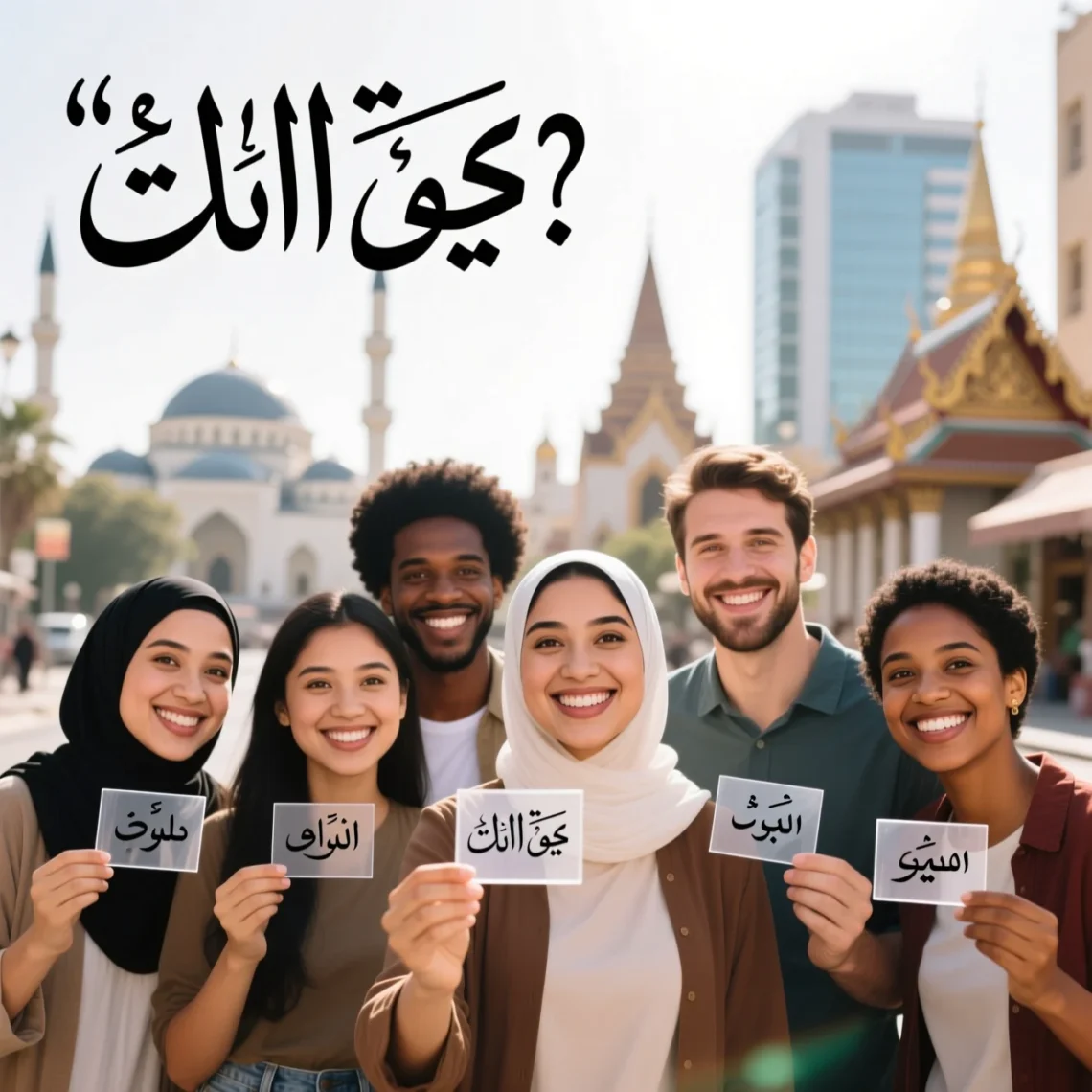
Just as “Merhaba” opens a door, “Kayfa haluk” (كيف حالك؟) — the Arabic way to say “How are you?” — deepens the connection.
Across the world, similar expressions carry the same essence: concern, care, and human empathy.
Let’s explore how people across cultures ask this simple yet profound question — and what it reveals about humanity’s shared heartbeat.
🗺️ Table of “How Are You” Around the World
| Language | Phrase | Cultural Insight |
|---|---|---|
| Arabic | Kayfa haluk? (كيف حالك؟) | Means “How are you?” — deeply respectful, often paired with blessings. |
| Turkish | Nasılsın? | Commonly used among friends and family; said with warmth. |
| English | How are you? / How’s it going? | Polite small talk, often rhetorical in modern English. |
| French | Comment ça va? | Literally “How’s it going?”; friendly and informal. |
| Spanish | ¿Cómo estás? | Expresses warmth and genuine care in Latin cultures. |
| Italian | Come stai? | A friendly greeting, sometimes followed by hugs or cheek kisses. |
| German | Wie geht’s? | Informal and common; reflects directness and politeness. |
| Hindi | Aap kaise hain? (आप कैसे हैं?) | Shows respect through formality and tone. |
| Chinese (Mandarin) | Nǐ hǎo ma? (你好吗?) | Means “Are you good?” — polite and simple. |
| Japanese | Ogenki desu ka? (お元気ですか?) | Used formally; expresses concern for health. |
| Swahili | Habari gani? | Literally “What’s the news?”; invites conversation. |
| Zulu | Unjani? | Means “How are you?”; reflects community spirit. |
| Korean | Eotteohke jinaeseyo? (어떻게 지내세요?) | Literally “How have you been?”; shows politeness. |
| Hawaiian | Pehea ʻoe? | Gentle and warm; fits the island’s friendly tone. |
| Russian | Kak dela? (Как дела?) | Informal and widely used among friends. |
🇸🇦 How to Say “How Are You?” in Arabic
The Arabic phrase for “How are you?” is “Kayfa haluk?” (كيف حالك؟) — pronounced KAY-fah HAH-luk (for males) and Kayfa haliki (for females).
It literally translates to “How is your condition?” but its meaning runs deeper — it reflects sincere care for someone’s well-being.
Common Variations:
- Formal: Kayfa haluk? — “How are you?”
- Informal: Shlonak? (male) / Shlonich? (female) — used in the Gulf and Iraq.
- Egyptian Arabic: Ezayak? (male) / Ezayek? (female).
- Levantine Arabic (Lebanon, Syria, Jordan): Keefak? (male) / Keefik? (female).
Cultural Insight:
In Arab societies, this question often leads to genuine conversation. It’s not rhetorical — people truly want to know how you are. The exchange may even include blessings like “Alhamdulillah” (Praise be to God) or “Ana bekhair” (I’m fine).
Learning how to say how are you in Arabic is not just about words — it’s about understanding a culture where empathy is a daily habit.
🇪🇺 How to Say “How Are You?” in European Languages
Europe’s greetings are shaped by centuries of etiquette, respect, and evolving social norms.
- France — Comment ça va?: Often paired with a smile or cheek kiss; casual but kind.
- Spain — ¿Cómo estás?: A heartfelt greeting, often followed by conversation about life or family.
- Italy — Come stai?: Spoken with emotion; Italians often use touch or tone to convey care.
- Germany — Wie geht’s?: Direct yet friendly; “Wie geht es Ihnen?” for formal settings.
- Russia — Kak dela?: Informal but sincere, used between friends or colleagues.
- Portugal — Como estás?: Warm, melodic, and welcoming.
- Greece — Ti kaneis?: Literally “What are you doing?” — a sign of closeness.
In Europe, asking “How are you?” often blends politeness with personal touch, reflecting centuries of cultural refinement.
🌏 How to Say “How Are You?” in Asian Languages
Asia’s greetings reflect respect, spirituality, and social harmony.
- China — Nǐ hǎo ma?: A polite question, often answered with “Wǒ hěn hǎo” (I’m fine).
- India — Aap kaise hain?: Deeply respectful; younger speakers use it for elders.
- Japan — Ogenki desu ka?: Formal but heartfelt, showing true care for health.
- Korea — Eotteohke jinaeseyo?: Used with a smile and slight bow.
- Thailand — Sabai dee mai?: Literally “Are you well?”; reflects Thailand’s calm and positivity.
- Vietnam — Bạn có khỏe không?: Focuses on physical and emotional wellness.
- Philippines — Kamusta ka?: Derived from Spanish; used with sincerity and warmth.
- Indonesia — Apa kabar?: Means “What’s the news?”; used to start meaningful conversations.
- Turkey — Nasılsın?: Common and friendly; usually followed by “İyiyim” (I’m fine).
- Arabic — Kayfa haluk?: A greeting that unites millions under one word of care.
Across Asia, asking someone “How are you?” is more than courtesy — it’s an invitation to connect on a human level.
🌍 How to Say “How Are You?” in African Languages
Africa’s linguistic richness shines through its expressive greetings.
- Swahili — Habari gani?: “What’s the news?” — a true conversation starter.
- Zulu — Unjani?: Simple yet deeply human; shows recognition and community.
- Yoruba — Bawo ni?: Literally “How are you?”; often extended into longer exchanges.
- Amharic — Indemin neh?: Polite and warm; Ethiopia’s way to express care.
- Somali — Iska warran?: “What’s the story?”; reflects curiosity and warmth.
- Akan (Ghana) — Wo ho te sɛn?: “How are you?”; personal and polite.
- Hausa — Lafiya lau?: “Are you well?”; emphasizes health and peace.
- Shona — Wakadini zvako?: Deeply respectful; used for both elders and peers.
- Berber — Mataɣ tgit?: “Are you well?”; ancient and poetic.
- Lingala — Ndenge nini?: Friendly, used among friends in Congo.
In many African societies, greetings like “How are you?” last several minutes — a ritual of care and belonging.
🌺 How to Say “How Are You?” in Indigenous & Island Languages
Island and Indigenous greetings often carry spirituality and connection to nature.
- Hawaiian — Pehea ʻoe?: Calm and joyful; often followed by a warm smile.
- Maori — Kei te pēhea koe?: “How are you?”; part of the sacred Kia ora greeting tradition.
- Samoan — Oa mai oe?: Reflects happiness to see someone.
- Cherokee — Osda nigada?: Means “Are you well?”; reflects harmony and community.
- Tahitian — E aha to oe huru?: “How are you?”; poetic and melodic.
- Fijian — Vakacava tiko?: Polite, showing care for both health and spirit.
- Inuit — Qanuipit?: “How are you?”; practical and sincere in Arctic culture.
- Tagalog — Kamusta ka?: Familiar, comforting, and affectionate.
- Haitian Creole — Kijan ou ye?: Direct yet friendly; emphasizes emotional warmth.
- Guaraní — Mba’éichapa nde?: Deeply personal; builds emotional connection.
Indigenous greetings remind us that asking “How are you?” isn’t small talk — it’s soul talk.
💬 Cultural Insights: The Deeper Meaning of “How Are You?”
Across centuries, this question evolved from simple health checks to expressions of care.
In Arabic, Kayfa haluk roots back to “ḥāl,” meaning “state” or “condition.” It’s a reminder that life’s true richness lies in asking and listening.
Whether whispered in a market in Cairo or typed in a text in Tokyo, “How are you?” has one goal — to say, “I see you, I care.”
🌸 Proverbs About Greeting Across Cultures
- Arabic: “Begin with peace, and peace will follow.”
- Turkish: “A smiling face is half the greeting.”
- Zulu: “When you greet, you give life.”
- Chinese: “Kind words can warm three winters.”
- French: “Politeness costs little but gains much.”
Every culture agrees: genuine greetings nourish the soul.
❓ FAQs
Q1: How do you say “How are you?” in Arabic?
You say “Kayfa haluk?” (كيف حالك؟) — “How are you?” (male). For females, say “Kayfa haliki?”
Q2: What’s the informal version of “How are you?” in Arabic?
Common dialects use “Keefak/Keefik” (Levantine) or “Ezayak/Ezayek” (Egyptian).
Q3: How do you respond to “Kayfa haluk?”
You can say “Ana bekhair, Alhamdulillah” — “I’m fine, praise be to God.”
Q4: Why is this phrase important in Arabic culture?
Because it’s sincere. Asking about someone’s state is an act of respect and empathy, not a formality.
Q5: Is “Kayfa haluk” used in all Arab countries?
Yes, though dialects vary — the meaning stays the same everywhere: genuine care.
❤️ Conclusion: A Universal Question with Infinite Meaning
From “Kayfa haluk” to “Comment ça va?”, “Habari gani?” to “Ogenki desu ka?”, one truth connects us all:
Every time we ask someone how they are, we are extending kindness, empathy, and humanity.
So next time you meet someone — wherever you are — pause, smile, and ask:
“Kayfa haluk?” — How are you?
💬 Your Turn:
How do you say “How are you?” in your language? Comment below — let’s create a global conversation of care. 🌎💖