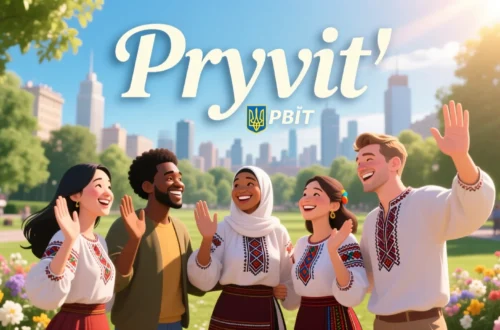
There’s something magical about the way people in Ireland greet you.
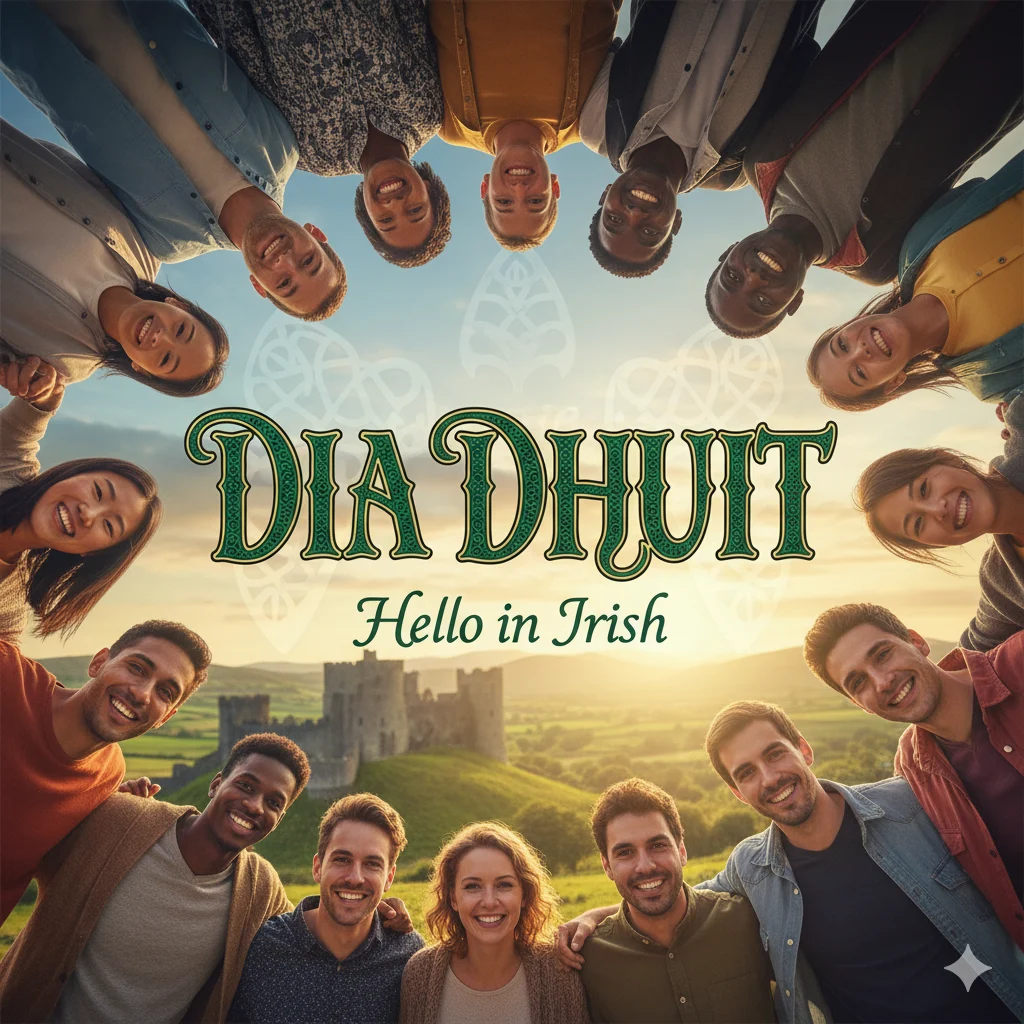
When I first arrived in Galway, a shopkeeper smiled and said “Dia dhuit” — pronounced dee-ah gwit. At first, I thought it simply meant “hello.” But when I learned its true meaning — “God be with you” — I felt something deeper.
In Irish (Gaeilge), greetings are not just words; they’re blessings. They carry centuries of history, faith, and friendship. When an Irish person says hello, they’re not just acknowledging your presence — they’re wishing you well, heart and soul.
And this is something every culture shares: a universal need to connect, to be seen, and to bless others through words.
Let’s explore how to say hello not only in Irish, but in languages across the globe — discovering how a simple greeting carries the story of humanity.
🗺️ Table of Greetings Around the World
| Language | Word/Phrase for “Hello” | Cultural Insight |
|---|---|---|
| Irish (Gaeilge) | Dia dhuit | Means “God be with you”; rooted in Ireland’s Christian and Gaelic heritage. |
| English | Hello / Hi | A universal greeting expressing openness and friendliness. |
| French | Bonjour | Literally “good day”; politeness is key in French culture. |
| Spanish | Hola | Cheerful and affectionate; often used with warm body language. |
| Italian | Ciao | Means “hello” and “goodbye”; relaxed and informal. |
| German | Hallo / Guten Tag | Varies from casual to formal, reflecting social structure. |
| Turkish | Merhaba | Symbolizes openness and peace; used in all social situations. |
| Arabic | As-salamu alaykum | “Peace be upon you”; a spiritual greeting of harmony. |
| Japanese | Konnichiwa | Literally “good afternoon”; part of Japan’s etiquette culture. |
| Mandarin (Chinese) | Nǐ hǎo (你好) | Means “you good”; emphasizes mutual respect. |
| Hindi (India) | Namaste (नमस्ते) | “I bow to you”; deeply spiritual and respectful. |
| Swahili | Jambo / Habari | Expresses warmth and connection in East Africa. |
| Zulu | Sawubona | “I see you”; acknowledges one’s existence and worth. |
| Hawaiian | Aloha | Means love, peace, and hello; a spiritual embrace. |
| Maori (New Zealand) | Kia ora | “Be well”; expresses life, health, and gratitude. |
🇮🇪 How to Say Hello in Irish
In Irish Gaelic, “hello” is “Dia dhuit” (DEE-ah GWIT).
It literally means “God be with you” — a reflection of Ireland’s deep-rooted spirituality.
When you greet one person, you say Dia dhuit;
when addressing two or more people, you say Dia dhaoibh (DEE-ah YEEV).
✨ Cultural Significance
Ireland’s greetings blend ancient Celtic tradition with Christian faith. Historically, the Irish saw language as sacred — words carried energy, blessings, and good fortune. Saying “Dia dhuit” isn’t just polite — it’s a way to share goodwill and divine grace.
In Irish villages, greetings are often followed by genuine conversation — about family, weather, or life. Connection, not speed, defines Irish communication.
🇪🇺 How to Say Hello in European Languages
Europe’s greetings reflect its diversity — from formality in France to warmth in Spain.
- France — Bonjour: Always said first; skipping it can seem rude.
- Spain — Hola: Friendly, often paired with kisses or hugs.
- Italy — Ciao: Easygoing, musical, and affectionate.
- Germany — Hallo / Guten Tag: Clear distinction between casual and formal.
- Netherlands — Hallo / Hoi: Informal and cheerful.
- Sweden — Hej: Used at all times of the day.
- Portugal — Olá: Expressive and melodic, reflecting the Portuguese soul.
- Greece — Yasou: “To your health”; often said with warmth and smiles.
European greetings are about respect and connection, blending tradition with friendliness.
🌏 How to Say Hello in Asian Languages
Asia’s greetings are deeply rooted in respect, spirituality, and peace.
- Arabic — As-salamu alaykum: “Peace be upon you”; used across 20+ countries.
- Turkish — Merhaba: Friendly and open; symbolizes hospitality.
- Hindi — Namaste: “I bow to the divine in you.”
- Japanese — Konnichiwa: Accompanied by a bow, showing humility.
- Chinese — Nǐ hǎo: “You good”; signifies mutual respect.
- Korean — Annyeonghaseyo: “Are you peaceful?” shows genuine concern.
- Thai — Sawasdee ka/krub: Polite and graceful, reflecting Thai harmony.
- Vietnamese — Xin chào: A gentle, melodic greeting.
- Filipino — Kumusta: Derived from Spanish “cómo está”; warm and conversational.
- Malay/Indonesian — Halo / Apa kabar: Cheerful and adaptable.
Asian greetings often involve bows, gestures, or tone — showing that communication goes beyond words.
🌍 How to Say Hello in African Languages
Across Africa, greetings represent belonging and respect.
- Swahili — Jambo / Habari: Common across Kenya and Tanzania.
- Zulu — Sawubona: “I see you”; an acknowledgment of humanity.
- Yoruba — Bawo ni? “How are you?” begins genuine dialogue.
- Amharic — Selam: Means “peace”; used in Ethiopia.
- Akan (Ghana) — Maakye: “Good morning”; greetings vary by time of day.
- Shona — Mhoro: A friendly, simple hello.
- Hausa — Sannu: Respectful and polite.
- Somali — Iska warran?: “What’s the news?” fosters connection.
- Berber — Azul: Ancient greeting meaning “peace.”
- Lingala — Mbote: Expresses joy and warmth.
In many African countries, greetings take time — it’s a ritual of caring, not just courtesy.
🌺 How to Say Hello in Indigenous & Island Languages
Island and indigenous greetings are poetic and spiritual, connecting people to the land and one another.
- Hawaiian — Aloha: More than hello — it’s love and compassion in one word.
- Maori — Kia ora: “Be well”; symbol of life and appreciation.
- Samoan — Talofa: “I am happy to see you.”
- Cherokee — Osiyo: Means welcome; used in community and ceremony.
- Tahitian — Ia ora na: “May you live”; heartfelt and optimistic.
- Fijian — Bula: Symbol of life, happiness, and warmth.
- Inuit — Aluu: Sincere and direct.
- Guaraní — Avy’a rohayhu: Expresses happiness and affection.
- Haitian Creole — Bonjou: Joyful and polite morning greeting.
- Tagalog — Kumusta: Familiar and friendly.
These greetings show that, across the world, “hello” is more than a word — it’s a way of sharing life.
💬 Cultural Insights: The Power of “Dia dhuit” and the Evolution of Hello
The Irish “Dia dhuit” dates back to early Christian Ireland when language was infused with blessing. Over centuries, as languages mixed and modernized, greetings became shorter — Hello, Hi, Hey.
But Ireland preserved the heart of its greeting: kindness, spirituality, and warmth. Saying “Dia dhuit” isn’t just meeting someone — it’s recognizing their spirit.
This reflects a universal truth: every greeting, whether “Aloha,” “Sawubona,” or “Namaste,” is an acknowledgment of shared humanity.
🌸 Proverbs About Greeting Across Cultures
- Irish: “A kind word never broke anyone’s mouth.”
- Turkish: “A smiling face is half of the greeting.”
- Zulu: “I see you; therefore, you exist.”
- Arabic: “Begin with peace, end with peace.”
- Chinese: “A kind word warms three winters.”
- Italian: “Who greets first has more friends.”
Every culture knows this truth: how we greet is how we connect.
❓ FAQs
Q1: What does “Dia dhuit” mean in Irish?
It means “God be with you,” the traditional Irish way of saying hello.
Q2: How do you pronounce “Dia dhuit”?
Pronounced DEE-ah GWIT (for one person) and DEE-ah YEEV (for more than one).
Q3: Is Irish Gaelic still spoken in Ireland?
Yes, it’s one of Ireland’s official languages and taught in schools. Many regions, called Gaeltacht, still use it daily.
Q4: Why are greetings important in Irish culture?
Because they express warmth, community, and faith — core Irish values.
Q5: What is the response to “Dia dhuit”?
The traditional reply is “Dia is Muire dhuit” — “God and Mary be with you.”
❤️ Conclusion: A Universal Greeting of the Heart
Whether it’s “Dia dhuit,” “Aloha,” “Namaste,” or “Hello,” every greeting carries a story of kindness and humanity.
To say hello in Irish is to share a blessing — a wish that good will follow the person you greet.
So next time you meet someone, let your words carry warmth. You’re not just saying hello — you’re building a bridge of peace.
💬 Now it’s your turn!
How do you say hello in your language? Comment below and join our global “Dia dhuit” circle of connection and goodwill! 🌍