There’s something timeless about the word father.
It’s whispered by a toddler, shouted in joy by a teenager, and remembered fondly by adults everywhere. No matter what language we speak, the love for a father transcends borders.
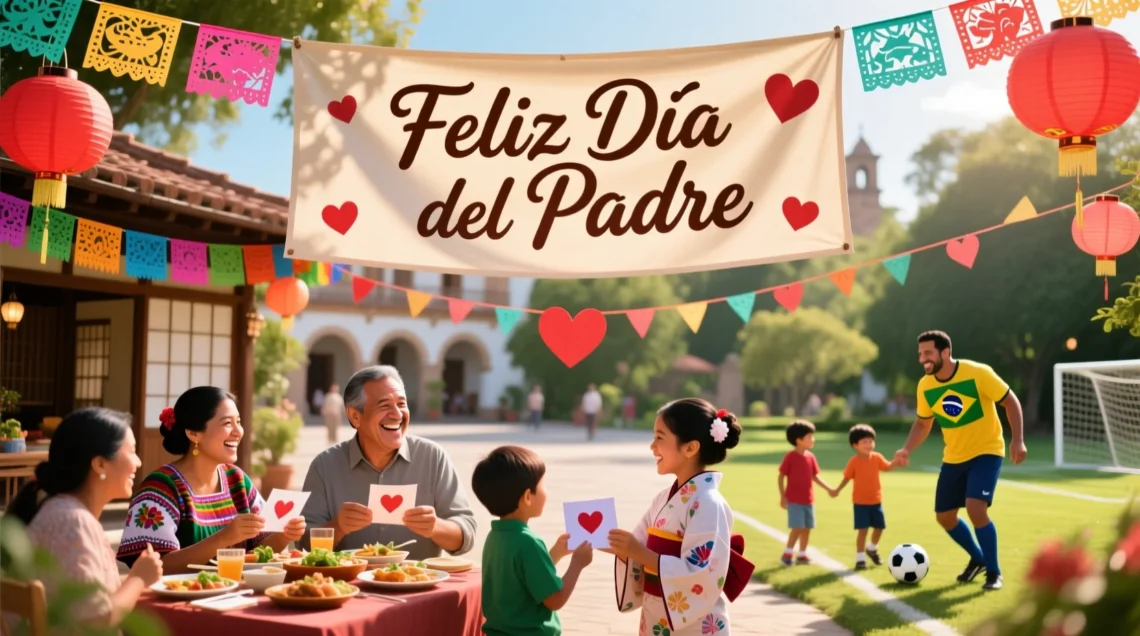
I still remember my first Father’s Day in Madrid. My host family’s children ran into the kitchen with handmade cards shouting, “¡Feliz Día del Padre!” The father’s eyes glistened, not because of the words themselves — but because those words carried gratitude, pride, and love.
That’s when I realized: saying Happy Father’s Day in Spanish is not just about language — it’s about honoring the silent strength and warmth that fathers bring into our lives.
Let’s explore how different cultures celebrate this special day, starting with the Spanish phrase that captures the heart of it all: “Feliz Día del Padre.”
🗺️ Table of Father’s Day Greetings Around the World
| Language | Phrase for “Happy Father’s Day” | Cultural Insight |
|---|---|---|
| Spanish | Feliz Día del Padre | Celebrated on March 19 (St. Joseph’s Day) in Spain and Latin America. |
| English | Happy Father’s Day | Observed on the third Sunday of June; rooted in American tradition. |
| French | Bonne fête des pères | Fathers often receive hand-drawn cards from children. |
| Italian | Buona festa del papà | Celebrated on March 19, honoring Saint Joseph, patron of fathers. |
| German | Alles Gute zum Vatertag | Involves outdoor gatherings and “men’s day” celebrations. |
| Portuguese | Feliz Dia do Pai | Celebrated with family meals and heartfelt notes. |
| Arabic | Eid al-ab sa’id (عيد الأب سعيد) | Expresses deep respect and blessings for fathers. |
| Hindi | पितृ दिवस की शुभकामनाएँ (Pitru divas ki shubhkamnayein) | Modern celebration influenced by global Father’s Day. |
| Mandarin (Chinese) | 父亲节快乐 (Fùqīn jié kuàilè) | Often celebrated with gifts and shared meals. |
| Japanese | 父の日おめでとう (Chichi no hi omedetō) | Simple yet respectful, showing gratitude. |
| Swahili | Siku ya Baba njema | Emphasizes family unity and respect for elders. |
| Zulu | Usuku olunempilo lukaBaba oluhle | Focused on honoring family leadership. |
| Hawaiian | Hauʻoli Lā Makua Kāne | Combines “hauʻoli” (happy) and “makua kāne” (father). |
| Maori | Rā Whakanui i ngā Matua tāne | A day for giving thanks to fathers and male elders. |
| Turkish | Babalar Günü Kutlu Olsun | Means “May your Father’s Day be blessed.” |
🇪🇸 How to Say Happy Father’s Day in Spanish
The phrase “Feliz Día del Padre” literally means “Happy Day of the Father.”
- Feliz = Happy
- Día = Day
- del Padre = of the Father
In Spain, Father’s Day (El Día del Padre) is celebrated on March 19, coinciding with St. Joseph’s Day (El Día de San José) — the symbolic father figure of Christianity.
In Latin America, the date varies, but the sentiment remains the same: a day filled with gratitude, family meals, and affection.
Spanish-speaking cultures emphasize emotion and togetherness. Children write heartfelt notes or recite poems to their fathers. In Mexico, it’s common to say:
“¡Te quiero, papá! ¡Feliz Día del Padre!”
(“I love you, Dad! Happy Father’s Day!”)
Learning how to say Happy Father’s Day in Spanish opens a window into family traditions rooted in warmth, faith, and respect.
🇪🇺 How to Say Happy Father’s Day in European Languages
Europe’s celebration of fathers reflects both ancient traditions and modern family bonds.
- France: “Bonne fête des pères” — celebrated with homemade gifts.
- Italy: “Buona festa del papà” — families gather for sweet treats like zeppole di San Giuseppe.
- Germany: “Alles Gute zum Vatertag” — fathers enjoy outings or hikes with friends.
- Portugal: “Feliz Dia do Pai” — children give symbolic gifts of love.
- Greece: “Χαρούμενη Ημέρα του Πατέρα (Haroumeni Imera tou Patera)” — gratitude and respect are central.
European greetings reflect appreciation through family time and heartfelt gestures, combining cultural heritage with emotional depth.
🌏 How to Say Happy Father’s Day in Asian Languages
In Asia, the word “father” carries deep reverence — often tied to tradition and respect.
- Turkey: “Babalar Günü Kutlu Olsun” — symbolizes blessings and gratitude.
- India: “Pitru divas ki shubhkamnayein” — a newer celebration shaped by global influence.
- China: “Fùqīn jié kuàilè” — families gather to express love and respect.
- Japan: “Chichi no hi omedetō” — often celebrated with handmade gifts and favorite meals.
- Korea: “Abeoji-ui nal chukhahaeyo (아버지의 날 축하해요)” — expresses gratitude through acts of service.
- Arabic-speaking countries: “Eid al-ab sa’id” — combines faith and familial blessings.
- Thailand: Father’s Day is tied to the King’s birthday and celebrated with marigold flowers.
Across Asia, the greeting is less about words and more about acts of love and respect.
🌍 How to Say Happy Father’s Day in African Languages
African cultures often express love through storytelling, community, and shared meals.
- Swahili: “Siku ya Baba njema” — celebrates wisdom and protection.
- Zulu: “Usuku lukaBaba oluhle” — focuses on respect for elders.
- Amharic: “Enkuan le’abat beshita” — “Congratulations to fathers.”
- Yoruba: “O ku ojo baba” — literally “congratulations on Father’s Day.”
- Hausa: “Barka da Ranar Uba” — blessings upon fathers.
- Lingala: “Mbote na Tata na ngai” — “Hello to my father.”
- Somali: “Maalinta Aabbaha faraxsan” — joyful celebration of fatherhood.
Fathers in African societies are honored as storytellers, guides, and community anchors.
🌺 How to Say Happy Father’s Day in Indigenous & Island Languages
Islands and Indigenous cultures celebrate Father’s Day through gratitude and community.
- Hawaiian: “Hauʻoli Lā Makua Kāne” — conveys happiness and appreciation.
- Maori: “Rā Whakanui i ngā Matua tāne” — includes all father figures, not just biological dads.
- Samoan: “Aso fiafia o tamā” — “A happy day for fathers.”
- Cherokee: “Osda Unadoda Uweti” — “Good Father’s Day.”
- Tahitian: “Ia oaoa i te mahana no te metua tane” — may your Father’s Day be joyful.
- Fijian: “Marau na siga ni tama” — “Joyful day of fathers.”
These greetings are heartfelt and spiritual — a reminder that honoring a father means celebrating life itself.
💬 Cultural Insights: Why Father’s Day Matters Everywhere
Fathers have always been the silent pillars — protectors, providers, and teachers.
While every country has different traditions, the emotional core remains constant: gratitude and love.
From the Spanish Feliz Día del Padre to the Japanese Chichi no hi omedetō, the message is universal: thank you for your strength, your guidance, and your endless love.
🌸 Proverbs About Fathers Across Cultures
- Spanish: “El que ama a su padre, honra su vida.” — “He who loves his father honors his life.”
- Chinese: “A father’s virtue is the foundation of the home.”
- Turkish: “Baba gölgedir, gölge giderse güneş yakar.” — “A father is shade; without it, the sun burns.”
- African proverb: “A father is a tree whose roots never die.”
- Italian: “Un padre vale più di cento maestri.” — “A father is worth more than a hundred teachers.”
❓ FAQs
Q1: How do you say Happy Father’s Day in Spanish?
It’s “Feliz Día del Padre.” Pronounced feh-lees dee-ah del pah-dreh.
Q2: When is Father’s Day celebrated in Spain?
On March 19, coinciding with St. Joseph’s Day.
Q3: How do Latin American countries celebrate it?
With family gatherings, gifts, and emotional messages to fathers.
Q4: What’s the meaning behind “Padre”?
“Padre” comes from Latin pater, meaning father — also used to show respect.
Q5: Why is Father’s Day important globally?
It honors sacrifice, guidance, and unconditional love — values shared across all cultures.
❤️ Conclusion: “Feliz Día del Padre” — More Than Just Words
Whether you say “Feliz Día del Padre” in Spanish, “Happy Father’s Day” in English, or “Baba Günü Kutlu Olsun” in Turkish, the emotion remains the same — love, gratitude, and connection.
So this Father’s Day, say it from the heart.
Celebrate not just the man who raised you, but the values he taught you — kindness, courage, and love.
💬 Now it’s your turn:
How do you say “Happy Father’s Day” in your language?
Share it in the comments below and help us build a global celebration of fathers everywhere. 🌍