As a child, I wandered through my grandmother’s garden, marveling at the vibrant petals she called “flores” in Spanish. That word, simple yet vivid, sparked my curiosity about how people name these delicate wonders worldwide. Flowers, symbols of beauty, love, and renewal, hold a special place in every culture.
For example, whether they’re offered in a Japanese cherry blossom festival or woven into a Hawaiian lei, flowers speak a universal language. Let’s explore how the word for “flower” blooms across languages and cultures, revealing shared human admiration for nature’s artistry.
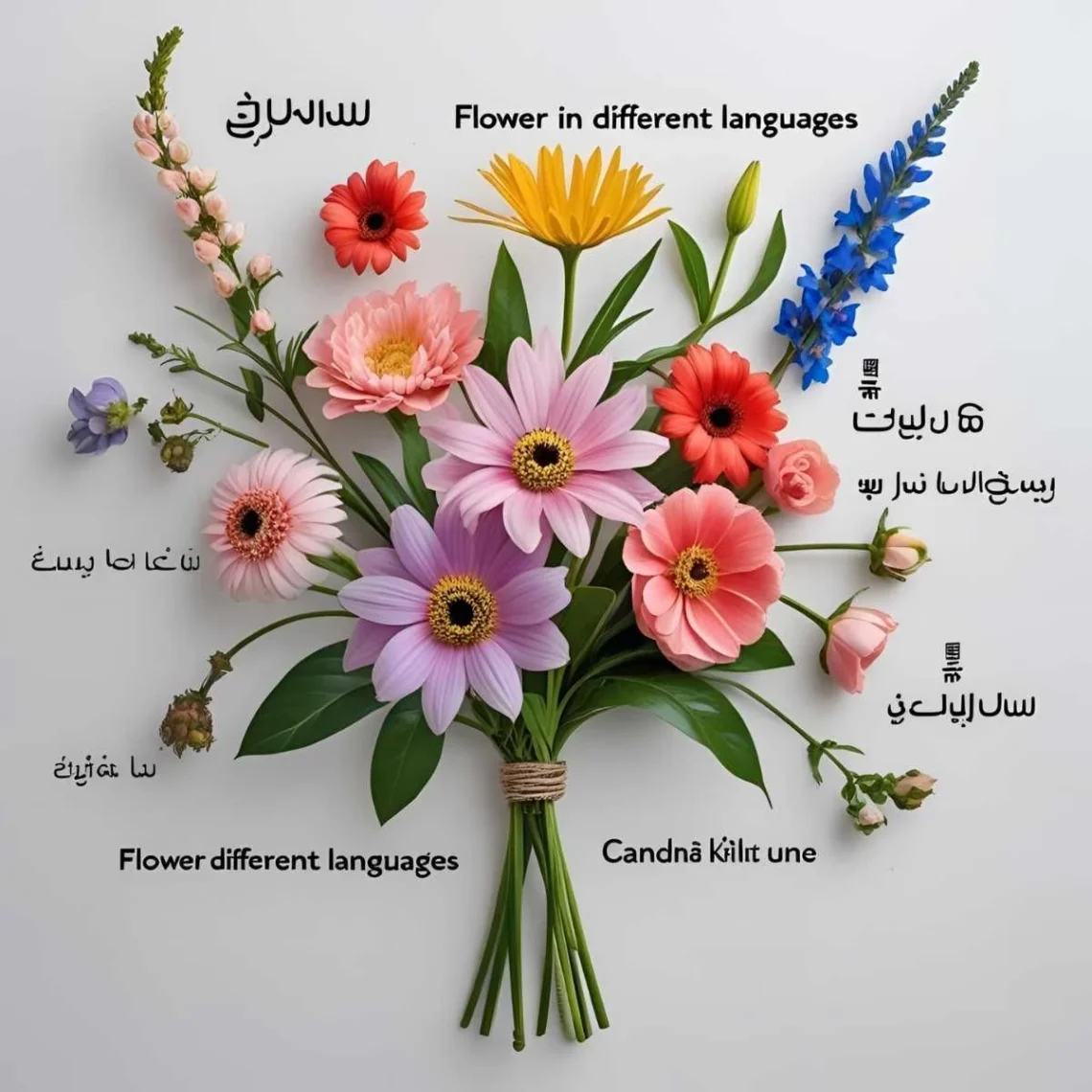
Reference Table: “Flower” in Different Languages
| Language | Word/Phrase | Cultural/Linguistic Insight |
|---|---|---|
| French | Fleur | Evokes romance, often tied to France’s floral art traditions. |
| Spanish | Flor | Reflects the vibrant floral festivals in Latin America and Spain. |
| Italian | Fiore | Suggests beauty, used in poetic expressions of love. |
| German | Blume | Straightforward, mirroring Germany’s practical linguistic style. |
| Mandarin | Huā (花) | Symbolizes prosperity and beauty in Chinese culture. |
| Hindi | Phool (फूल) | Linked to rituals and offerings in Indian traditions. |
| Japanese | Hana (花) | Deeply tied to hanami, the cherry blossom viewing tradition. |
| Korean | Kkot (꽃) | Represents beauty and is celebrated in spring festivals. |
| Arabic | Zahra (زهرة) | Means “bloom” or “beauty,” used poetically across 20+ countries. |
| Swahili | Maua | Reflects the vibrant floral landscapes of East Africa. |
| Zulu | Imbali | Evokes pride in South Africa’s rich biodiversity. |
| Yoruba | Òdòdó | Tied to celebrations and spiritual offerings in Nigeria. |
| Maori | Puāwai | Means “to blossom,” reflecting growth in New Zealand’s culture. |
| Hawaiian | Pua | Central to lei-making, symbolizing love and aloha. |
| Cherokee | Atsilvsgi | Connected to nature’s sacred role in Native American traditions. |
European Languages: Petals of Poetry
European languages weave romance and tradition into the word for “flower.” For instance, in French, “fleur” carries a romantic air, often linked to France’s history of floral art in perfumery and gardens like Versailles. Meanwhile, Spanish uses “flor,” a term vibrant as the flower festivals in Spain and Latin America, where blooms adorn celebrations. Additionally, Italian’s “fiore” evokes poetic beauty, frequently used in love songs and literature. In contrast, German’s “Blume” is straightforward, reflecting the culture’s directness, yet it’s cherished in Germany’s garden-centric traditions. Thus, these terms highlight Europe’s blend of poetic and practical reverence for flowers, from romantic gestures to cultural festivals.
Asian Languages: Blossoms of Symbolism
Asia’s diverse languages reflect deep cultural ties to flowers. For example, in Mandarin, “huā” symbolizes prosperity and beauty, often featured in Chinese art and Lunar New Year decorations. In Hindi, “phool” is integral to Indian rituals, where flowers like marigolds are offered in temples or weddings. Similarly, Japanese uses “hana,” a word tied to the cherished hanami tradition of cherry blossom viewing, symbolizing life’s fleeting beauty. Korean’s “kkot” is celebrated in spring festivals, representing renewal and joy. Finally, Arabic’s “zahra,” used across over 20 countries like Morocco and Iraq, means “bloom” and appears in poetry, reflecting the region’s literary heritage. Consequently, these terms show Asia’s reverence for flowers as symbols of life, spirituality, and beauty.
African Languages: Nature’s Vibrant Voice
In African languages, the word for “flower” reflects nature’s role in community and tradition. For instance, Swahili’s “maua,” used in over 20 countries like Kenya and Tanzania, evokes the region’s lush floral landscapes, often used in celebrations. In Zulu, “imbali” signifies pride in South Africa’s biodiversity, where flowers like proteas are national symbols. Similarly, Yoruba’s “òdòdó,” common in Nigeria, is tied to spiritual offerings and weddings, symbolizing joy and purity. These terms, spoken in communal settings like markets or ceremonies, highlight Africa’s deep connection to nature’s beauty and its role in cultural rituals.
Indigenous & Island Languages: Blossoms of Connection
Indigenous and island languages emphasize flowers as symbols of growth and community. For example, Maori’s “puāwai” in New Zealand means “to blossom,” reflecting personal and cultural growth. In Hawaiian, “pua” is central to lei-making, where flowers symbolize love and the spirit of aloha. Similarly, Cherokee’s “atsilvsgi” connects to nature’s sacred role in Native American traditions, often used in ceremonies. In Samoan, the term “fuga” reflects the Pacific’s use of flowers in dances and rituals, symbolizing community bonds. Across these cultures, from New Zealand to the Cherokee Nation, flowers represent connection, celebrated in communal and spiritual practices.
Cultural Insights: The Timeless Bloom of Words
The word for “flower” has evolved with humanity’s reverence for nature. For instance, in ancient Greece, terms like “anthos” (flower) were linked to myths about gods creating blooms. In ancient Egypt, “zahra” appeared in hieroglyphs, symbolizing life and offerings. Moreover, in African traditions, flowers like “òdòdó” are tied to spiritual rituals, reflecting ancestral connections. In Asia, the shift from agrarian to modern societies has elevated terms like “hana” to cultural icons, as seen in Japan’s cherry blossom festivals. These words carry centuries of meaning, from European floral art to Pacific island lei traditions, uniting cultures in their love for nature’s beauty.
Proverbs and Sayings: Floral Wisdom
- French: “Every flower blooms in its own time.” This reflects patience in growth and beauty.
- Hindi: “A flower’s fragrance spreads love.” It ties flowers to emotional connections.
- Swahili: “A flower does not choose its garden.” This emphasizes beauty in diversity.
- Japanese: “A flower falls, yet its beauty remains.” It highlights the fleeting nature of life.
- Yoruba: “Flowers bring light to the heart.” This connects blooms to joy and hope.
FAQs
Why do some words for “flower” sound similar?
Languages with shared roots, like Indo-European (French’s “fleur,” Spanish’s “flor”) or Arabic-influenced Swahili (“maua”), often have similar terms due to historical exchanges.
What’s the oldest term for “flower”?
Greek’s “anthos” (circa 8th century BCE) is among the earliest, linked to myths and poetry.
How do cultures shape the term’s use?
In spiritual cultures (e.g., African, Indigenous), flowers are tied to rituals, while in artistic cultures (e.g., European, Asian), they inspire poetry and festivals.
Conclusion
From “fleur” in France to “maua” in Tanzania, the word for “flower” blooms with universal admiration for nature’s beauty. Each term, whether the poetic “hana” in Japanese or the communal “pua” in Hawaiian, reflects cultural values while celebrating a shared love for flowers. Consequently, these words remind us that beauty, like a flower, transcends borders, uniting all people in appreciation of life’s delicate wonders. How do you say “flower” in your language, and what does it mean to you? Share your stories below—we’re excited to hear your voice!