When I first heard a little girl in Tokyo call out, “Neko!”, her voice was filled with such affection that even the stray cat turned its head proudly — as if understanding every syllable.
That moment reminded me of something beautiful: every language has its own way of expressing love for cats, yet the emotion behind it — warmth, curiosity, companionship — feels universal.
Learning how to say cat in Japanese isn’t just about vocabulary; it’s about understanding how Japan (and the world) sees these mysterious, graceful creatures. Let’s explore how different cultures name the animal that has captured our hearts for centuries — the cat.
🗺️ Table: How to Say “Cat” in Different Languages
| Language | Word/Phrase for “Cat” | Cultural or Linguistic Insight |
|---|---|---|
| Japanese | Neko (猫) | Symbol of luck, grace, and companionship in Japanese culture. |
| Turkish | Kedi | Cats are beloved and protected, especially in Istanbul. |
| English | Cat | Derived from Latin “cattus”; universal and simple. |
| French | Chat (sha) | Associated with elegance and mystery. |
| Spanish | Gato / Gata | Used with gender forms; “el gato” (male), “la gata” (female). |
| Italian | Gatto / Gatta | Often used affectionately; cats symbolize independence. |
| German | Katze | Common household pet; “Kätzchen” means kitten. |
| Arabic | Qitt (قط) | Cats are respected in Islamic culture; the Prophet Muhammad loved cats. |
| Hindi (India) | Billi (बिल्ली) | Associated with domestic life and superstition in folklore. |
| Swahili | Paka | Cats in African culture symbolize protection and agility. |
| Russian | Kot / Koshka (Кот / Кошка) | Gendered terms; Russia has strong cultural affection for cats. |
| Mandarin (Chinese) | Māo (猫) | Represents gentleness and balance; common in idioms. |
| Korean | Goyangi (고양이) | Cats are seen as cute and mystical, often featured in K-pop culture. |
| Maori (New Zealand) | Ngeru | Modern adaptation of “cat” integrated into indigenous language. |
| Zulu | Ikati | Similar to “cat”; African culture associates them with cleverness. |
🇯🇵 How to Say Cat in Japanese: “Neko” (猫)
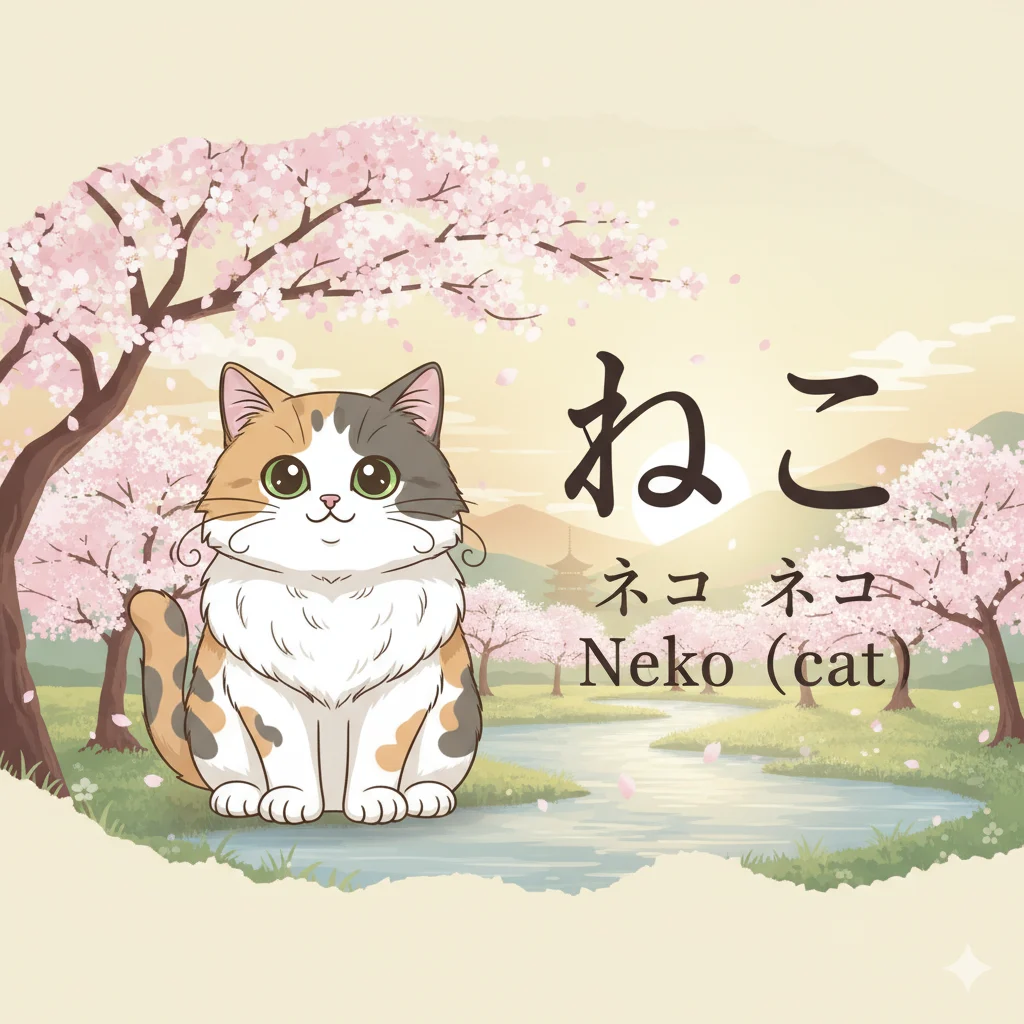
The Japanese word for cat is “Neko” (pronounced neh-koh).
It’s simple, melodic, and carries emotional weight — much like the animal itself.
🐾 Cultural Insight:
Cats hold a sacred and cultural significance in Japan. You can see them everywhere — from the waving Maneki-neko figurines (the “beckoning cat” of good fortune) to temples that protect strays.
In anime and pop culture, cats symbolize curiosity, mystery, and independence. The word “Neko” even forms the root of other expressions like:
- Neko-chan (ねこちゃん): A cute or affectionate way to say “kitty.”
- Neko no te mo karitai (猫の手も借りたい): A proverb meaning “I’d even borrow a cat’s paw” — said when someone is extremely busy!
Learning how to say cat in Japanese opens a small window into the nation’s gentle affection for all living beings.
🇪🇺 How to Say Cat in European Languages
Europe’s languages have long adored cats — not just as pets but as symbols of mystery, magic, and independence.
- France — Chat: Cats here are associated with elegance and grace; “chat noir” (black cat) appears in famous art and folklore.
- Spain — Gato / Gata: Latin warmth and gendered affection — cats often have human-like personalities in Spanish literature.
- Italy — Gatto: Italians adore cats for their independence; they often call them “micio” as a nickname.
- Germany — Katze: A word as practical as the culture; “Hauskatze” means “house cat.”
- Russia — Kot / Koshka: Cats are treasured — Russia even celebrates International Cat Day annually.
- Turkey — Kedi: Istanbul is famously known as the City of Cats; “Kedi” represents freedom and kindness.
Europe’s cats reflect its people — graceful, diverse, and full of personality.
🌏 How to Say Cat in Asian Languages
Asia’s relationship with cats is layered with symbolism, spirituality, and folklore.
- China — Māo (猫): A sound-alike to the English “meow,” cats here represent calm and balance.
- Korea — Goyangi: Cats are icons of charm in modern K-pop culture.
- India — Billi: Cats appear in Indian myths, sometimes as mysterious, clever creatures.
- Arabic-speaking countries — Qitt: Revered since ancient times; Islam honors cats as clean and noble animals.
- Thailand — Maew: Cats were once temple guardians, believed to ward off evil spirits.
- Vietnam — Mèo: Featured in the Vietnamese zodiac instead of the rabbit — symbolizing agility and luck.
- Indonesia — Kucing: Common word that reflects cats’ friendly, domestic presence.
Across Asia, cats blend spirituality and daily life — soft paws walking through temples, homes, and hearts.
🌍 How to Say Cat in African Languages
Africa’s connection with cats goes back thousands of years — from the mighty lions of Egypt to domestic companions in homes across the continent.
- Swahili — Paka: Everyday pet name; “paka wa nyumbani” means “house cat.”
- Zulu — Ikati: Cats symbolize cleverness and independence.
- Yoruba (Nigeria) — Ologbo: Associated with watchfulness and mystery.
- Amharic (Ethiopia) — Dimet: Derived from ancient Semitic roots.
- Somali — Bisad: Cats are seen as protectors of homes.
- Berber (North Africa) — Amcic: Reflects linguistic diversity of Maghreb regions.
- Hausa (West Africa) — Mage: Used both for cats and small felines.
From goddess Bastet of Egypt to modern African households, cats have always symbolized grace and guardianship.
🌺 How to Say Cat in Indigenous & Island Languages
Islands and indigenous cultures also hold cats in affectionate and symbolic light.
- Hawaiian — Popoki: Derived from an old English sailor term, now fully Hawaiian.
- Maori — Ngeru: Adapted into the Maori lexicon; cats are beloved pets.
- Samoan — Pusi: Derived from English “pussycat,” a warm term for feline friends.
- Cherokee — Wesa: Cats symbolize curiosity and connection to nature.
- Fijian — Koli ni pusi: Means “cat dog” — reflecting cultural adaptation of terms.
- Tahitian — Tio: Rooted in old Polynesian language; gentle and melodic.
- Haitian Creole — Chat: Borrowed from French but used affectionately in local speech.
Indigenous languages remind us how adaptable love for cats truly is — crossing oceans and generations.
💬 Cultural Insights: The Cat’s Journey Through Civilization
Cats were worshipped in Egypt, feared in medieval Europe, and adored in modern Japan.
They’ve traveled with sailors, ruled temples, and inspired poets.
The Japanese “Neko” and Turkish “Kedi” come from ancient trade routes that spread not just goods — but affection for our four-legged friends.
Today, from Tokyo to Cairo to New York, “cat” — in any language — means comfort, mystery, and companionship.
🐾 Proverbs & Sayings About Cats Around the World
- Japanese: “Neko ni koban” — “Giving a gold coin to a cat,” meaning wasting something on someone who doesn’t appreciate it.
- Turkish: “Kedi uzanamadığı ciğere mundar der.” — “The cat calls the liver spoiled when it can’t reach it.”
- English: “Curiosity killed the cat.”
- Arabic: “The cat dreams of mice.”
- Chinese: “A cat has nine lives.”
Proverbs prove that no matter where you go, the cat is both loved and admired — often as a mirror of human nature.
❓ FAQs
Q1: What is the Japanese word for cat?
The Japanese word for cat is Neko (猫).
Q2: How do you pronounce “Neko”?
Pronounced neh-koh, with equal stress on both syllables.
Q3: What does “Neko” symbolize in Japan?
It symbolizes good luck, independence, and affection — the waving Maneki-neko cat is a national symbol of fortune.
Q4: Are there idioms involving cats in Japanese?
Yes — “Neko no te mo karitai” means “I’d even borrow a cat’s paw,” said when someone is overwhelmed with work.
Q5: Why are cats important in Japanese culture?
Because they are associated with harmony, spiritual luck, and companionship. Many Japanese temples and towns (like Aoshima Island) are famous for their cats.
❤️ Conclusion: From “Neko” to “Kedi” — A Global Language of Love
Whether you say Neko, Kedi, Gato, or Paka, every word carries the same meaning: affection, curiosity, and comfort.
Learning how to say cat in Japanese is more than a linguistic lesson — it’s a celebration of how humans connect with animals and each other.
💬 Now it’s your turn:
What do you call “cat” in your language? Comment below and share how your culture celebrates these fascinating creatures. 🐾