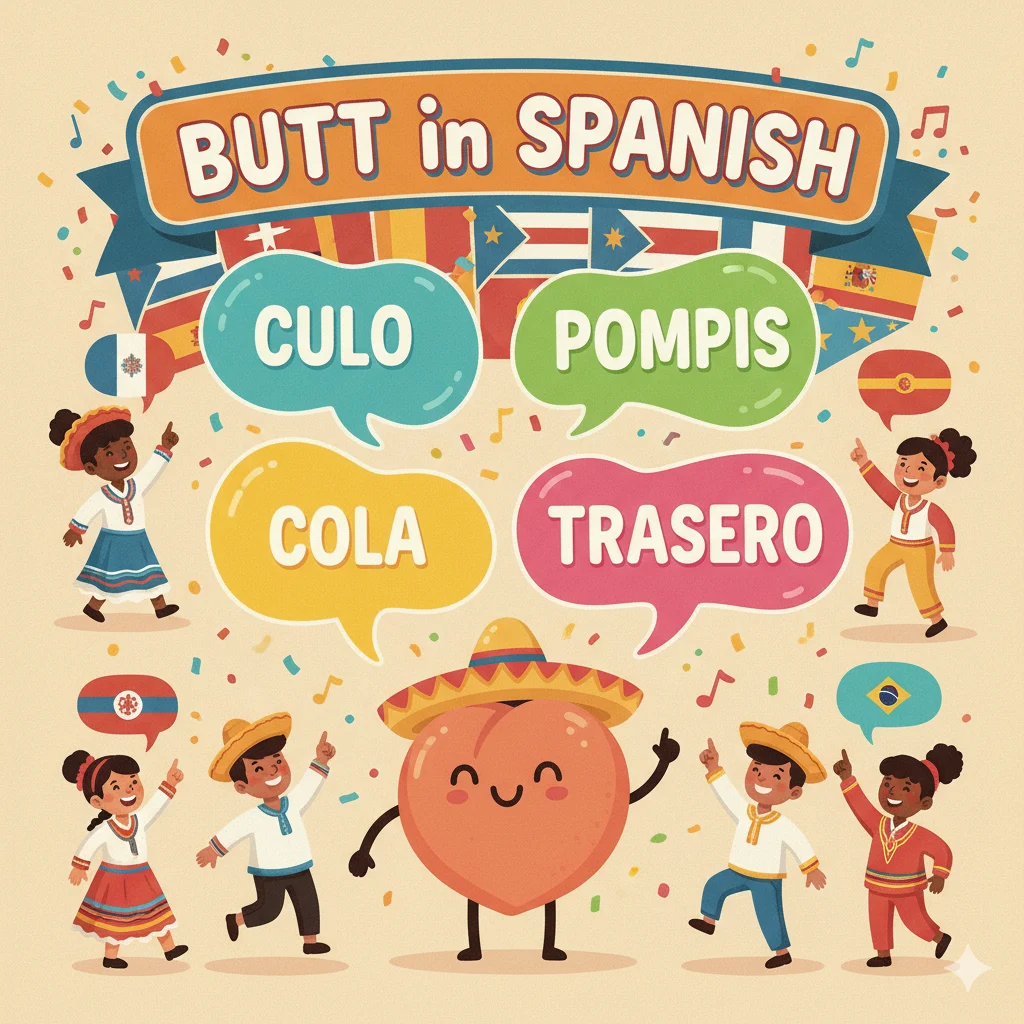
Language can be beautiful, emotional — and sometimes a little funny.
When we learn new languages, we often start with polite phrases like “hello” or “thank you.” But curiosity doesn’t stop there. Sooner or later, everyone asks the question: “How do you say butt in Spanish?”
The answer isn’t as simple as one word. Like many expressions, it depends on where you are, who you’re talking to, and how polite you want to sound.
In Spain, people might use a cheeky term with a laugh; in Mexico, it might sound softer; in Argentina, it might even be affectionate or humorous.
Just like greetings reveal culture and warmth, even a lighthearted word like “butt” reveals something deeper — how language carries our attitudes toward humor, modesty, and everyday life.
🗺️ Table of Spanish Words for “Butt” (Across Regions)
| Country / Region | Word or Phrase | Cultural Insight |
|---|---|---|
| Spain | Culo | Common but informal; used casually among friends, not in formal speech. |
| Mexico | Pompis | Polite, family-friendly version often used with children or in casual talk. |
| Argentina | Cola / Traste | “Cola” is standard; “traste” adds humor or playfulness. |
| Chile | Potito | A cute, diminutive version used jokingly or affectionately. |
| Colombia | Cola / Nalgas | “Cola” is general; “nalgas” is anatomical and neutral. |
| Peru | Trasero | Formal and polite; used in most contexts. |
| Dominican Republic | Nalga / Trasero | Depending on tone, can be formal or humorous. |
| Puerto Rico | Nalgas / Pompis | Common and friendly; context matters. |
| Venezuela | Cola | Neutral and widely used, works in both formal and informal speech. |
| Cuba | Pompis / Nalgas | Soft and friendly; “nalgas” is the most standard. |
| Ecuador | Trasero | Formal and non-offensive, suitable for general use. |
| Costa Rica | Pompis / Trasero | Both are common and polite. |
| Uruguay | Cola / Traste | Informal and humorous tone, depending on context. |
| Spain (Formal) | Trasero / Glúteos | Medical or polite terms, often used in education or fitness. |
| Latin America (General) | Cola | The safest all-purpose word, friendly and neutral. |
🇪🇸 European Spanish: Wit and Everyday Humor
In Spain, the most common word for “butt” is “culo.” It’s informal and direct — a little cheeky but not necessarily rude when used among friends.
However, in formal or polite conversation, Spaniards prefer “trasero” or “glúteos.”
💡 Cultural Note
Spaniards often use humor to lighten conversations. A phrase like “mover el culo” (to move your butt) simply means “get moving” — a playful expression used daily.
In Spain, language often walks the fine line between humor and honesty, making even an everyday term like “culo” a sign of cultural authenticity and comfort.
🇲🇽 Latin American Spanish: Variety, Softness, and Respect
Across Latin America, language tends to be softer and more respectful, especially around anatomy-related words.
- In Mexico, “pompis” is the go-to family-friendly term, even used with children.
- In Colombia and Venezuela, “cola” is neutral and widely accepted.
- In Peru and Ecuador, “trasero” fits all settings — polite and formal.
- Argentina and Uruguay add a dose of humor with “traste,” giving everyday conversation a touch of personality.
💬 Expression Example
- “Me duele el trasero de tanto sentarme.”
→ “My butt hurts from sitting so long.”
Simple, harmless, and part of daily speech.
The richness of Spanish dialects shows how humor and politeness coexist beautifully in communication.
🌎 Cultural Insights: Humor, Modesty, and Meaning
The variety of Spanish words for “butt” reflects not only linguistic diversity but also cultural attitudes toward the body and humor.
In Spain, humor is direct; in Latin America, it’s more tender or euphemistic.
Historically, polite society avoided anatomy-related words — leading to creative, often affectionate alternatives like pompis, potito, or colita.
In modern pop culture, Spanish music and film often use these words playfully — making them part of everyday conversation without offense.
📚 Proverbs and Expressions
While there aren’t many ancient proverbs about the “butt,” Spanish does have humorous sayings related to movement, laziness, and humor:
- “Levanta el trasero.” — “Get up and get going.”
- “Mover el culo.” — “Move your butt” (motivational slang).
- “Sentarse sobre los laureles.” — “To sit on your laurels” (to get lazy after success).
Even here, humor plays a role — showing that Spanish embraces life with warmth, laughter, and humanity.
❓ FAQs
Q1: What’s the most polite way to say “butt” in Spanish?
Use “trasero” or “glúteos” in polite or formal situations.
Q2: What’s the common slang word for “butt” in Spanish?
“Culo” in Spain, “pompis” in Mexico, and “cola” across Latin America.
Q3: Are these words offensive?
Not usually — it depends on tone and context. Words like pompis or trasero are neutral and widely accepted.
Q4: Why are there so many variations?
Because Spanish is spoken in over 20 countries — each region shapes its language based on humor, politeness, and culture.
Q5: What’s the formal or medical term?
Glúteos — used in anatomy, fitness, or medical settings.
❤️ Conclusion: What Language Teaches Us About Being Human
Learning how to say butt in Spanish isn’t just a funny curiosity — it’s a reminder of how creative and colorful human language can be.
Each word — from culo to pompis — carries a cultural fingerprint, revealing how people balance humor, respect, and connection in daily speech.
So, next time someone asks you how to say “butt” in Spanish, you’ll not only know the answer — you’ll know the story behind it.
💬 Now it’s your turn:
What’s a funny or interesting word you’ve learned in another language? Share it in the comments and let’s celebrate the lighter, fun side of language together! 🌍