Numbers are everywhere — in time, money, ages, and even love stories. But have you ever stopped to think about how words for numbers reflect the culture that speaks them?
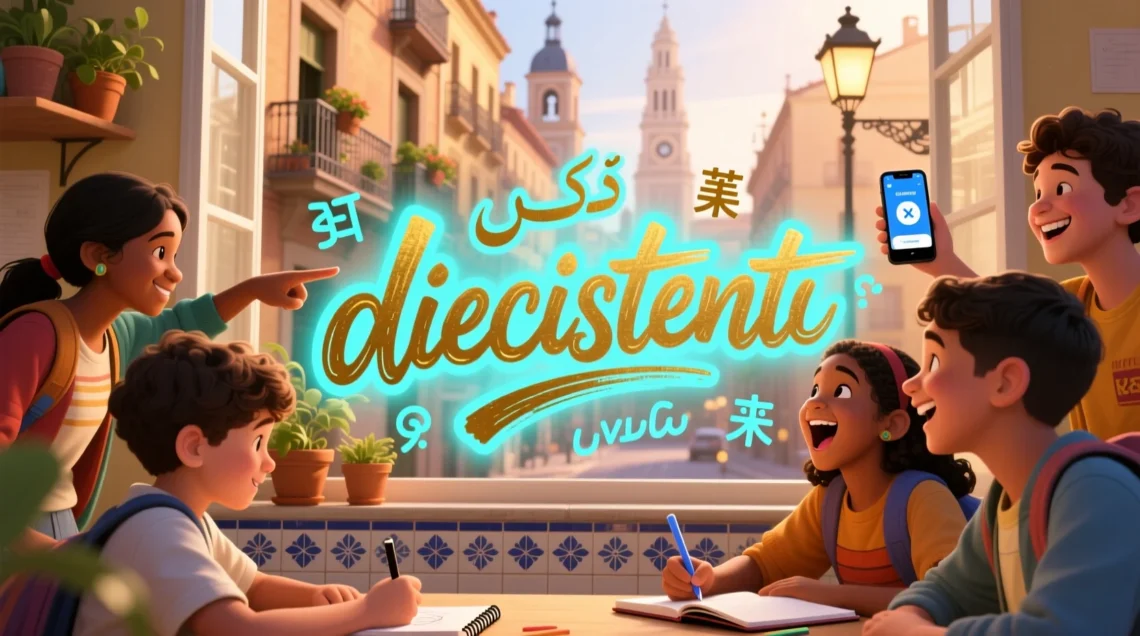
When I first learned Spanish, one of my early discoveries was how melodic numbers sound. “Diecisiete,” meaning 17 in Spanish, rolled off the tongue like poetry. It wasn’t just math — it was music.
Across the world, the way we say numbers tells a deeper story — of history, rhythm, and cultural identity. Let’s explore how the number 17 (“diecisiete”) is expressed, understood, and celebrated in Spanish and beyond.
🔢 What Does “17” Mean in Spanish?
In Spanish, 17 is written as diecisiete (pronounced dyeh-see-syeh-teh).
It comes from combining diez (10) and siete (7) — literally, “ten and seven.”
This construction is consistent with other Spanish teen numbers:
- 16 → dieciséis
- 17 → diecisiete
- 18 → dieciocho
- 19 → diecinueve
Grammar Tip:
Spanish numbers from 16 to 19 are compound words — joined together, unlike English (“seventeen”) which merges but sounds smoother. Spanish preserves both root words, giving the number more rhythm and clarity.
🇪🇸 The Cultural Meaning of “Diecisiete” in Spanish-Speaking Countries
In Spanish culture, numbers often have emotional and symbolic meaning.
- In Spain, the number 17 is sometimes considered unlucky — similar to how 13 is viewed in other countries. This belief traces back to Roman numerals: XVII, which can be rearranged to spell “VIXI” in Latin, meaning “I have lived” — implying death.
- In Latin America, however, 17 doesn’t carry bad luck. In fact, it’s neutral or even positive — often associated with birthdays, school years, and milestones.
- In Mexico and Argentina, “diecisiete años” (seventeen years) is an age of youth, music, and independence — frequently celebrated in pop songs and teen memories.
So, when learning how to say 17 in Spanish, you’re not just memorizing a number — you’re touching a word shaped by history, superstition, and life itself.
🗺️ Numbers Across Languages — How “17” Is Said Worldwide
| Language | Word/Phrase for “17” | Cultural Insight |
|---|---|---|
| Spanish | Diecisiete | Means “ten and seven”; rhythmic and clear. |
| English | Seventeen | Derived from Old English “seofontīene.” |
| French | Dix-sept | Literally “ten-seven”; similar to Spanish formation. |
| Italian | Diciassette | Shares Latin roots; considered unlucky in Italy. |
| German | Siebzehn | A compound word meaning “seven-ten.” |
| Turkish | On yedi | Literally “ten seven”; simple and logical. |
| Arabic | سبعة عشر (sab‘a ashar) | Means “seven ten”; follows the Arabic numeral order. |
| Japanese | Jū-nana / Jū-shichi (じゅうなな / じゅうしち) | Two valid ways to say 17; different contexts prefer one form. |
| Hindi | सत्रह (satrah) | Smooth-sounding; common in daily counting. |
| Swahili | Kumi na saba | “Ten and seven”; similar structure to Spanish. |
| Russian | Семнадцать (semnadtsat’) | Literally “seven-on-ten.” |
| Greek | Δεκαεπτά (dekaeptá) | “Ten-seven”; reflects ancient Greek numeric logic. |
| Portuguese | Dezessete | Shares Latin base; used across Brazil and Portugal. |
| Korean | 십칠 (sip-chil) | “Ten-seven”; structured and efficient. |
| Maori | Tekau mā whitu | “Ten and seven”; traditional Polynesian numeric phrasing. |
🌐 European Languages: Numbers with Personality
In European tongues, the way “17” is expressed often mirrors the region’s linguistic ancestry.
- French “dix-sept”, Italian “diciassette”, and Spanish “diecisiete” all descend from Latin — proof of Rome’s linguistic legacy.
- Italian and Spanish both treat 17 as a number tied to superstition — linked to the Roman “VIXI.”
- In English and German, the number sounds powerful and steady: “seventeen,” “siebzehn.”
Each version may sound different, but all share the same structure — tens before units, showing how mathematical logic transcends borders.
🌏 Asian Languages: Harmony in Counting
In Asia, numbers carry both mathematical and spiritual weight.
- In Japan, 17 can be said as “jū-nana” or “jū-shichi” — with choice depending on clarity and flow.
- In China, “shí qī (十七)” means “ten seven,” directly mirroring the Arabic and Turkish systems.
- In Korea, “sip-chil (십칠)” uses the same logical compound form.
- In India, “satrah” has soft sounds, aligning with Hindi’s poetic rhythm.
- In Arabic-speaking cultures, “sab‘a ashar” also reads as “seven ten,” aligning with the ancient Semitic numeral order.
Asia’s approach to numbers often emphasizes balance, clarity, and flow — a linguistic reflection of cultural harmony.
🌍 African and Indigenous Languages: Numbers of Community and Heritage
- In Swahili (East Africa), 17 is “kumi na saba” — literally “ten and seven,” maintaining simplicity and connection to everyday life.
- In Zulu, it’s “ishumi nesikhombisa,” showing rich linguistic patterning.
- In Yoruba, “mókànlá-dínlógún” means “three short of twenty,” a fascinating counting tradition rooted in base-20 numeration.
- In Maori, “tekau mā whitu” carries both function and beauty — a rhythmic, chant-like expression.
In many African and indigenous cultures, numbers are not just abstract — they link trade, ritual, and storytelling.
💬 Cultural Insights: The Story Behind 17
The number 17 holds unique symbolic weight worldwide:
- In Italy and Spain, it whispers superstition.
- In Japan, 17 is tied to poetic traditions — haikus often have 17 syllables.
- In Christianity, 17 symbolizes overcoming the trials of 16 with the new beginnings of 1 — spiritual victory.
When you say “diecisiete” in Spanish, you’re using a word that’s mathematical, historical, and deeply human.
🌸 Number Proverbs and Sayings from Different Cultures
- Spanish: “A los diecisiete, todo parece posible.” — “At seventeen, everything seems possible.”
- Japanese: “Jūshichi no kotoba wa uta ni naru.” — “The words of seventeen become a poem.”
- Turkish: “Her sayının bir hikayesi vardır.” — “Every number has a story.”
- English: “Seventeen is youth — the edge of discovery.”
Numbers, like greetings, connect us in ways we often overlook.
❓ FAQs
Q1: How do you say 17 in Spanish?
The number 17 in Spanish is diecisiete, pronounced dyeh-see-syeh-teh.
Q2: What does diecisiete literally mean?
It combines “diez” (ten) and “siete” (seven) — literally “ten and seven.”
Q3: Why is 17 considered unlucky in some Spanish-speaking regions?
The superstition originates from Roman numerals (XVII) rearranging to “VIXI,” meaning “I have lived,” implying death in Latin.
Q4: How do you write 17th in Spanish?
It’s decimoséptimo (masculine) or decimoséptima (feminine).
Q5: How do you say 17 years old in Spanish?
You say “tengo diecisiete años” — meaning “I am seventeen years old.”
❤️ Conclusion: More Than Just a Number
Learning how to say 17 in Spanish — diecisiete — isn’t only about numbers; it’s about understanding a culture that values sound, structure, and meaning.
Every language gives life to numbers in its own voice — some sing, some whisper, but all connect us through time and tradition.
So next time you count in Spanish, let “diecisiete” remind you of how beautifully humans express even the simplest ideas.
💬 Your Turn:
What number or word fascinates you most in another language? Share your thoughts in the comments — let’s celebrate the poetry of numbers together!