It’s strange how something that represents nothing can mean so much.
When I first began learning Spanish, the word “Cero” caught my attention. It’s short, smooth, and simple — yet it carries deep meaning. In Spanish, cero (pronounced SEH-roh) doesn’t just stand for the number zero; it’s a symbol of a beginning, a clean slate, and infinite possibilities.
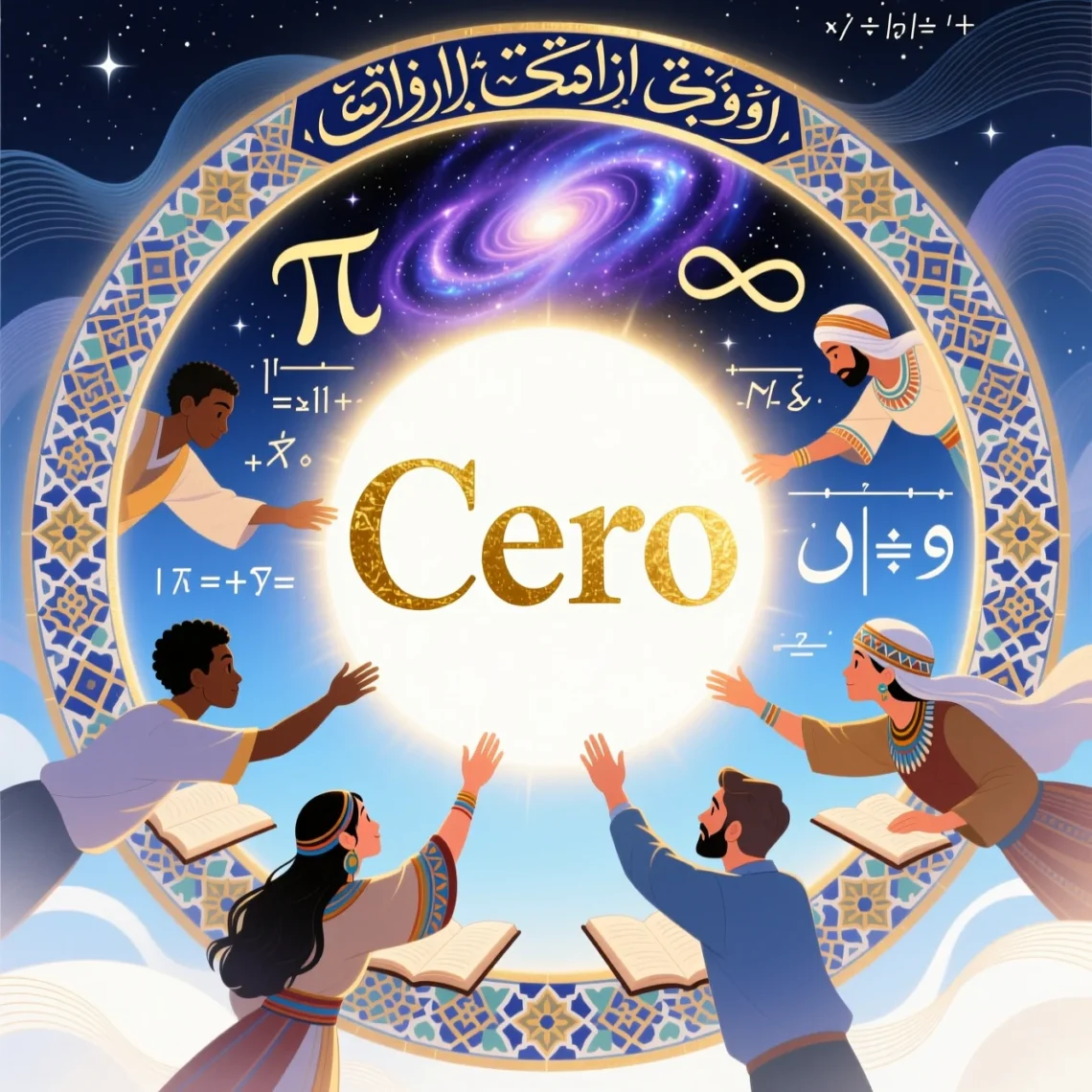
Just as “Merhaba” connects hearts, “Cero” connects minds — through science, mathematics, philosophy, and language. Every civilization that embraced zero unlocked a new level of understanding about the world.
Today, we explore not only how to say zero in Spanish but also how cultures across the globe view nothingness — and why that nothing might just be everything.
🔢 Table: How to Say “Zero” in Different Languages
| Language | Word for Zero | Cultural or Linguistic Insight |
|---|---|---|
| Spanish | Cero | Derived from Arabic “ṣifr,” symbolizing the birth of modern numerals. |
| English | Zero | From French and Latin roots meaning “nothing.” |
| French | Zéro | Shares the same Arabic origin; used both mathematically and metaphorically. |
| Italian | Zero | Same pronunciation as English; widely used in sports (e.g., “zero points”). |
| German | Null | Represents both emptiness and starting point. |
| Arabic | Ṣifr (صفر) | The original root of “zero”; foundation of the numeral system. |
| Hindi | Shunya (शून्य) | Ancient Sanskrit term meaning “void” or “emptiness.” |
| Chinese (Mandarin) | Líng (零) | Symbolizes both emptiness and the potential for fullness. |
| Japanese | Rei / Zero (れい / ゼロ) | Used interchangeably in math and daily life. |
| Russian | Nol’ (Ноль) | Represents nothingness but also a starting point. |
| Swahili | Sifuri | Derived from Arabic “ṣifr,” showing the spread of trade and mathematics. |
| Turkish | Sıfır | Same root as Arabic; brought through Islamic scholarship. |
| Greek | Miden (Μηδέν) | Philosophical roots in ancient Greece’s view of existence. |
| Portuguese | Zero | Commonly used across Lusophone countries. |
| Korean | Yeong (영) | Associated with wholeness and the circle of life. |
🇪🇸 How Do You Say Zero in Spanish?
In Spanish, zero is said as “Cero” — pronounced SEH-roh.
The word originates from the Arabic “ṣifr”, which passed through Medieval Latin (“zephirum”) and Italian before reaching Spanish. This journey mirrors how knowledge, numbers, and philosophy traveled across continents during the Middle Ages.
Cultural Insight:
In Spanish-speaking cultures, “cero” goes beyond math. It appears in idioms and everyday expressions:
- “Partir de cero” — to start from zero (begin again, start over).
- “Cero estrés” — zero stress (a lifestyle goal).
- “Cero tolerancia” — zero tolerance (firmness or strictness).
Thus, “cero” symbolizes both emptiness and renewal — a concept both humble and powerful.
🇪🇺 How to Say Zero in European Languages
Europe’s languages inherited zero through trade and scholarship, turning “nothing” into a cornerstone of science.
- French — Zéro: Used in sports (“zéro point”) and idioms (“partir de zéro”).
- Italian — Zero: Common in business, weather, and scores (“zero gradi” = zero degrees).
- German — Null: A strong word symbolizing emptiness, yet also beginnings.
- Portuguese — Zero: Shared pronunciation with Spanish; represents equality (“zero differences”).
- Greek — Miden: Philosophically linked to the question of existence and non-existence.
Europe’s embrace of zero reshaped how humans understood numbers, the universe, and logic.
🌏 How to Say Zero in Asian Languages
Asia gave birth to the concept of zero — a gift that changed the world.
- India — Shunya (शून्य): The birthplace of zero. In Hindu and Buddhist philosophy, “shunya” means the void, the infinite potential that precedes creation.
- China — Líng (零): The word represents the sound of raindrops, symbolizing emptiness that gives life.
- Japan — Rei (れい): Literally means “spirit” or “soul”; a poetic connection between zero and purity.
- Korea — Yeong (영): Symbolic of wholeness and eternity.
- Arabic — Ṣifr (صفر): The origin of the entire zero concept; gave rise to global numeric systems.
- Thai — Soon (ศูนย์): Means “center” or “nothing,” reflecting balance and harmony.
Asian languages teach us that zero is not absence — it is potential waiting to be realized.
🌍 How to Say Zero in African Languages
Africa’s trade routes carried both language and mathematics — including the concept of zero.
- Swahili — Sifuri: Derived from Arabic “ṣifr,” spread through Islamic education.
- Yoruba — Odo: Literally “nothing,” used in daily counting and proverbs.
- Zulu — Uziro: Borrowed from English; reflects linguistic adaptation.
- Amharic — Ziro: Used both in numeracy and modern slang.
- Somali — Eber: Symbolic of emptiness or clean slate.
In African societies, zero often marks rebirth — the starting point before progress.
🌺 How to Say Zero in Indigenous & Island Languages
For many Indigenous cultures, the concept of zero came through contact with explorers or missionaries, yet their own philosophies already embraced balance, cycles, and renewal.
- Hawaiian — ʻAʻole helu (literally “no number”) — reflects natural simplicity.
- Maori — Kore: Means “nothing,” “void,” or “non-being,” aligning with spiritual balance.
- Cherokee — Tla-go: Means “none,” used in counting and negation.
- Fijian — Sega: “None” or “nothing,” tied to harmony with nature.
- Inuit — Nulliq: Means “none” — practical for counting in harsh environments.
- Samoan — Leai: Means “nothing,” often used in both numbers and daily life.
These expressions remind us that zero is not emptiness — it’s peace, balance, and reset.
💬 Cultural Insights: How “Zero” Changed Civilization
The story of zero is a story of human progress.
From India’s “Shunya” to Arabic “Ṣifr” to Spanish “Cero”, the concept traveled through scholars, traders, and explorers — revolutionizing mathematics, astronomy, and philosophy.
Without zero, there would be no algebra, no computers, no modern economy. Yet beyond numbers, “zero” symbolizes fresh starts, humility, and limitless potential — something every culture understands in its own way.
🌸 Proverbs and Sayings About “Zero”
- Spanish: “Empezar de cero” — “To start from zero.”
- English: “Zero to hero” — transformation through effort.
- Arabic: “From nothing came everything.”
- Japanese: “Zero is full of possibilities.”
- Hindi: “Shunya se sab kuch” — “Everything comes from emptiness.”
The wisdom of zero lies in its paradox — it’s nothing, yet everything begins from it.
❓ FAQs
Q1: How do you say zero in Spanish?
You say “Cero” — pronounced SEH-roh.
Q2: What is the meaning of “Cero” in Spanish culture?
It means zero but also symbolizes new beginnings, as seen in phrases like “empezar de cero.”
Q3: Where does the Spanish word “Cero” come from?
It comes from the Arabic “ṣifr,” meaning empty or void, which evolved through Latin and Italian.
Q4: Why is zero important in history?
Zero revolutionized mathematics and science, originating in ancient India and spreading globally through Arabic scholars.
Q5: What’s the philosophical meaning of zero?
Zero represents balance, potential, humility, and renewal — a universal truth across civilizations.
❤️ Conclusion: The Beauty of “Cero” — Nothing and Everything
Knowing how to say zero in Spanish — Cero — gives you more than a vocabulary word; it gives you a piece of human history.
From Sanskrit scrolls to Spanish classrooms, from the silence of nothingness to the creation of infinity, zero unites the world in its quiet power.
So, next time you count down to “zero,” remember — you’re echoing the wisdom of centuries.
💬 Your Turn:
How do you say zero in your language? Comment below and share the meaning it holds in your culture! Let’s celebrate the universal magic of “nothing.”