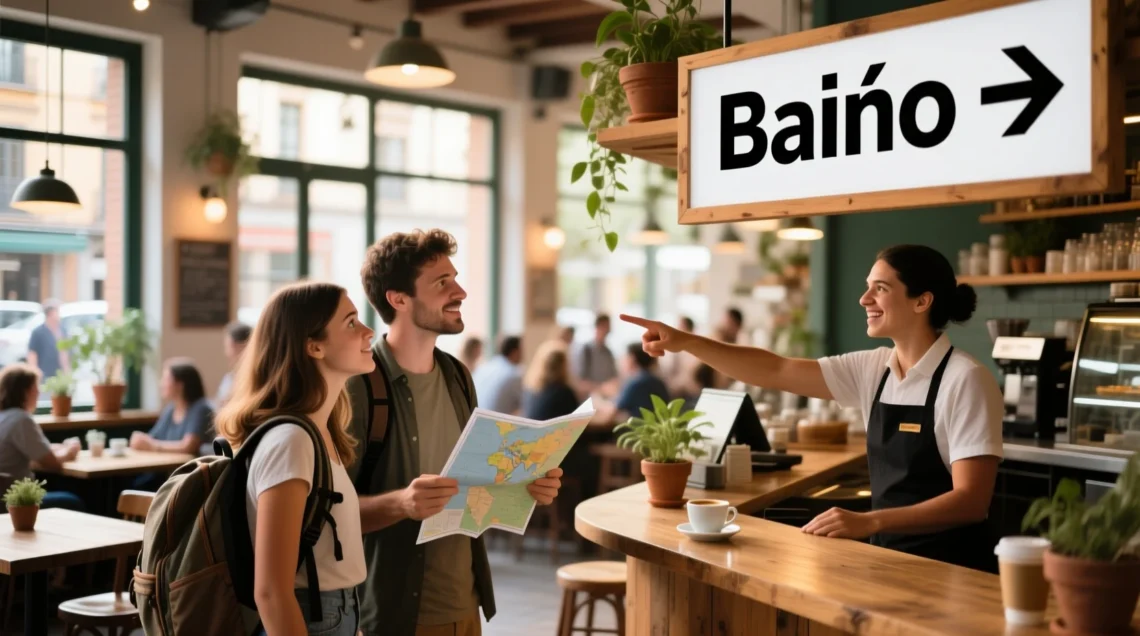
We’ve all been there — in a new country, desperately needing a restroom, and realizing… we don’t know how to ask for it!
When I first traveled through Madrid, I found myself in a cozy café surrounded by cheerful chatter. After my third cup of coffee, I nervously approached the barista and asked, “¿Dónde está el baño?” — “Where is the toilet?” The smile she gave me wasn’t just polite; it was understanding, universal, and oddly comforting.
That day, I realized something funny but profound: even a word as practical as “toilet” carries culture, emotion, and etiquette. Learning how to say toilet in Spanish isn’t just about translation — it’s about understanding how people communicate comfort, respect, and need across borders.
🗺️ Table: How to Say “Toilet” Around the World
| Language | Word/Phrase for Toilet | Cultural Insight |
|---|---|---|
| Spanish | Baño / Aseo / Servicios | “Baño” is most common; “aseo” is polite, “servicios” used in public areas. |
| English | Toilet / Restroom / Bathroom | “Restroom” is preferred in formal settings; “toilet” is straightforward. |
| French | Toilettes | Always plural; commonly used and polite. |
| Italian | Bagno | Similar to Spanish; used both for bathroom and bath. |
| German | Toilette / WC | “WC” is widely used in signs; “Toilette” is formal. |
| Portuguese | Banheiro | In Brazil, “banheiro”; in Portugal, “casa de banho.” |
| Arabic | Hammam / Mirhad | “Hammam” means bath; “mirhad” is formal. |
| Hindi | Shauchalay (शौचालय) | Used in official or public contexts. |
| Mandarin (Chinese) | Cèsuǒ (厕所) | Literal word for toilet; direct but polite. |
| Japanese | Toire (トイレ) | Borrowed from English; commonly used and acceptable. |
| Swahili | Choo | Used casually in everyday conversation. |
| Zulu | Indlu yangasese | Means “private room”; culturally modest. |
| Turkish | Tuvalet | From French “toilette”; widely used across Turkey. |
| Russian | Tualet (Туалет) | Direct equivalent; used universally. |
| Hawaiian | Lua | Traditional word for bathroom or pit; still used today. |
🇪🇸 How Do You Say Toilet in Spanish?
The Spanish word for “toilet” is baño (pronounced BAH-nyo).
Depending on the region, you may also hear:
- Aseo — more polite and formal, used in restaurants and hotels.
- Servicios — often seen on public restroom signs.
Example Sentences:
- “¿Dónde está el baño?” — Where is the bathroom?
- “¿Puedo usar el aseo, por favor?” — May I use the restroom, please?
Cultural Tip:
In Spanish-speaking countries, asking for the “baño” is considered perfectly polite. However, tone and manners matter — adding por favor (please) always goes a long way.
🇪🇺 European Languages: Practical Politeness
In Europe, the word for “toilet” reflects social etiquette and cultural comfort.
- France: “Les toilettes” — essential plural form; politeness is key.
- Italy: “Bagno” — simple and versatile, used for bathroom and bath.
- Germany: “Toilette” or “WC” — clarity and practicality come first.
- Portugal: “Casa de banho” — literally “house of bath.”
- Greece: “Toualéta” — borrowed from French, widely recognized.
Europeans often distinguish between formal and informal terms, showing that even restrooms have linguistic manners!
🌏 Asian Languages: Respect and Modesty
In Asia, discussions around restrooms are often shaped by modesty and formality.
- Japan — Toire (トイレ): Comes from “toilet,” yet said with politeness.
- China — Cèsuǒ (厕所): Practical, used in public signs; respectful tone matters.
- India — Shauchalay (शौचालय): Official term; “bathroom” or “toilet” used conversationally.
- Arabic Countries — Hammam: Historically linked to bathhouses, now means restroom.
- Korea — Hwajangshil (화장실): Means “powder room”; considered polite.
- Thailand — Hong nam: Literally “water room”; soft and graceful.
In many Asian cultures, cleanliness and humility shape language — even when talking about everyday necessities.
🌍 African Languages: Community and Simplicity
Africa’s greetings and daily words often carry community meaning, and the word “toilet” is no exception.
- Swahili — Choo: The common word across East Africa.
- Zulu — Indlu yangasese: Literally “private house.”
- Yoruba — Igbale omi: Means “place of water.”
- Amharic — Bet mus: “House of water,” showing respect for modesty.
- Hausa — Bayan gida: Literally “behind the house”; reflects traditional outdoor restrooms.
- Lingala — Ndako ya mayi: “Water house.”
African expressions often highlight discretion — a polite way to maintain dignity and respect.
🌺 Island & Indigenous Languages: Nature and Simplicity
Island cultures, often closer to nature, use beautiful, simple words for everyday life.
- Hawaiian — Lua: Ancient word meaning pit or restroom.
- Maori — Wharepaku: “Little house”; affectionate and modest.
- Samoan — Faleuila: “House of washing”; poetic and functional.
- Tahitian — Fare haaputu manava: “House for relief.”
- Cherokee — Ula: Rarely used today but historically common.
Even when discussing private matters, these cultures weave respect and poetry into language.
💬 Cultural Insights: The Etiquette of Asking for the Bathroom
Knowing how to say toilet in Spanish (or any language) is more than vocabulary — it’s social intelligence.
In Spain or Latin America, a polite smile and “¿Dónde está el baño, por favor?” go further than words alone.
In Japan, a slight bow accompanies the question.
In France, tone and timing matter.
How we ask says as much about us as what we ask for. Across the world, people respond kindly when approached with respect — especially when it’s a universal human need!
🌸 Proverbs and Expressions Related to Cleanliness
- Spanish proverb: “La limpieza es la mitad de la salud.” — “Cleanliness is half of health.”
- Turkish saying: “Temizlik imandandır.” — “Cleanliness is part of faith.”
- Arabic proverb: “An-naẓāfa min al-īmān.” — “Cleanliness is from faith.”
- English saying: “Cleanliness is next to godliness.”
Cleanliness, like greetings, connects us across faiths and nations.
❓ FAQs
Q1: How do you say toilet in Spanish?
The most common word is baño, but you can also use aseo (formal) or servicios (public).
Q2: How do you pronounce baño?
Pronounced BAH-nyo, with a soft “ny” sound like “canyon.”
Q3: Is it rude to ask for the toilet in Spain?
Not at all! Just remember to add por favor (please).
Q4: What’s the difference between baño and aseo?
Baño is general and common; aseo is more polite or used in professional settings.
Q5: What does “¿Dónde está el baño?” mean?
It means “Where is the bathroom?” — the most essential Spanish travel phrase!
❤️ Conclusion: Language, Respect, and Being Human
Learning how to say toilet in Spanish isn’t glamorous — but it’s deeply human.
It’s about respect, practicality, and connection.
Whether it’s baño, toilette, or choo, the word reminds us that all humans share the same needs — and the same kindness when helping each other out.
So next time you travel, say it with a smile:
“¿Dónde está el baño, por favor?” 💧