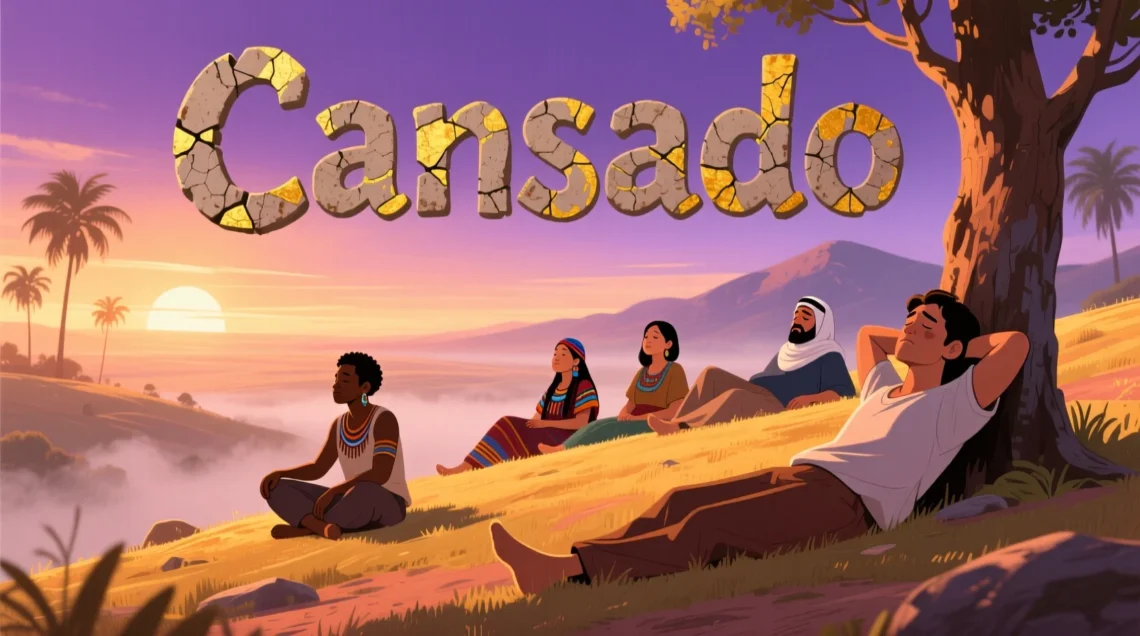
We’ve all felt it — that deep sigh after a long day, that moment when our body whispers, “enough.”
When I was traveling through Madrid, I remember a café owner asking me, “¿Estás cansado?” — “Are you tired?”
There was something comforting about the way she said it. The word “cansado” didn’t just describe exhaustion — it carried empathy. It meant “I see you, I understand.”
Learning how to say tired in Spanish goes beyond vocabulary; it’s about understanding how cultures express care, emotion, and humanity. Because no matter where we are, the feeling of being tired — and the desire for rest — connects us all.
🗺️ Table: How to Say “Tired” in Different Languages
| Language | Word/Phrase for “Tired” | Cultural Insight |
|---|---|---|
| Spanish | Cansado / Cansada | Means “tired”; gendered word showing male (cansado) and female (cansada) forms. |
| English | Tired | A universal word used for physical, emotional, or mental fatigue. |
| French | Fatigué / Fatiguée | Commonly used, often with “Je suis…” (I am). |
| Italian | Stanco / Stanca | Reflects both physical and emotional tiredness. |
| German | Müde | Used in daily life, also symbolically (“Ich bin müde von allem” – “I’m tired of everything”). |
| Turkish | Yorgun | Means weary; carries emotional depth. |
| Arabic | Taʿbān (تعبان) | Reflects both exhaustion and humility. |
| Japanese | Tsukareta (疲れた) | Used to express fatigue politely or casually. |
| Mandarin (Chinese) | Lèi (累) | Simple yet expressive; tone changes meaning. |
| Hindi | Thakā huā (थका हुआ) | Reflects literal and metaphorical tiredness. |
| Swahili | Nimechoka | Means “I am tired”; emotional and direct. |
| Zulu | Ngikhathele | Expresses deep fatigue; used both physically and emotionally. |
| Korean | Pigonhaeyo (피곤해요) | Polite expression for tiredness. |
| Russian | Ustal (Устал / Устала) | Gendered form; deeply emotional in Russian literature. |
| Portuguese | Cansado / Cansada | Cognate with Spanish; shows shared Latin roots. |
🇪🇸 How Do You Say Tired in Spanish?
In Spanish, “tired” is translated as “cansado” (for males) or “cansada” (for females).
✨ Pronunciation:
- Cansado — [kahn-SAH-doh]
- Cansada — [kahn-SAH-dah]
🧠 Usage Examples:
- Estoy cansado. → “I’m tired.”
- Ella está cansada. → “She’s tired.”
- Después del trabajo, todos estamos cansados. → “After work, we’re all tired.”
💬 Cultural Insight:
In Spanish-speaking countries, “cansado” isn’t just physical. It can mean emotionally or mentally drained.
When someone says “Estoy cansado de todo” (“I’m tired of everything”), it reveals depth, fatigue of the soul — not just the body.
Spanish culture, rich in emotion and empathy, often uses tone and expression to color the meaning. The same phrase can sound like exhaustion or quiet reflection.
🇪🇺 How to Say “Tired” in European Languages
Europe’s languages each give a unique twist to the feeling of tiredness:
- French — Fatigué: Expresses elegance even in exhaustion; often said with a soft sigh.
- Italian — Stanco: Reflects the Italian passion even in fatigue — melodious and expressive.
- German — Müde: Has a serious undertone; can mean weary from life’s challenges.
- Turkish — Yorgun: Deeply emotional; used for physical and spiritual tiredness alike.
- Greek — Kourasmenos (Κουρασμένος): Derived from “to toil”; reflects effort and labor.
Europe’s expressions for tiredness often carry a poetic melancholy — a cultural reflection of life’s rhythm between work and rest.
🌏 How to Say “Tired” in Asian Languages
Asia’s words for “tired” often blend physical fatigue with emotional understanding:
- Japanese — Tsukareta (疲れた): Often used after work; can also mean “I’m worn out.”
- Mandarin — Lèi (累): Simple and powerful; context changes meaning from slight fatigue to deep exhaustion.
- Hindi — Thakā huā: Reflects both physical tiredness and weariness of spirit.
- Arabic — Taʿbān (تعبان): Used across Arab-speaking countries, expressing genuine human fatigue.
- Korean — Pigonhaeyo: Polite and soft; often used to express mild tiredness.
- Thai — Nued (เหนื่อย): Can mean tired or overwhelmed, often said with gentle tone.
Asian languages often turn tiredness into an emotional state — a way to express empathy and connection.
🌍 How to Say “Tired” in African Languages
In African societies, expressing tiredness is often tied to community rhythm and emotion:
- Swahili — Nimechoka: Literally “I am tired”; straightforward but heartfelt.
- Zulu — Ngikhathele: Means deep fatigue — often said after long labor or emotional days.
- Yoruba — Rẹ́rìn: Expresses physical tiredness but can also imply mental fatigue.
- Amharic — Däfäräku: Used in Ethiopia to show respectful expression of fatigue.
- Somali — Daalan: Reflects exhaustion with humility.
- Hausa — Gajiya: Can mean tired, weary, or worn down — layered in meaning.
Across Africa, “tiredness” often symbolizes not weakness but humanity — an acknowledgment that rest is sacred and deserved.
🌺 How to Say “Tired” in Indigenous & Island Languages
These languages often carry poetic depth in their words for tiredness:
- Hawaiian — Māluhiluhi: Means both “tired” and “peacefully calm.”
- Maori — Ngenge: Reflects fatigue from both work and emotional effort.
- Samoan — Vaivai: Means tired or weak; also expresses humility.
- Cherokee — Digaloga: Implies a need for rest and renewal.
- Tahitian — Moemoeā: Connects tiredness with dreams and rest.
- Fijian — Oca: A simple, heartfelt word for tired.
- Inuit — Qanittuq: Expresses weariness after effort, often due to harsh weather.
- Tagalog — Pagod: Common Filipino word for tired; often used with “sobrang” (very).
In many island and indigenous cultures, tiredness is connected to balance — between the body, the spirit, and nature.
💬 Cultural Insights: The Language of Fatigue
The way we say “tired” reveals our relationship with work, rest, and emotion.
In Spanish and Latin cultures, being cansado is part of being human — it’s accepted, not shamed.
In Japan, “tsukareta” might be followed by a bow or smile, turning exhaustion into grace.
In Africa, to say “nimechoka” is to say, “I’ve given my all today.”
Across the globe, tiredness isn’t just physical — it’s a shared language of empathy and humanity.
🌸 Proverbs About Tiredness Around the World
- Spanish: “Hasta el más fuerte necesita descansar.” — “Even the strongest need rest.”
- Turkish: “Yorgun atın yemesi az olur.” — “A tired horse eats little.” (Rest is necessary for renewal.)
- Chinese: “Resting is to walk farther.”
- African Proverb: “Even the moon needs rest to shine again.”
- Italian: “Chi dorme non piglia pesci.” — “He who sleeps doesn’t catch fish.” (Balance between rest and effort.)
❓ FAQs
Q1: How do you say tired in Spanish?
You say “cansado” (for males) or “cansada” (for females).
Q2: How do you pronounce “cansado”?
Pronounced kahn-SAH-doh, with stress on the middle syllable.
Q3: What does “estoy cansado” mean?
It means “I am tired.”
Q4: Can “cansado” mean emotionally tired?
Yes, it’s often used to express emotional or mental exhaustion, not just physical fatigue.
Q5: What are other Spanish words for tiredness?
Agotado (exhausted), rendido (worn out), and fatigado (fatigued) are common alternatives.
❤️ Conclusion: Finding Humanity in “Cansado”
Knowing how to say tired in Spanish isn’t just about translation — it’s about connection.
When you say “estoy cansado” in Spain or Latin America, you’re not just stating a fact; you’re inviting empathy.
Because around the world, being tired means the same thing: we’ve tried, we’ve cared, and we’ve lived.
💬 Now it’s your turn:
How do you say “tired” in your language? Share your word in the comments and help us build a global dictionary of feelings! 🌍