There’s something almost sacred about the moment you step into the shower.
The water washes away fatigue, the day’s worries, and sometimes even sadness.
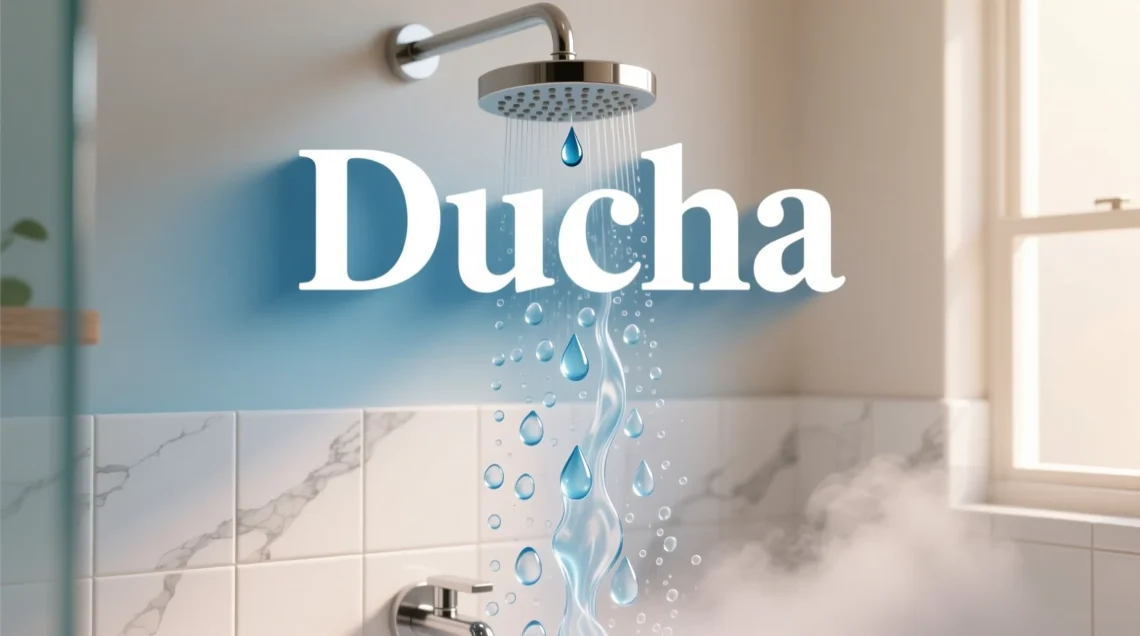
When I first lived in Spain, my host mother would say, “Voy a darme una ducha,” which means “I’m going to take a shower.” The word “ducha” rolled off her tongue softly — simple, everyday, but full of comfort and renewal.
That moment reminded me that showering isn’t just a daily habit — it’s a global ritual of cleansing, healing, and restarting.
From ancient Roman baths to Japanese onsens and Turkish hammams, every culture connects water to renewal.
So, let’s explore what “ducha” means in Spanish — and how the concept of taking a shower unites people worldwide.
💧 Table: How to Say “Shower” in Different Languages
| Language | Word/Phrase for “Shower” | Cultural Insight |
|---|---|---|
| Spanish | Ducha | Means “shower”; also refers to the act of bathing and the shower fixture. |
| English | Shower | From Old English “scūr,” meaning “a sudden rain.” |
| French | Douche | Same origin as “ducha”; used for both the act and the device. |
| Italian | Doccia | Similar Latin root; reflects the Mediterranean bath tradition. |
| German | Dusche | Derived from the same Latin source “ductio,” meaning “to lead (water).” |
| Portuguese | Chuveiro / Duche | Common in Brazil (chuveiro) and Portugal (duche). |
| Arabic | Dushe / دشّ (dush) | Borrowed from European languages; now widely used. |
| Japanese | シャワー (shawā) | Borrowed from English “shower”; used mostly for modern bathrooms. |
| Mandarin (Chinese) | 淋浴 (lín yù) | Means “to bathe under falling water.” |
| Hindi (India) | शॉवर (shower) / स्नान (snān) | “Snān” is the traditional ritual bath; “shower” is modern. |
| Swahili | Bafu la kuoga | Literally “bath for bathing”; reflects communal water culture. |
| Turkish | Duş | Derived from French “douche”; popularized during modernization. |
| Russian | Душ (dush) | Also from the French “douche”; used both literally and metaphorically. |
| Greek | Ντους (Ntous) | Modern Greek borrowed it from French; very similar pronunciation. |
| Korean | 샤워 (syawo) | Borrowed from English “shower”; common in everyday life. |
🇪🇸 How Do You Say Shower in Spanish?
In Spanish, the word “shower” is “ducha.”
It comes from the French word “douche,” which in turn originated from Latin “ductio” — meaning “to lead water.”
Pronunciation: DOO-cha
💡 Common Phrases:
- Tomar una ducha — To take a shower
- Voy a darme una ducha — I’m going to take a shower
- La ducha está caliente/fría — The shower is hot/cold
🧼 Cultural Insight:
In Spain and Latin America, “la ducha” is not just functional — it’s symbolic of refreshment and renewal.
During hot summers in Madrid or humid days in Mexico City, a ducha fría (cold shower) feels like a gift.
In Spanish households, you’ll often hear:
“Después del trabajo, nada mejor que una buena ducha.”
“After work, nothing’s better than a good shower.”
🇪🇺 How to Say Shower in European Languages
Europe has long celebrated bathing — from ancient Roman spas to modern wellness cultures.
- France — Douche: The origin of “ducha,” also used metaphorically for rejuvenation (une douche froide = “a wake-up call”).
- Italy — Doccia: Italians treat shower time as self-care, part of their love of beauty and ritual.
- Germany — Dusche: Efficient and practical, often part of daily rhythm.
- Portugal — Duche: Reflects a blend of utility and refreshment.
- Greece — Ntous: Shows the modern adoption of European linguistic roots.
In Europe, the word for shower often reflects luxury and cleanliness — a private moment of calm in busy lives.
🌏 How to Say Shower in Asian Languages
Asia offers a beautiful contrast between traditional and modern bathing practices.
- Japan — シャワー (shawā): While modern showers are common, onsens (hot springs) remain cultural treasures.
- China — 淋浴 (lín yù): Historically tied to spiritual purification, especially before ceremonies.
- India — स्नान (snān): Bathing holds religious significance in Hinduism — it’s a symbol of moral and physical cleansing.
- Korea — 샤워 (syawo): Borrowed from English; cleanliness is highly valued.
- Turkey — Duş: Influenced by the Ottoman hammam tradition, connecting social and spiritual well-being.
- Thailand — อาบน้ำ (aap naam): Literally “to bathe with water”; represents renewal and respect.
Across Asia, showers may differ in technology and tradition — but their emotional meaning remains cleansing and rebirth.
🌍 How to Say Shower in African Languages
Africa’s relationship with water and cleansing reflects community and gratitude.
- Swahili — Kuoga: Means “to bathe”; bathing is a refreshing ritual often done outdoors in warm climates.
- Zulu — Ukugeza: Symbolizes cleansing not just of the body but also of the soul.
- Yoruba — Wẹ Ara: Literally “wash the body”; daily hygiene deeply rooted in respect.
- Amharic — Mäkänät: Represents both personal and ritual cleansing.
- Somali — Qubeyso: Associated with purity and readiness.
- Hausa — Wanka: Linked with well-being and spiritual health.
For many African cultures, washing or showering is an act of gratitude — a moment of renewal given by nature.
🌴 How to Say Shower in Indigenous & Island Languages
From tropical islands to indigenous communities, water often carries sacred energy.
- Hawaiian — ʻAuʻau: Means “to bathe”; water is viewed as spiritually healing.
- Maori — Horoi: Means “to wash”; tied to rituals of purification.
- Samoan — Taele: Common for “to bathe”; often a joyful communal activity.
- Fijian — Kaukau: Everyday bathing; reflects connection with rivers and oceans.
- Cherokee — Ama-sga: Literally “to cleanse with water”; water is sacred.
- Tahitian — Tahe: Symbolizes natural purity and beauty.
- Inuit — Imaqtuq: Refers to washing with melted ice or snow — a ritual of resilience.
Across these languages, the shower — or bath — is seen not just as cleanliness, but renewal of the spirit and balance with nature.
💬 Cultural Insights: The History of Bathing and the Modern “Shower”
The word “shower” originated from the Old English “scūr,” meaning a sudden burst of rain.
In Spanish, “ducha” grew from Latin ductio — literally, “leading water.”
Historically, bathing rituals have symbolized rebirth, health, and purification.
From the public Roman baths (thermae) to the Turkish hammams and Japanese onsens, water remains humanity’s most ancient medicine.
Today, whether it’s a five-minute morning shower or a long evening soak, it’s our personal time of reflection and peace.
🪞 Proverbs and Sayings About Bathing and Renewal
- Spanish: “Después de la tormenta, viene la calma.” — “After the storm comes calm.”
- Japanese: “After bathing, the heart is pure.”
- Turkish: “Clean water runs where it is respected.”
- African proverb: “Those who wash together, stay together.”
- Latin: “Mens sana in corpore sano.” — “A healthy mind in a healthy body.”
❓ FAQs
Q1: How do you say shower in Spanish?
The Spanish word for “shower” is ducha (pronounced DOO-cha).
Q2: What does “ducha” mean?
“Ducha” refers to both the physical shower device and the act of taking a shower.
Q3: How do you say “take a shower” in Spanish?
You can say “tomar una ducha” or “darse una ducha.” Both are correct.
Q4: Is “ducha” used in all Spanish-speaking countries?
Yes, but some regions (like Mexico) also use “baño” informally to mean both bath and shower.
Q5: What’s the origin of the word “ducha”?
It comes from the French “douche,” which came from the Latin “ductio” (to lead or guide water).
❤️ Conclusion: A Simple Word with Deeper Meaning
Whether it’s ducha in Spanish, shower in English, or duş in Turkish — water brings renewal, comfort, and clarity.
Next time you turn on your shower, take a moment to feel the universal beauty of that act — it’s something every culture cherishes.
💧 Now it’s your turn!
How do you say “shower” in your language? Drop your version in the comments below — let’s celebrate the world’s shared ritual of renewal. 🌍