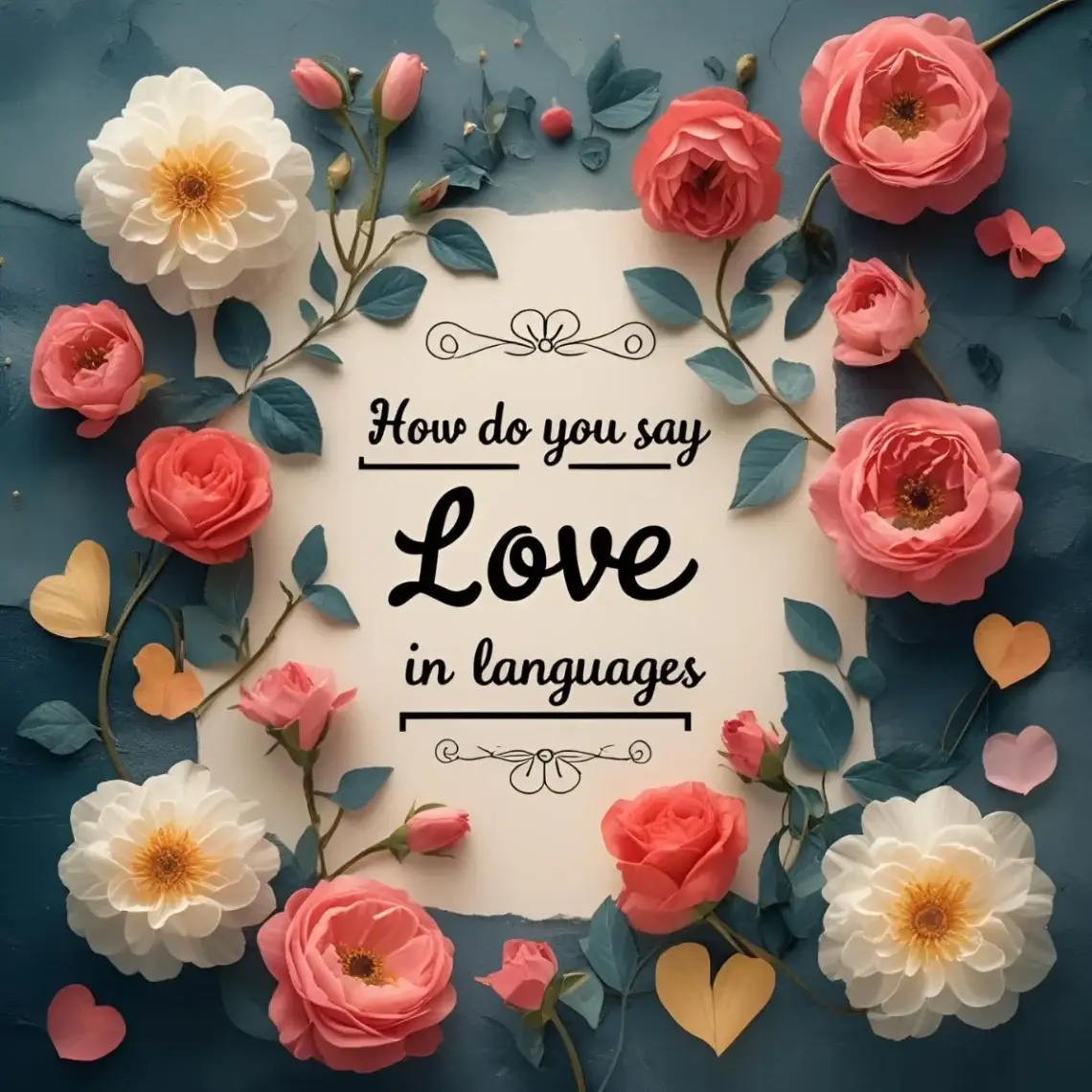
Love binds humanity, a word that crosses borders and warms hearts everywhere. I recall my grandmother’s soft “ti amo” in Italian, whispered during childhood summers in Tuscany, carrying a warmth that needed no translation. This simple phrase sparked my curiosity about how people express love worldwide. Each culture adds its unique voice to this universal emotion, whether through a parent’s lullaby or a poet’s verse. Let’s explore how “love” is spoken across languages, revealing its diverse expressions and shared meaning.
Reference Table: The Word for Love in Different Languages
| Language | Word/Phrase for Love | Cultural/Linguistic Insight |
|---|---|---|
| French | Amour | Sparks images of romance, tied to France’s poetic and artistic heritage. |
| Spanish | Amor | Used for romance, family, or friends, reflecting Latin cultures’ warmth. |
| Italian | Amore | Conveys deep affection, celebrated in opera and everyday Italian life. |
| German | Liebe | Shows sincerity and commitment, used for both romantic and family bonds. |
| Mandarin | Ài (爱) | Expresses deep emotion, often linked to family duty in Chinese culture. |
| Hindi | Pyar | Evokes devotion, common in Bollywood songs and Indian poetry. |
| Japanese | Ai (愛) | Highlights selfless love, tied to loyalty and sacrifice in Japanese stories. |
| Korean | Sarang (사랑) | Conveys tender bonds, popularized by K-dramas and music. |
| Arabic | Hubb | Carries passionate, spiritual weight, often seen in Arab poetry. |
| Swahili | Upendo | Reflects compassion and unity, widely used in East African communities. |
| Zulu | Uthando | Emphasizes emotional bonds, central to family and community in South Africa. |
| Yoruba | Ifẹ | A sacred term, blending affection with spiritual ties in Nigerian culture. |
| Maori | Aroha | Encompasses love, empathy, and compassion, key to Maori values. |
| Hawaiian | Aloha | Means love, peace, and compassion, central to Hawaiian identity. |
| Cherokee | Adageyudi | Reflects deep familial and spiritual bonds in Cherokee communities. |
European Languages
Across Europe, love carries a romantic charm, yet each language adds a distinct touch. For instance, French “amour” evokes passion, conjuring scenes of candlelit Parisian evenings. This word ties to France’s rich literary tradition, from classic novels to modern songs. Similarly, Spanish “amor” flows through Spain and Latin America, expressing romantic, familial, or friendly bonds with warmth. In contrast, Italian “amore” feels like a warm embrace, echoing in opera and daily life. Meanwhile, German “Liebe” conveys steady commitment, whether for a partner or child. Additionally, Portuguese “amor” in Brazil carries a melodic softness, often heard in bossa nova. Although these languages share Latin roots, their expressions of love reflect unique cultural perspectives—French passion, Spanish versatility, Italian warmth, and German reliability.
Asian Languages
Asia’s diverse languages paint love in vibrant hues. For example, Mandarin “ài” (爱) signifies deep, selfless emotion, often tied to family duty in China. Saying “wǒ ài nǐ” (I love you) signals serious commitment, unlike its casual use elsewhere. In Hindi, “pyar” pulses through India’s music and poetry, capturing romantic and spiritual devotion. Likewise, Japanese “ai” (愛) emphasizes loyalty, seen in stories of sacrifice or modern anime romances. In Korean, “sarang” (사랑) conveys tender bonds, amplified by K-pop’s global reach. Furthermore, Arabic “hubb,” spoken across over 20 countries like Egypt and Saudi Arabia, blends passion with spiritual depth, especially in poetry. From Thai “rak” to Vietnamese “yêu,” Asian languages show love’s depth, shaped by tradition, religion, and modern culture.
African Languages
Africa’s rich linguistic tapestry expresses love with community at its core. For instance, Swahili “upendo,” used in Kenya, Tanzania, and Uganda, signifies compassion and unity, strengthening social bonds. Similarly, Zulu “uthando” in South Africa highlights deep emotional ties, whether romantic or familial, rooted in Nguni values. In Yoruba, spoken in Nigeria and Benin, “ifẹ” blends affection with spiritual resonance, often used in rituals. Additionally, Amharic “fəqər” in Ethiopia carries poetic depth, while Hausa “soyayya” in Nigeria and Niger reflects warmth in daily life. Across over 20 African nations, from Shona “rudo” in Zimbabwe to Twi “ɔdɔ” in Ghana, love weaves families and communities together through storytelling and shared traditions.
Indigenous & Island Languages
Indigenous and island cultures offer unique lenses on love, often tied to community and spirituality. For example, Maori “aroha” in New Zealand embodies love, compassion, and empathy, central to values like hospitality. Similarly, Hawaiian “aloha” goes beyond a greeting, representing love, peace, and connection across Pacific Island communities. In Cherokee, spoken in parts of the U.S., “adageyudi” reflects familial and spiritual bonds, tied to cultural traditions. Likewise, Samoan “alofa” in Samoa emphasizes generosity and care. In Inuktitut (Canada), “piqpa” conveys love through familial protection in Arctic life. From Guarani “ayvu” in Paraguay to Chamorro “amå” in Guam, these languages highlight love as a force of unity and resilience across over 20 indigenous and island cultures.
Cultural Insights
Love’s meaning has evolved through history, shaped by culture and belief. In ancient Greece, terms like “agape” (unconditional love) and “eros” (romantic love) influenced Western thought. In contrast, Sanskrit’s “prema” linked love to divinity in ancient India. Similarly, Arabic “hubb” became central to Sufi mysticism, symbolizing spiritual devotion. In Africa, love often ties to community, as Swahili proverbs show shared responsibility. Meanwhile, East Asian cultures frame love through duty, influenced by Confucianism and Buddhism. In Pacific Island cultures, love emphasizes reciprocity, as seen in Hawaiian traditions. Thus, while love is universal, its expression reflects each culture’s values, history, and spirituality, creating a beautiful global mosaic.
Proverbs About Love
Love inspires wisdom across cultures. Here are some proverbs that capture its essence:
- French: “Love always finds a way.” This reflects France’s belief in love’s unstoppable nature.
- Hindi: “Even a broken heart in love is beautiful.” India embraces love’s emotional depth.
- Swahili: “Love is like fire; it cannot be hidden.” This shows love’s bold presence in East Africa.
- Japanese: “Love transcends walls.” Japan highlights love’s ability to overcome barriers.
- Yoruba: “Love brings the world together.” This reflects Nigeria’s view of love as unity.
- Maori: “Love planted, love received.” This emphasizes reciprocity in New Zealand’s culture.
These sayings reveal love as both a personal feeling and a cultural cornerstone, guiding relationships worldwide.
FAQs
Why do words for love sound similar in many languages?
Shared linguistic roots, like Latin “amor” influencing Romance languages, create similarities. Cultural exchanges through trade or migration also spread similar terms, such as Arabic “hubb” across regions.
What is the oldest known word for love?
The Sumerian term “ki,” used around 3000 BCE, meant love or affection in ancient texts, showing love’s timeless importance.
How do cultures express love differently?
Western cultures often declare love openly, while East Asian societies show it through actions. African cultures emphasize community ties, and indigenous groups tie love to spiritual harmony.
Conclusion
Love, in its many linguistic forms, unites humanity across cultures. From the passionate “amour” in France to the communal “upendo” in Swahili-speaking Africa, each word carries a unique cultural note, yet all echo the same human desire for connection. Whether sung in a Bollywood melody or shared in a Maori gathering, love binds us all. How do you say “love” in your language, and what does it mean to you? Share your thoughts below and let’s celebrate love’s universal language together!