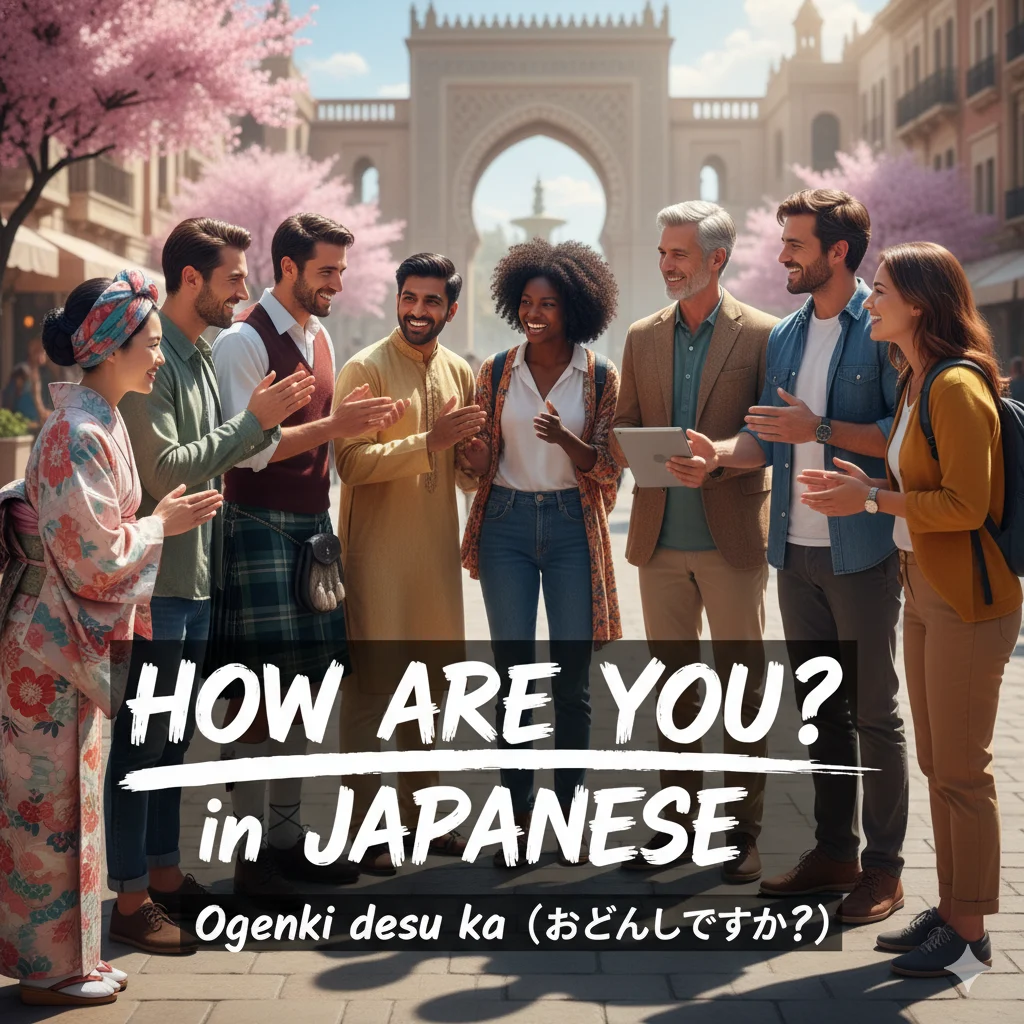
When I first arrived in Tokyo, a colleague greeted me with a gentle smile and said, “お元気ですか (Ogenki desu ka)?” — “How are you?”
It wasn’t just polite — it felt genuine. In that moment, I understood something deeper: in Japan, this simple question isn’t small talk. It’s a way to check in on someone’s well-being — a quiet expression of empathy.
Every culture has its own way of asking, “How are you?” It’s a question that shows connection, concern, and care — a thread of humanity that ties us all together.
Let’s explore how this phrase, starting with the Japanese Ogenki desu ka, echoes across the world in different sounds, tones, and traditions.
🗺️ Table: How to Say “How Are You” Around the World
| Language | Phrase | Cultural Insight |
|---|---|---|
| Japanese | お元気ですか (Ogenki desu ka) | A polite, respectful way to ask about someone’s health or well-being. |
| English | How are you? | Common greeting, often casual but still caring. |
| French | Comment ça va ? | Informal and friendly, often replied with “Ça va bien.” |
| Spanish | ¿Cómo estás? | Warm and friendly, used in all social circles. |
| Italian | Come stai? | Personal and affectionate, common among friends. |
| German | Wie geht’s? | Informal, meaning “How’s it going?” |
| Turkish | Nasılsın? | Expresses warmth and hospitality, always expecting a real answer. |
| Hindi | Aap kaise hain? (आप कैसे हैं?) | A polite question showing genuine respect. |
| Mandarin (Chinese) | Nǐ hǎo ma? (你好吗?) | Literally “You good?” — gentle and polite. |
| Arabic | Kayfa haluk? (كيف حالك؟) | Often followed by blessings; highly respectful. |
| Swahili | Habari gani? | Means “What’s the news?” — implies connection and curiosity. |
| Zulu | Unjani? | Literally “Are you well?”; deeply caring in tone. |
| Russian | Kak dela? (Как дела?) | Informal and friendly; used daily. |
| Hawaiian | Pehea ‘oe? | Means “How are you?” — reflects kindness and peace. |
| Maori (New Zealand) | Kei te pēhea koe? | Means “How are you?” — rooted in community spirit. |
🇯🇵 How Do You Say “How Are You” in Japanese?
The Japanese phrase for “how are you” is お元気ですか (Ogenki desu ka) — pronounced oh-gen-kee des ka.
✨ Meaning and Cultural Insight
- お (O): Honorific prefix showing respect
- 元気 (Genki): Means “healthy,” “lively,” or “energetic”
- ですか (Desu ka): Polite question ending
Together, Ogenki desu ka means “Are you well?”
In Japan, asking this isn’t casual chatter — it’s an expression of thoughtfulness. People may say it after some time apart or at the start of a letter or email. The tone is gentle and polite, reflecting Japan’s deep-rooted value of harmony (wa).
💬 Common Responses
- はい、元気です (Hai, genki desu) — “Yes, I’m fine.”
- まあまあです (Mā mā desu) — “I’m so-so.”
- 元気じゃないです (Genki janai desu) — “I’m not well.”
🇪🇺 How to Say “How Are You” in European Languages
Europeans may speak dozens of tongues, but they all ask this question with genuine interest.
- French — Comment ça va ? Often followed by “Ça va bien, merci.”
- Spanish — ¿Cómo estás? Friendly and used in all settings.
- Italian — Come stai? Warm, often accompanied by a hug or kiss.
- German — Wie geht’s? Casual and upbeat.
- Portuguese — Como vai? Polite, used both formally and informally.
- Greek — Ti kanis? (Τι κάνεις;) Literally “What are you doing?” but means “How are you?”
In Europe, tone matters — a cheerful “How are you?” often sets the mood for an entire conversation.
🌏 How to Say “How Are You” in Asian Languages
Asia’s greetings reflect deep respect and spirituality.
- Japanese — お元気ですか (Ogenki desu ka) emphasizes politeness and care.
- Chinese — 你好吗 (Nǐ hǎo ma) shows consideration and balance.
- Korean — 잘 지내세요? (Jal jinaeseyo?) means “Are you doing well?”
- Hindi — Aap kaise hain? expresses politeness and genuine warmth.
- Thai — สบายดีไหม (S̄bāy dī mị?) means “Are you comfortable/well?”
- Arabic — Kayfa haluk? comes from the root “hal,” meaning “state of being.”
- Vietnamese — Bạn khỏe không? means “Are you healthy?”
- Indonesian — Apa kabar? translates to “What’s the news?”
Across Asia, asking “how are you” is a mark of empathy — it’s not just linguistic, it’s emotional.
🌍 How to Say “How Are You” in African Languages
African cultures use greetings as gateways to connection, often extending far beyond the initial question.
- Swahili — Habari gani? “What’s the news?”
- Zulu — Unjani? “Are you well?”
- Yoruba — Bawo ni? “How are you?”
- Amharic — Dehna neh? “Are you fine?”
- Somali — Iska warran? “What’s the news?”
- Hausa — Yaya kake? “How are you?” (masculine)
- Shona — Wakadini zvako? “How have you been?”
- Tswana — O kae? “Where are you?” meaning “How are you?”
These greetings are often accompanied by laughter, hugs, or prolonged conversations — a social ritual of genuine care.
🌺 How to Say “How Are You” in Indigenous & Island Languages
From Pacific islands to the Americas, greetings carry a spiritual connection to life and community.
- Hawaiian — Pehea ‘oe? Means “How are you?” — infused with the aloha spirit.
- Maori — Kei te pēhea koe? “How are you?” — a way to check on emotional balance.
- Samoan — Oa mai oe? Literally “Are you okay?”
- Cherokee — Osda sunalei? Means “Are you well today?”
- Fijian — Vacava tiko? Means “How are you?” — said with bright smiles.
- Tahitian — E aha to oe huru? “What’s your condition?” — poetic and caring.
These cultures show that asking “how are you” is about spirit, not small talk — a ritual of belonging.
💬 Cultural Insights: The Heart Behind the Words
Across languages, “How are you?” has always been more than a question. It’s an acknowledgment — an emotional handshake.
In Japan, it’s quiet and respectful. In Africa, it’s joyful and social. In Europe, it’s conversational and warm. In the Pacific, it’s soulful.
These differences reveal one truth: the question unites us all in care and compassion.
🌸 Proverbs About Asking “How Are You”
- Japanese: “A kind word can warm three winter months.”
- Turkish: “Health is wealth.”
- Swahili: “A greeting is the beginning of friendship.”
- Italian: “Chi domanda, comanda.” — “He who asks, leads.”
- Arabic: “The heart’s peace begins with asking about another.”
❓ FAQs
Q1: How do you say how are you in Japanese?
You say お元気ですか (Ogenki desu ka) — a polite and respectful way to ask someone how they are.
Q2: How do you respond to Ogenki desu ka?
Say はい、元気です (Hai, genki desu) — “Yes, I’m fine.”
Q3: Is Ogenki desu ka formal or casual?
It’s polite and slightly formal. Among close friends, Japanese people might simply say 元気? (Genki?)
Q4: Why is “how are you” important in culture?
Because it’s an act of kindness — showing that someone cares about your well-being.
Q5: What is the literal meaning of Ogenki desu ka?
It means “Are you healthy/energetic?” — focusing on one’s health and spirit.
❤️ Conclusion: A Universal Question That Heals
Whether you say お元気ですか, Cómo estás, Habari gani, or Pehea ‘oe, the message is the same — I care about you.
In a world that moves too fast, asking “How are you?” slows us down and reconnects us to empathy.
So next time you meet someone, remember: a simple question can mean the world.
💬 Your Turn:
How do you say “How are you?” in your language? Share it below and join our global chain of kindness and curiosity! 🌏