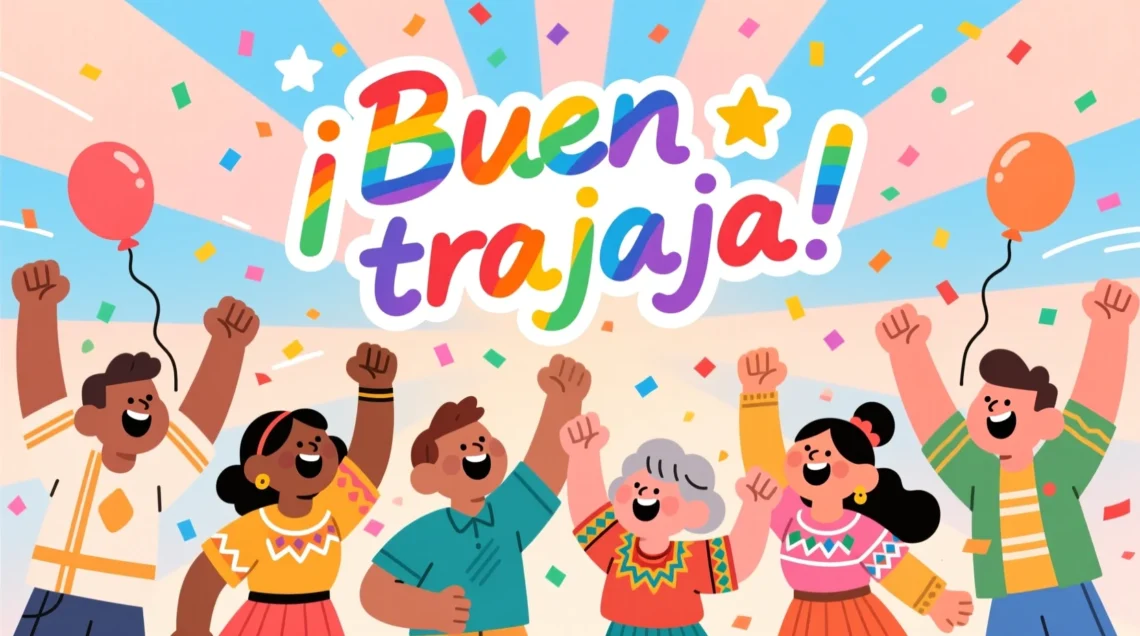
When someone tells you “good job!” after you’ve worked hard on something, it feels like sunlight breaking through the clouds. I still remember my first trip to Madrid — I’d just ordered a full meal in Spanish without mistakes, and the waiter smiled and said:
“¡Buen trabajo!”
That phrase, meaning “good job,” carried genuine appreciation. It wasn’t just a translation — it was a cultural gesture of respect and warmth.
Learning how to say good job in Spanish goes beyond words. It’s about understanding how people express pride, encouragement, and motivation. Across the world, every culture has its own beautiful way of celebrating effort.
Let’s explore how this universal message of encouragement is shared from Spain to the farthest corners of the earth.
📚 Table: How to Say “Good Job” Around the World
| Language | Word/Phrase for “Good Job” | Cultural Insight |
|---|---|---|
| Spanish | ¡Buen trabajo! / ¡Bien hecho! | Common in Spain and Latin America; “Bien hecho” is slightly warmer, like “well done.” |
| English | Good job! / Well done! | Everyday expression of praise in schools, workplaces, and families. |
| French | Bon travail ! / Bien fait ! | Used in professional or academic settings to show approval. |
| Italian | Bel lavoro! / Bravo! | “Bravo” is highly expressive, showing pride and admiration. |
| German | Gute Arbeit! / Gut gemacht! | Direct and strong; Germans value recognition for precision. |
| Portuguese | Bom trabalho! / Muito bem! | Used often in Brazil with enthusiasm and positivity. |
| Turkish | Aferin! / İyi iş çıkardın! | Expresses heartfelt encouragement; often used with children and students. |
| Arabic | عمل جيد (ʿamal jayyid) | Literally “good work”; reflects deep respect for effort. |
| Japanese | よくやった (Yoku yatta) | Means “You did it well!” — warm and encouraging. |
| Korean | 잘했어요 (Jalhaesseoyo) | Common praise in schools and families; carries emotional support. |
| Swahili | Kazi nzuri! | Literally “good work”; widely used in East Africa. |
| Hindi | शाबाश (Shabash) | A heartfelt word often said by teachers or elders. |
| Russian | Молодец (Molodets) | Means “Well done!”; conveys pride and respect. |
| Greek | Μπράβο (Bravo) | Shared with Italian roots; passionate and expressive. |
| Mandarin (Chinese) | 干得好 (Gàn de hǎo) | Literally “did well”; used in workplaces and schools. |
🇪🇸 How to Say Good Job in Spanish
In Spanish, the most common phrases are:
- ¡Buen trabajo! — “Good job!”
- ¡Bien hecho! — “Well done!”
- ¡Excelente trabajo! — “Excellent job!”
- ¡Lo hiciste muy bien! — “You did very well!”
Cultural Insight:
In Spain and Latin America, compliments often go beyond formality. When someone says ¡Bien hecho!, it’s usually said with genuine warmth — often accompanied by a smile, a pat on the back, or even a hug.
Spanish-speaking cultures value effort (esfuerzo) and heart (corazón) — so praise is as much about passion as performance.
🇪🇺 European Languages: Elegant Ways to Say “Good Job”
Across Europe, praise reflects social tone and politeness:
- France — Bon travail! Polite and often used professionally.
- Italy — Bravo! Said with emotion, whether to a singer or a student.
- Germany — Gut gemacht! Straightforward and powerful.
- Greece — Bravo! Expressive, often accompanied by applause.
- Portugal — Bom trabalho! Friendly and supportive.
European expressions of encouragement blend politeness with genuine admiration — proof that effort deserves acknowledgment everywhere.
🌎 Latin American Expressions of Encouragement
In Latin America, praise is emotional, sincere, and communal.
- Mexico: “¡Bien hecho!” or “¡Excelente trabajo!” — enthusiasm is key.
- Argentina: “¡Muy bien!” — sometimes with claps or high-fives.
- Colombia: “¡Felicitaciones!” (Congratulations) — blends praise with celebration.
- Chile: “¡Te pasaste!” — slang for “You outdid yourself!”
- Peru: “¡Buen trabajo, amigo!” — friendly and heartwarming.
Cultural Note:
In Latin America, praise strengthens relationships — it’s about encouragement, not just evaluation. Saying “good job” here builds bonds of trust and friendship.
🌏 Asian Languages: Praise Rooted in Respect
- Japanese — Yoku yatta: Used by teachers, parents, and mentors.
- Korean — Jalhaesseoyo: A tender and encouraging compliment.
- Mandarin — Gàn de hǎo: Common in workplaces, classrooms, or sports.
- Hindi — Shabash: Deeply rooted in family and education.
- Thai — ทำได้ดีมาก (Tham dai di mak): “You did very well,” often said warmly.
- Filipino — Magaling ka!: “You’re good!” said with joyful pride.
In many Asian cultures, compliments carry humility — praise is heartfelt, but modesty is equally valued.
🌍 African Languages: Celebrating Community Success
In African societies, encouragement often celebrates collective effort:
- Swahili — Kazi nzuri! (“Good work!”) — used in schools, workplaces, and communities.
- Zulu — Wen’ uyibekile! (“You nailed it!”) — highly expressive.
- Yoruba — O se dada! (“You did well!”) — full of affection and recognition.
- Amharic — Betam teru new! (“Very good!”) — said with pride.
- Shona — Waita zvakanaka! (“You did great!”) — personal and friendly.
African greetings and praise are social glue — they celebrate we instead of me, valuing community over individual pride.
🌺 Island & Indigenous Languages: Words that Uplift
From the Pacific islands to the Americas, “good job” often ties to emotional well-being and togetherness.
- Hawaiian — Hana maika‘i! (“Good work!”) — reflects harmony and joy.
- Maori — Ka pai! (“Well done!”) — full of enthusiasm.
- Samoan — Lelei tele lau galuega! (“Your work is very good!”) — warm and encouraging.
- Cherokee — Osda sunalei! (“Good job!”) — rarely literal, but full of pride.
- Tahitian — Mea maitai! (“Good thing!”) — simple but sincere.
- Fijian — Vinaka vakalevu! (“Very good!”) — expresses gratitude and admiration.
Island greetings often merge praise and positivity — making every compliment a celebration of unity.
💬 Cultural Insights: The Power of Positive Words
Saying “good job” might sound simple, but it carries enormous emotional weight.
Encouragement boosts confidence, builds trust, and inspires growth.
In Spanish-speaking cultures, praise is not just acknowledgment — it’s connection.
The phrase “¡Bien hecho!” reminds us that kindness and recognition transcend borders.
🌸 Proverbs & Sayings About Praise
- Spanish: “Las palabras amables no cuestan mucho, pero valen mucho.” — “Kind words cost little but mean much.”
- Japanese: “One kind word can warm three winter months.”
- Swahili: “Maneno mazuri ni dawa.” — “Good words are medicine.”
- English: “A word of praise is the seed of success.”
- Turkish: “İltifat, işi güzelleştirir.” — “A compliment beautifies the work.”
Every culture knows — appreciation is fuel for the human spirit.
❓ FAQs
Q1: How do you say “good job” in Spanish?
The most common phrases are “¡Buen trabajo!” and “¡Bien hecho!”, meaning “Good job!” and “Well done!” respectively.
Q2: What’s the difference between “¡Buen trabajo!” and “¡Bien hecho!”?
Both are correct; “Buen trabajo” focuses on the work, while “Bien hecho” emphasizes the performance — like “Well done.”
Q3: How do Spanish speakers praise children or students?
Common phrases include “¡Muy bien!” (Very good!), “¡Excelente!” (Excellent!), and “¡Lo hiciste genial!” (You did great!).
Q4: What’s the cultural meaning behind praise in Spain and Latin America?
Compliments are expressive and emotional — they strengthen social connection and motivation.
Q5: How do other cultures say “good job”?
Each language has unique versions, from “Bravo!” in Italian to “Kazi nzuri!” in Swahili and “Yoku yatta!” in Japanese.
❤️ Conclusion: A Universal Celebration of Effort
Whether you say “¡Buen trabajo!”, “Bravo!”, or “Good job!”, you’re recognizing something profoundly human — the joy of effort and success.
A few words of appreciation can spark confidence, heal doubt, and build bridges across cultures.
💬 Now it’s your turn:
How do you say “good job” in your language? Share your phrase in the comments — and let’s create a global wave of encouragement and positivity! 🌍✨