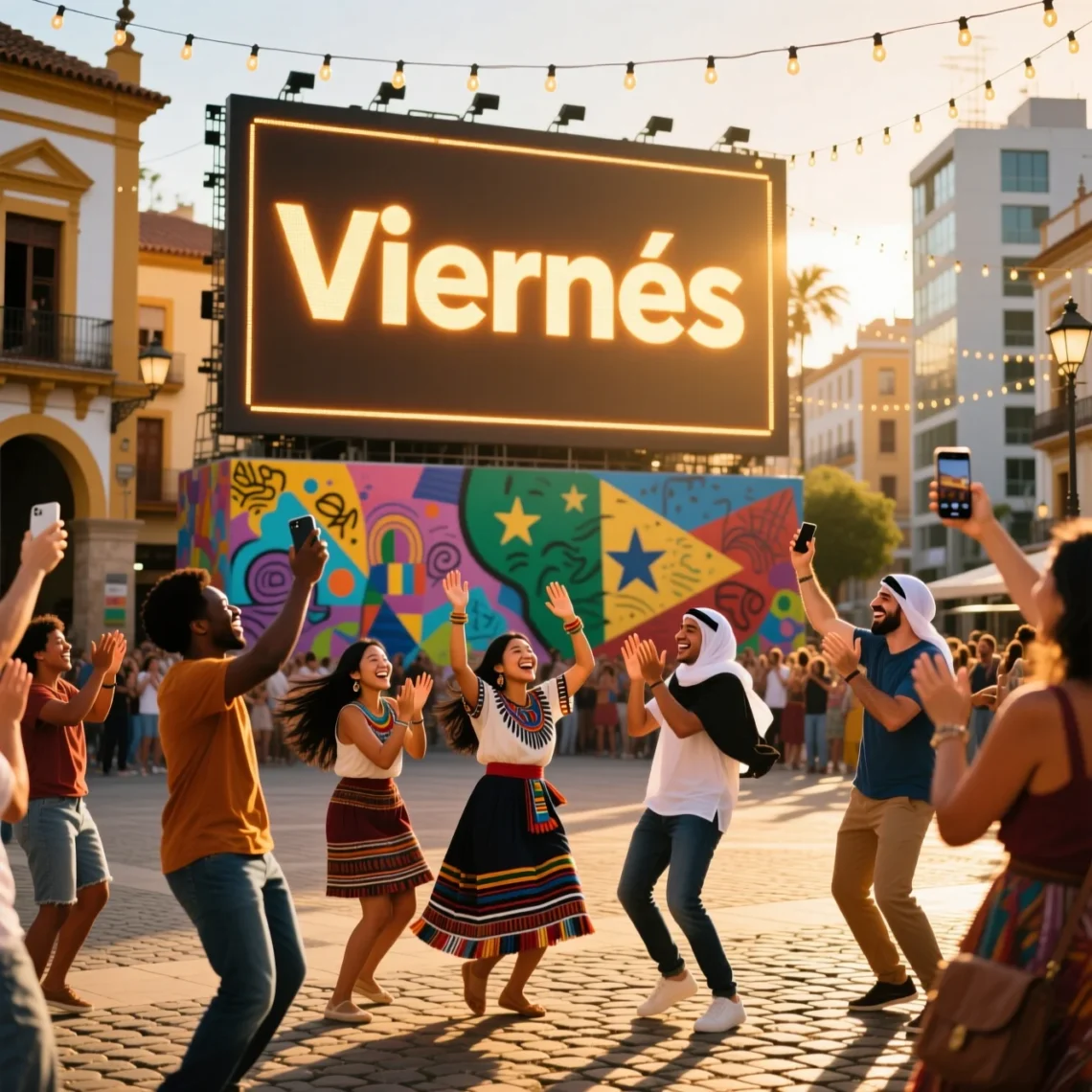
There’s a certain energy in the air every Friday — an unspoken joy that stretches across continents. Whether it’s the smell of fresh bread in Madrid, the sound of laughter in a Mexican plaza, or the call to prayer before the weekend in Morocco, Friday feels the same everywhere: a sigh of relief, a pause, and a promise of rest.
When I first heard the Spanish word for Friday — “Viernes” — it rolled off the tongue like music. It carried rhythm, warmth, and anticipation. But what truly fascinated me was how every language in the world has its own way to express this shared feeling of the week’s golden ending.
Let’s explore not just how to say Friday in Spanish, but how this day is named, celebrated, and felt across cultures.
📘 Quick Reference Table: Friday in Different Languages
| Language | Word for “Friday” | Cultural Insight |
|---|---|---|
| Spanish | Viernes | Derived from “Venus,” the Roman goddess of love — Friday is the day of beauty and connection. |
| English | Friday | From Old English Frīgedæg — “Day of Frigg,” goddess of love. |
| French | Vendredi | Means “Day of Venus”; tied to affection and leisure. |
| Italian | Venerdì | Shares Latin roots with “Venus”; Italians often see Friday as the prelude to joy. |
| German | Freitag | “Day of Freya,” another goddess of love and beauty. |
| Arabic | Al-Jumʿah (الجمعة) | “The day of gathering”; holds deep spiritual importance in Islam. |
| Hindi | Shukravaar (शुक्रवार) | From “Shukra,” meaning the planet Venus — associated with blessings. |
| Mandarin Chinese | Xīngqīwǔ (星期五) | Literally “day five”; systematic numbering of weekdays. |
| Japanese | Kin-yōbi (金曜日) | “Day of gold” or “day of metal”; linked to Venus in ancient astrology. |
| Swahili | Ijumaa | Derived from Arabic Jummah, the holy day for prayer. |
| Zulu | uLwesihlanu | Means “the fifth day”; structured within the seven-day cycle. |
| Greek | Paraskeví (Παρασκευή) | Means “preparation”; Friday prepares for the holy Sabbath. |
| Turkish | Cuma | Comes from Arabic; the day for communal worship. |
| Hebrew | Yom Shishi (יום שישי) | The sixth day; connected to preparation for Shabbat. |
| Finnish | Perjantai | Named after Freya, goddess of love — celebrating affection and harmony. |
🇪🇸 How Do You Say Friday in Spanish?
The word Friday in Spanish is “Viernes.”
It’s pronounced VYER-nes (with a soft “v”).
Origin & Meaning:
“Viernes” comes from the Latin Veneris Dies — meaning “Day of Venus.” Venus was the Roman goddess of love, beauty, and pleasure. No wonder Friday feels so good — it’s been the day of affection and relaxation since ancient times!
In Spanish-speaking cultures, Viernes carries joy. It’s the day of gathering with friends, heading out for tapas, or simply unwinding after a long week. You’ll often hear people say:
“¡Por fin es viernes!” — “Finally, it’s Friday!”
That phrase echoes the same excitement everywhere in the world: the anticipation of freedom.
🇪🇺 Friday in European Languages: Love, Leisure, and Celebration
In Europe, the word for Friday often connects to love and rest — a reflection of ancient mythologies.
- French — Vendredi: The day of Venus, associated with romance and calm.
- Italian — Venerdì: Italians often celebrate with family dinners and laughter.
- German — Freitag: Derived from Freya, the Norse goddess of love.
- Greek — Paraskeví: Literally “preparation,” tied to Orthodox customs before Sabbath.
- Turkish — Cuma: A holy day in Islam — men gather at the mosque for Jumu’ah prayers.
In many European countries, Friday evenings represent the bridge between hard work and heartfelt living — a balance of duty and delight.
🌏 Friday Across Asia: From Prayer to Prosperity
Asia gives Friday a deeper, spiritual tone.
- Arabic-speaking world — Al-Jumʿah: The word means “the day of gathering,” and it’s a sacred day of communal prayer.
- India — Shukravaar: Derived from the Sanskrit word Shukra, meaning Venus. It’s considered auspicious, especially for love and financial blessings.
- China — Xīngqīwǔ: Literally “Weekday Five,” practical and structured — reflecting China’s organized calendar system.
- Japan — Kin-yōbi: “Day of gold,” tied to ancient planetary astrology.
- Thailand — Wan Suk: Translates as “Happy Day” — symbolic of joy and relaxation.
- Indonesia — Jumat: Rooted in the Arabic term Jum’ah, the main day for religious observance.
From mosques to temples, from offices to homes, Asia transforms Friday into a blend of faith, rest, and gratitude.
🌍 Friday in Africa: A Day of Unity and Reflection
Across Africa, Friday carries both spiritual and communal meanings:
- Swahili — Ijumaa: A holy day derived from Arabic, widely observed with prayer and family time.
- Amharic (Ethiopia) — Arb: The sixth day, preparing for the Sabbath.
- Yoruba (Nigeria) — Ojobo: Associated with blessings and peace.
- Zulu — uLwesihlanu: The fifth day in the weekly rhythm.
- Hausa — Juma’a: The Islamic day of prayer, often spent with community.
- Somali — Jimce: Means “Friday,” a day for family gatherings.
Friday in Africa isn’t just the end of the workweek — it’s the heart of social life, faith, and togetherness.
🌺 Indigenous & Island Languages: Fridays of Life and Renewal
- Hawaiian — Poʻalima: Means “the fifth day”; connected to balance and nature.
- Maori — Rāmere: Derived from the Polynesian counting system; a day of rest and preparation.
- Samoan — Aso Faraile: The fifth weekday; families often start weekend festivities early.
- Tahitian — Mahana Maha: Symbolizing joy before the weekend.
- Cherokee — Unadoda: A quiet day of reflection before spiritual rest.
- Fijian — Vakaraubuka: “Preparation for Saturday,” part of island rhythm.
Island and Indigenous cultures view Friday as more than time — it’s a pulse of life that reconnects community and earth.
💬 Cultural Insights: Why Friday Feels So Special
Friday’s global roots trace back to the planet Venus — the symbol of love, harmony, and peace.
From the Roman Empire to modern Spain, the name stayed consistent: the day of affection and connection.
For Muslims, Friday is sacred — a day of prayer and unity.
For Christians and Jews, it’s preparation for Sabbath rest.
For modern workers everywhere, it’s a symbol of freedom, music, and social life.
Viernes, therefore, is more than a weekday — it’s a feeling humanity shares.
🌸 Proverbs and Sayings About Friday
- Spanish: “Viernes, cara sonriente.” — “Friday brings a smiling face.”
- English: “Thank God it’s Friday!” — a modern cultural anthem.
- Arabic: “Jummah Mubarak.” — “Blessed Friday.”
- Hindi: “Shukravaar shubh din hai.” — “Friday is a day of blessings.”
- Swahili: “Ijumaa njema.” — “Have a good Friday.”
Every culture celebrates the day in its own voice, but the emotion remains the same — gratitude, joy, and renewal.
❓ FAQs
Q1: How do you say Friday in Spanish?
Friday in Spanish is “Viernes.”
Q2: What is the meaning of Viernes?
It comes from Veneris Dies — “Day of Venus,” goddess of love and beauty.
Q3: How do you pronounce Viernes in Spanish?
It’s pronounced VYER-nes.
Q4: Why is Friday named after Venus?
Ancient astrologers linked each day of the week to a planet; Friday was ruled by Venus, symbolizing joy and affection.
Q5: What do people in Spanish-speaking countries do on Fridays?
Many enjoy social gatherings, family meals, and celebrations — Fridays mark the start of “el fin de semana,” the weekend.
❤️ Conclusion: The Universal Heartbeat of Friday
Whether you say Viernes, Vendredi, Freitag, or Al-Jumʿah, Friday always means one thing: hope, connection, and renewal.
So next time you greet someone on a Friday, remember that millions across the globe are smiling for the same reason — it’s the day our hearts exhale.
🌟 Your turn!
How do you say “Friday” in your language? Comment below and join the conversation — let’s celebrate the beauty of Fridays everywhere.