Have you ever said something in another language — and instantly realized it didn’t mean what you thought?
That’s what happened to an American student named Emily during her first semester in Madrid. After tripping in class, she laughed and said, “Estoy embarazada.” Her classmates froze. Why? Because in Spanish, “embarazada” doesn’t mean embarrassed — it means pregnant!
This classic mistake is one of the most famous translation mix-ups in Spanish learning history.
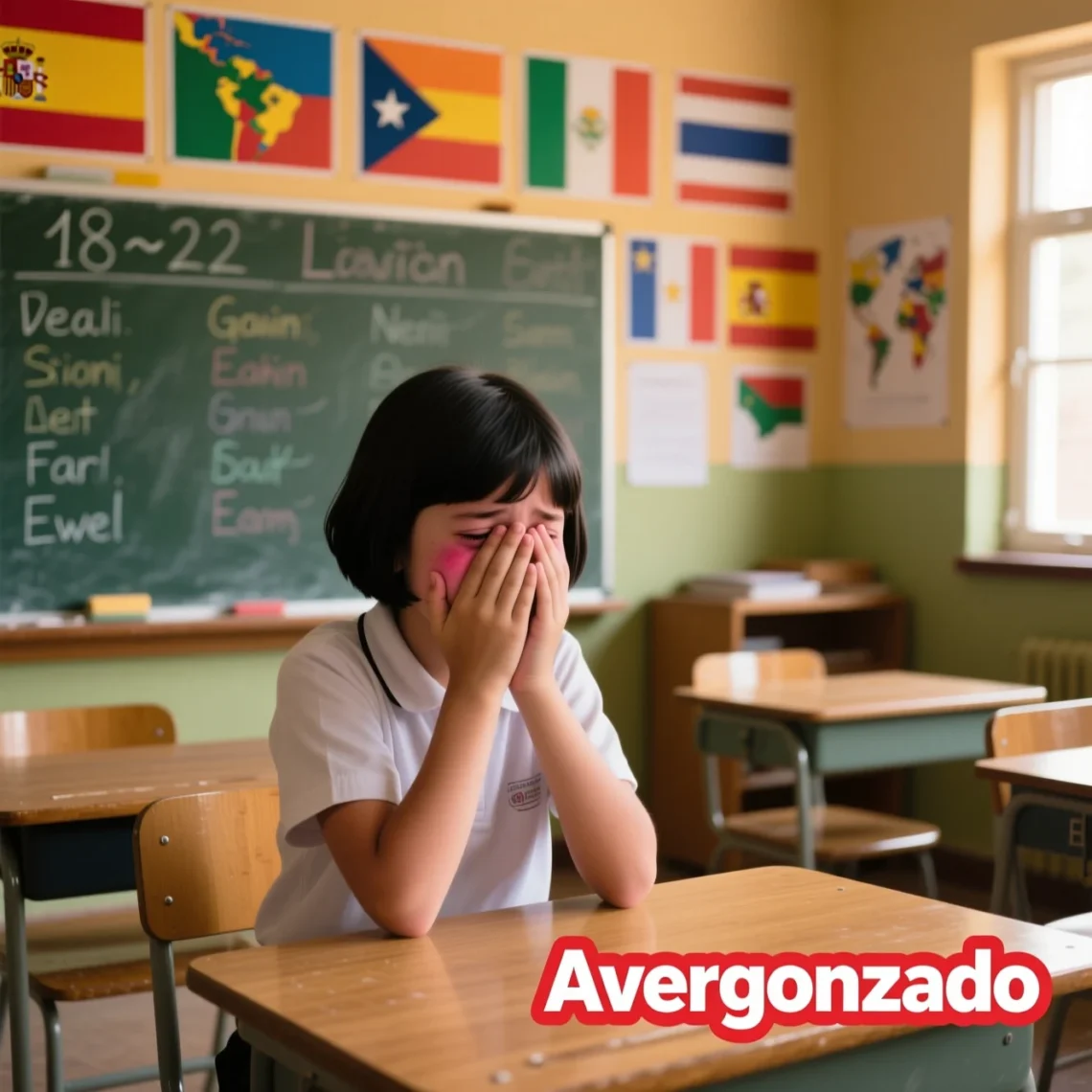
So, how do you say embarrassed in Spanish correctly? The right word is “avergonzado” (for males) or “avergonzada” (for females). But understanding embarrassment in Spanish culture goes deeper than translation — it’s about how feelings are expressed differently around the world.
💬 The Correct Spanish Word for Embarrassed
| English Word | Spanish Translation | Usage Notes |
|---|---|---|
| Embarrassed | Avergonzado / Avergonzada | The accurate translation; expresses feeling ashamed or uncomfortable. |
| Shame | Vergüenza | A noun meaning “shame” or “embarrassment.” |
| To embarrass | Avergonzar | The verb form meaning “to make someone feel embarrassed.” |
| Blushing | Sonrojarse | Literally “to blush,” often used in romantic or shy contexts. |
| Awkward | Incómodo / Incómoda | Describes uncomfortable or socially tense situations. |
Example:
“Me sentí avergonzado cuando olvidé su nombre.”
(“I felt embarrassed when I forgot her name.”)
Pro tip:
Avoid saying “Estoy embarazada” unless you really are expecting a baby!
🇪🇸 How Do You Say Embarrassed in Spanish — Cultural Meaning
In Spanish-speaking cultures, emotions like embarrassment and shame are deeply tied to respect and social harmony.
Being “avergonzado” is less about personal awkwardness and more about how one’s actions affect others.
For example:
- In Spain, saying “me da vergüenza” (it gives me shame) can express mild shyness — like singing in public.
- In Mexico, embarrassment is often shown through humor, using phrases like “¡Qué oso!” meaning “how embarrassing!” (literally “what a bear!”).
- In Argentina, people might laugh off mistakes to show confidence rather than shame.
While English speakers might blush and stammer, Spanish speakers often express embarrassment through gestures, tone, or playful language.
🗺️ Table: How to Say “Embarrassed” in 15 Different Languages
| Language | Word/Phrase | Cultural Insight |
|---|---|---|
| Spanish | Avergonzado / Avergonzada | Expresses shame or discomfort; emotionally deeper than English “embarrassed.” |
| English | Embarrassed | Usually refers to mild social awkwardness. |
| French | Gêné / Embarrassé | Gêné implies discomfort; embarrassé means self-conscious. |
| Italian | Imbarazzato / Imbarazzata | Similar to Spanish, derived from the same Latin root. |
| German | Verlegen | Means shy or self-conscious. |
| Portuguese | Envergonhado / Envergonhada | Directly related to “avergonzado,” with Latin roots. |
| Arabic | Khaajil (خَجِل) | Often tied to modesty and humility. |
| Japanese | Hazukashii (恥ずかしい) | Reflects both embarrassment and shame; linked to social etiquette. |
| Korean | Buchukeureowoyo (부끄러워요) | Conveys shyness or bashfulness, especially in polite contexts. |
| Hindi | Sharminda (शर्मिंदा) | Tied to cultural modesty and honor. |
| Swahili | Aibu | Means both shame and embarrassment; often a moral emotion. |
| Russian | Stydno (стыдно) | Deep sense of moral embarrassment or guilt. |
| Turkish | Utanmak | Derived from the word for “shame”; implies self-consciousness. |
| Greek | Ntrepómai (ντρέπομαι) | Means “I am ashamed”; rooted in social reputation. |
| Mandarin Chinese | Gǎn dào bù hǎo yìsi (感到不好意思) | Means “feeling bad or shy”; a common polite expression. |
🌎 Emotional and Cultural Variations
The emotion of embarrassment isn’t the same everywhere.
- In Western cultures, it’s often personal — about making a mistake or being judged.
- In Asian societies, it’s more collective — losing face or causing discomfort to others.
- In Latin cultures, humor and playfulness often mask embarrassment — laughter softens the moment.
So when you say “avergonzado” in Spanish, you’re not just translating a word — you’re expressing a social feeling that depends on relationships, respect, and context.
💡 Historical Roots of the Word
The Spanish word “avergonzado” and the Portuguese “envergonhado” share a common Latin ancestor — verecundia, meaning “modesty or respect.”
Over time, this evolved into vergüenza in Spanish and vergogna in Italian, both referring to shame or self-awareness.
This evolution reflects how ancient societies valued humility and reputation — traits still visible in Spanish-speaking cultures today.
🌸 Proverbs and Sayings About Embarrassment
- Spanish: “La vergüenza no alimenta.” — “Shame doesn’t feed you.” (Encourages confidence over fear.)
- Mexican: “Qué oso.” — “What a bear!” (A lighthearted phrase for something embarrassing.)
- French: “Rougir n’est pas un crime.” — “Blushing is not a crime.”
- Japanese: “Haji wa kake-sute.” — “Throw away your shame and move on.”
- Arabic: “Al-khajal zīnat al-mar’a.” — “Modesty is a woman’s adornment.”
These proverbs reveal a global truth — embarrassment may sting, but humility builds character.
❓ FAQs
Q1: How do you say embarrassed in Spanish?
The correct translation is “avergonzado” (for men) or “avergonzada” (for women).
Q2: Why can’t I say “embarazada”?
Because embarazada means pregnant — a false cognate that causes a common translation mistake.
Q3: What does “me da vergüenza” mean?
It means “I feel shy” or “it embarrasses me,” depending on context.
Q4: What’s a casual way to say embarrassed in Spanish?
People often say “¡Qué oso!” in Mexico or “me dio pena” in other regions — both express mild embarrassment.
Q5: How can I remember the difference between “avergonzado” and “embarazada”?
Think of “Avergonza” as having “vergüenza” (shame) — they share the same root. Embarazada always means “pregnant,” never “embarrassed.”
❤️ Conclusion: A Word That Teaches More Than Grammar
Learning how to say embarrassed in Spanish isn’t just about mastering vocabulary — it’s about understanding emotion through culture.
“Avergonzado” reflects humility, self-awareness, and the social heartbeat of Spanish-speaking communities. It reminds us that words carry worlds inside them.
So next time you blush, don’t be embarrassed — just smile and say, “Me siento un poco avergonzado.”
You’ve not only learned a word — you’ve connected with an entire culture.
💬 Call to Action:
What’s a word in your language that changes meaning when translated? Share your story below — let’s learn and laugh about language together!