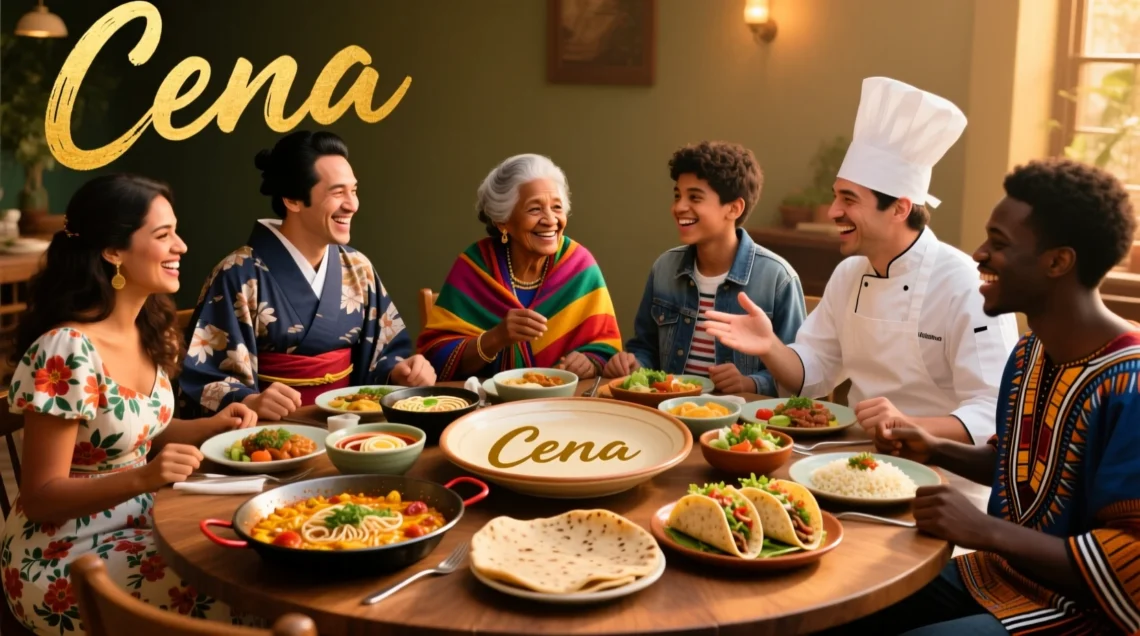
It was a soft summer night in Madrid. The streets buzzed with laughter, the scent of olive oil and garlic filled the air, and a waiter approached with a smile saying, “¿Estás listo para la cena?” — Are you ready for dinner?
That word, “cena,” felt more than just “dinner.” It carried comfort, warmth, and a sense of belonging. Across cultures, dinner is not only a meal — it’s a ritual of connection.
So, how do you say dinner in Spanish? You say “cena” — pronounced SAY-nah. But beyond pronunciation lies a world of meaning — about families, traditions, and the human need to gather and share stories at the end of the day.
Let’s explore how this beautiful concept translates around the world.
🗺️ Table of Dinner in Different Languages
| Language | Word/Phrase for “Dinner” | Cultural Insight |
|---|---|---|
| Spanish | Cena | Usually served late in Spain, around 9–10 p.m.; social and lively. |
| English | Dinner / Supper | Main evening meal, often a family gathering time. |
| French | Dîner | Elegant and refined; often a multi-course affair. |
| Italian | Cena | Similar to Spanish; leisurely and family-oriented. |
| German | Abendessen | Literally “evening food”; practical and hearty. |
| Portuguese | Jantar | Warm family gathering, typically later in the evening. |
| Japanese | Yūshoku (夕食) | Balanced and aesthetically served; part of Japan’s food harmony. |
| Mandarin (Chinese) | Wǎncān (晚餐) | A family-centered meal emphasizing balance. |
| Hindi (India) | Raat ka khana (रात का खाना) | Literally “night food”; often shared with family. |
| Arabic | ‘Ashaa (عشاء) | Rooted in hospitality; often follows sunset prayers. |
| Swahili | Chakula cha jioni | “Evening food”; central to family life. |
| Turkish | Akşam yemeği | “Evening meal”; symbolizes togetherness. |
| Russian | Uzhin (Ужин) | Relaxed and comforting; shared with family at home. |
| Greek | Deípno (Δείπνο) | Traditionally a sacred and social act of sharing. |
| Korean | Jeonyeok (저녁) | Often eaten with family, featuring rice, soup, and sides. |
🇪🇸 How Do You Say Dinner in Spanish
The Spanish word for “dinner” is “cena.”
It’s one of the most beloved words in Spanish culture — because in Spain and Latin America, dinner isn’t just about food, it’s about community.
Cultural Insight:
In Spain, la cena happens late — often between 9 p.m. and 11 p.m. People gather outdoors, laugh, share tapas, and enjoy long conversations. In Latin America, cena can vary — lighter meals in Mexico, hearty dishes in Argentina, or shared home cooking in Colombia.
Learning how to say dinner in Spanish is learning about how people celebrate the night — with food, laughter, and love.
🇪🇺 Dinner in European Languages
Europe has long treated dinner as a social anchor — the moment when families reconnect.
- France — Dîner: Often starts late and involves multiple small, elegant courses.
- Italy — Cena: Relaxed and family-filled, typically featuring pasta, bread, and wine.
- Germany — Abendessen: More practical — often cold cuts, bread, and cheese.
- United Kingdom — Dinner/Supper: “Dinner” for formal meals, “supper” for casual family evenings.
- Greece — Deípno: Traditionally tied to hospitality and shared storytelling.
Across Europe, dinner time embodies togetherness, balance, and gratitude.
🌏 Dinner in Asian Languages and Cultures
Asia’s dinners vary wildly — from ritual to feast — but all express harmony and care.
- Japan — Yūshoku: Served with artistry; each dish balanced for color and texture.
- China — Wǎncān: Family-style dining, dishes placed in the center to share.
- India — Raat ka khana: Typically vegetarian and spice-rich; eaten with family.
- Korea — Jeonyeok: A structured meal of rice, soup, and banchan (side dishes).
- Thailand — Ăhăan yen: “Cool food”; evening dishes that soothe after the hot day.
- Arabic-speaking world — ‘Ashaa: Deeply cultural; in Ramadan, it’s part of nightly iftar celebrations.
- Turkey — Akşam yemeği: Shared joy with meze and tea — always about hospitality.
- Vietnam — Bữa tối: Light, balanced, and full of greens.
- Indonesia — Makan malam: Translates as “night eating”; casual and family-centered.
Dinner in Asia reflects a balance between nourishment and mindfulness.
🌍 Dinner in African Cultures
Africa’s evening meals emphasize unity and tradition.
- Swahili — Chakula cha jioni: Shared around communal plates, symbolizing togetherness.
- Zulu — Isidlo sakusihlwa: Evening meal that bonds family members.
- Yoruba — Ale: Often features yam, plantain, or stew; social and heartfelt.
- Amharic — Mishet: A mix of injera, lentils, and sauces — eaten with hands to share closeness.
- Somali — Casho: Evening meal served after prayer, often with rice and meat.
- Hausa — Abincin dare: Literally “night food”; simple, hearty, and family-focused.
- Akan (Ghana) — Aduane anadwo: A symbol of family unity.
- Shona — Sadza remadekwana: Cornmeal dish shared among family members.
- Berber — Imensi: Traditional evening feast served in clay dishes.
- Lingala — Bilanga ya pokwa: “Evening meal”; joyful and full of laughter.
Dinner in Africa isn’t rushed — it’s a time for storytelling and reconnection.
🌺 Indigenous & Island Cultures: Dinner Under the Stars
On islands and among indigenous peoples, dinner often connects humans with nature.
- Hawaiian — ʻAina ahiahi: “Evening meal” — part of life’s spiritual rhythm.
- Maori — Te kai o te pō: “Food of the night”; eaten in family circles.
- Samoan — Taumafataga o le afiafi: A communal feast to end the day.
- Cherokee — Atse atsi: Symbolic of sharing earth’s bounty.
- Fijian — Kana ni bogi: “Night food”; served with cassava and coconut dishes.
- Tahitian — Tama’a ahiahi: Shared with laughter and music.
- Inuit — Inuqtauvik: Warm meal indoors after the cold day — survival meets gratitude.
- Haitian Creole — Dinè: Derived from French, highlighting Caribbean heritage.
- Tagalog (Philippines) — Hapunan: Evening meal enjoyed by extended families.
- Guaraní — Karu pyhare: “Food of the night”; represents harmony with nature.
These meals remind us that across the world, to share dinner is to share life.
💬 Cultural Insights: The Heart of “Cena”
Dinner has always been more than nourishment.
From the Roman convivium to the Ottoman feasts, to today’s family table — evening meals have symbolized peace and unity after the day’s work.
In Spanish culture, “cena” reflects the Mediterranean rhythm: eat slowly, laugh deeply, live joyfully.
Learning how to say dinner in Spanish means embracing that slow, grateful approach to living — where food is the language of love.
🌸 Proverbs and Sayings About Dinner
- Spanish: “A la mesa y a la cama, sólo una vez se llama.” — “To the table and bed, one is called only once.” (Don’t keep people waiting!)
- French: “L’appétit vient en mangeant.” — “Appetite comes with eating.”
- Italian: “A tavola non si invecchia.” — “At the table, one does not age.”
- Arabic: “Eat together and your food will be blessed.”
- Chinese: “Eating is heaven.” (民以食为天)
Every culture teaches that dinner isn’t just about eating — it’s about being together.
❓ FAQs
Q1: What is the Spanish word for dinner?
The Spanish word for dinner is “cena.”
Q2: How do you pronounce “cena”?
It’s pronounced SAY-nah with a soft “c.”
Q3: What time is dinner in Spain?
Usually between 9:00 p.m. and 11:00 p.m., often outdoors with friends or family.
Q4: What does dinner mean in Spanish culture?
It’s a social ritual — a time to connect, laugh, and savor life’s blessings.
Q5: Are “cena” and “dinner” used the same way in Latin America?
Mostly yes, though in some Latin countries, cena is lighter — more like a snack or soup before bed.
❤️ Conclusion: A Universal Table
Whether you say “cena” in Spanish, “dîner” in French, or “yūshoku” in Japanese, one thing never changes: dinner brings people together.
It’s the pause at the end of the day — where families share laughter, friends reconnect, and stories are passed between generations.
So the next time someone asks, “How do you say dinner in Spanish?”
You can smile and say, “Cena — and it means much more than just food.”
🍷 Now your turn:
What’s dinner called in your language — and what does it mean to you?
Share in the comments and let’s build a global table of connection! 🌍