There’s something deeply human about raising a glass. It doesn’t matter if it’s wine in Italy, sake in Japan, or tea in Morocco — the moment we toast, we say “I’m happy to share this moment with you.”
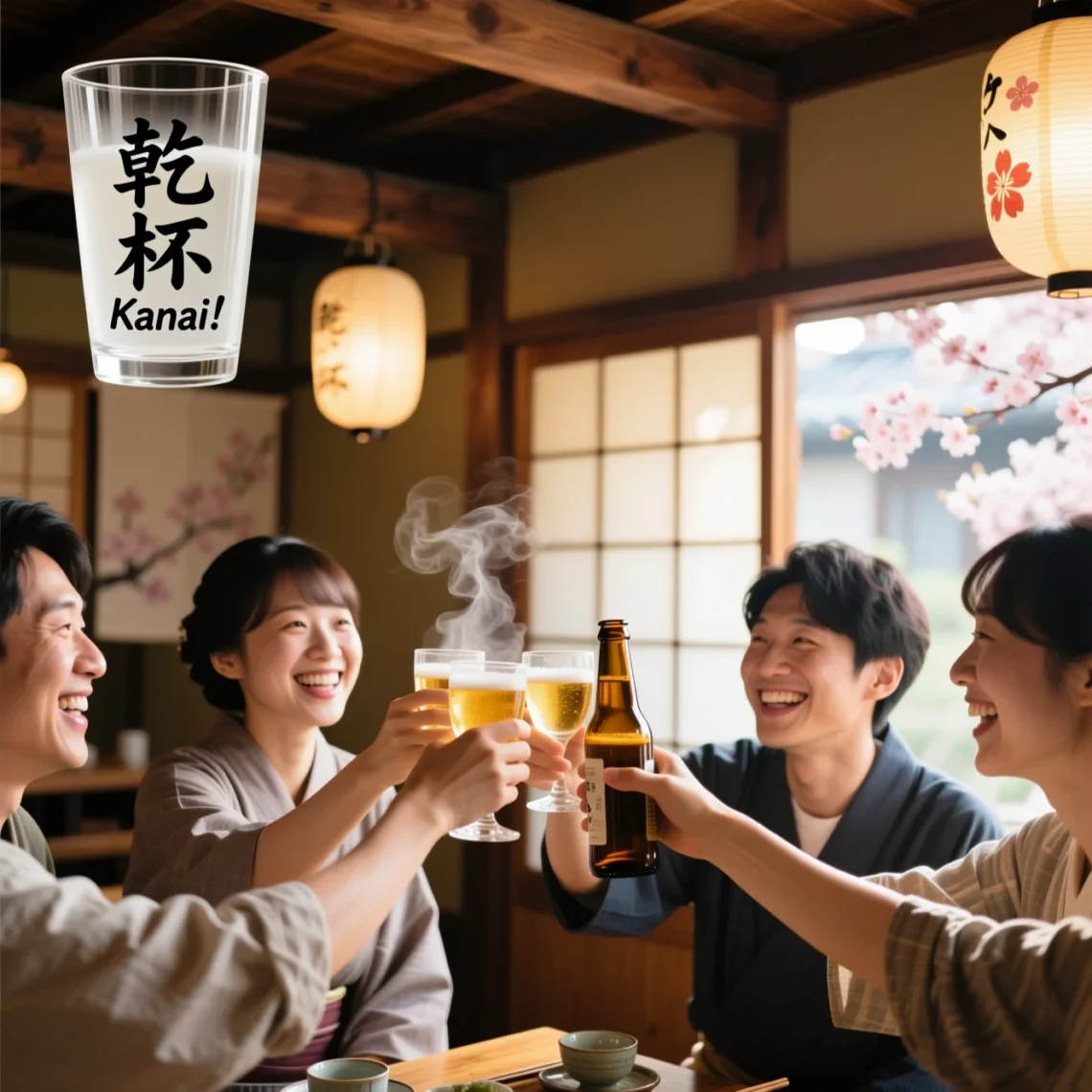
When I first experienced a traditional dinner in Tokyo, the host gently lifted his glass and said, “Kanpai!” Everyone echoed the word in harmony, their laughter filling the room. In that instant, I realized that cheers — no matter the language — is not just a word. It’s a celebration of togetherness, gratitude, and life itself.
If you’ve ever wondered how do you say cheers in Japanese, the answer is beautifully simple: it’s Kanpai (乾杯) — and it literally means “empty cup.” But behind that word lies a deep cultural story of respect, harmony, and shared joy.
🍶 Table: How to Say “Cheers” in Different Languages
| Language | Word/Phrase for “Cheers” | Cultural Insight |
|---|---|---|
| Japanese | Kanpai (乾杯) | Means “empty cup”; symbolizes respect and unity. |
| English | Cheers | A friendly, casual toast to good times and good company. |
| French | Santé | “To your health”; elegance and gratitude combined. |
| Spanish | Salud | Means “health”; often followed by joyful laughter. |
| Italian | Cin Cin | Lighthearted and melodic; inspired by the sound of clinking glasses. |
| German | Prost | Rooted in “prosperity”; a bold, joyful toast. |
| Turkish | Şerefe | Means “to honor”; said with sincerity and friendship. |
| Russian | Za zdorovye (За здоровье) | “To health”; a deeply traditional toast. |
| Mandarin (Chinese) | Gān bēi (干杯) | Literally “dry the cup”; similar to Japanese “Kanpai.” |
| Korean | Geonbae (건배) | Means “empty the glass”; used in celebratory gatherings. |
| Arabic | Fe sahatek (في صحتك) | “To your health”; expresses goodwill and blessing. |
| Greek | Yamas (Γειά μας) | “To our health”; joyful and inclusive. |
| Swedish | Skål | Means “bowl” — from Viking tradition of communal drinking. |
| Polish | Na zdrowie | “To your health”; heartfelt and communal. |
| Portuguese | Saúde | Common in Brazil and Portugal; cheerful and warm. |
🇯🇵 How Do You Say Cheers in Japanese?
In Japanese, you say “Kanpai” (乾杯) to mean cheers.
It’s pronounced kahn-pie, and it’s the centerpiece of any celebration — from weddings and business dinners to casual nights with friends.
🌸 The Meaning Behind “Kanpai”
The word Kanpai is made up of two characters:
- 乾 (Kan) — “dry”
- 杯 (Pai) — “cup”
Together, they literally mean “empty the cup.” But symbolically, it means: let’s celebrate sincerely, together, as equals.
In Japan, toasting is more than clinking glasses. It’s a moment of shared gratitude — for the drink, the people, and the connection. Guests often wait until everyone is served and the host calls “Kanpai!” before drinking — a gesture of respect and harmony.
🇪🇺 How to Say Cheers in European Languages
Europe’s toasts reveal centuries of tradition and cultural personality:
- France — Santé: Toasts are elegant and often eye contact is key — a sign of sincerity.
- Italy — Cin Cin: Lively and musical, often shouted with joy.
- Spain — Salud: Means “to your health,” capturing Mediterranean warmth.
- Germany — Prost: Loud, energetic, and always with eye contact — breaking this rule is bad luck!
- Greece — Yamas: Derived from “to our health,” expressing unity and happiness.
- Russia — Za zdorovye: A powerful, heartfelt toast reflecting deep friendship.
Across Europe, a toast is never just about the drink — it’s about shared humanity and respect for life’s simple joys.
🌏 How to Say Cheers in Asian Languages
Asia’s toasts are full of symbolism and respect:
- Japan — Kanpai: “Empty cup”; a moment of togetherness and gratitude.
- China — Gān bēi: “Dry the glass”; often accompanied by polite bowing.
- Korea — Geonbae: Similar to “Kanpai,” often shouted with energy during social gatherings.
- India — Cheers / Shubhkamnayein: Western influence blends with heartfelt wishes.
- Thailand — Chok dee: “Good luck!” said with joy and positivity.
- Vietnam — Một, hai, ba, dzô! (“One, two, three, go!”) — energetic and fun.
- Indonesia — Bersulang: “To raise the glass”; symbolizes friendship.
- Turkey — Şerefe: “To honor”; showing deep respect for the group.
- Arabic-speaking regions — Fe sahatek: “To your health”; full of goodwill.
In Asia, toasts connect old customs with modern friendship — blending formality with heartfelt connection.
🌍 How to Say Cheers in African & Island Cultures
Though less formalized, toasts in Africa and island nations emphasize gratitude, life, and togetherness:
- Swahili — Maisha marefu: “Long life”; celebrating vitality and community.
- Zulu — Phuza! “Drink!” — energetic and fun.
- Yoruba — Ayo ni o: “To happiness.”
- Amharic — Le t’ena: “To health.”
- Hawaiian — Aloha: Means love, peace, and goodwill — often used in toasts.
- Maori — Kia ora: “Be well”; a wish of good life and health.
- Samoan — Manuia: “Good luck”; shared during family feasts.
- Tahitian — Ia ora na: “May you live”; poetic and heartfelt.
In these cultures, toasting is about community and gratitude — the heart of every celebration.
🕊️ Cultural Insights: The Meaning of Toasts Across Time
The idea of toasting dates back thousands of years — ancient Greeks offered wine to the gods, while medieval Europeans toasted to avoid poisoning (yes, really!).
In Japan, Kanpai evolved from samurai-era traditions — a way to honor trust among warriors. Over time, it became a symbol of harmony and friendship.
No matter where you are in the world, raising a glass unites people. Whether you say Kanpai, Cheers, or Salud, you’re part of a ritual that transcends language — celebrating life itself.
🥂 Proverbs & Sayings About Toasting
- Japanese: “Sake wa hito no kokoro o tsunagu.” — “Sake connects human hearts.”
- German: “Beim Trinken lernt man die Freunde kennen.” — “You know your friends when you drink.”
- Italian: “Chi beve solo, si rovina.” — “He who drinks alone ruins himself.”
- Russian: “Za druzhbu!” — “To friendship!”
- English: “Here’s to nights we’ll never forget, with friends we’ll always remember.”
Every culture teaches one truth — sharing a drink is sharing humanity.
❓ FAQs
Q1: What does Kanpai mean in Japanese?
It means “empty cup” — a toast expressing unity and joy.
Q2: How do you pronounce Kanpai?
Pronounced kahn-pie, with emphasis on the first syllable.
Q3: Is Kanpai used in formal settings?
Yes. From business dinners to weddings, “Kanpai” is Japan’s universal toast.
Q4: What’s the difference between Kanpai and Gān bēi?
Both mean “cheers,” but Kanpai is Japanese and used more respectfully; Gān bēi (Chinese) means “bottoms up.”
Q5: Do Japanese people clink glasses?
Yes, but gently. It’s polite to hold your glass slightly lower than your elder’s — a sign of respect.
❤️ Conclusion: The Universal Spirit of “Kanpai”
So, how do you say cheers in Japanese? You say “Kanpai” — and when you do, you’re joining a centuries-old tradition of gratitude, friendship, and celebration.
It’s not about emptying your glass — it’s about filling the moment with connection.
🌸 Kanpai — to life, to laughter, to love.
💬 Now it’s your turn:
How do you say “cheers” in your language? Drop it in the comments and join our global toast to happiness! 🥂