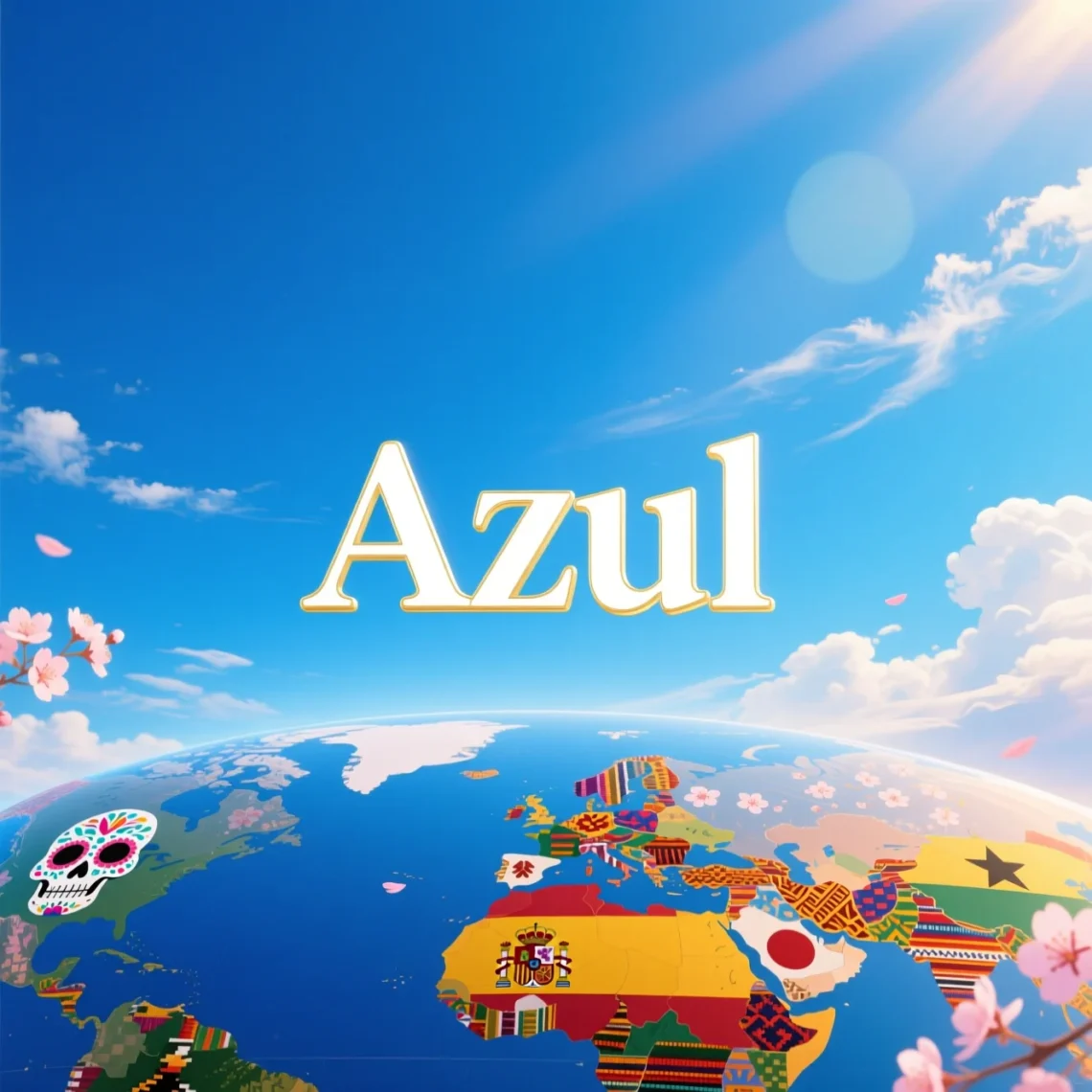
When I first learned the word “Azul” — the Spanish word for blue — I was standing under the vast sky of Seville. The sky was not just blue; it was alive — vibrant, deep, infinite. A local artist smiled and said, “El azul de España no se olvida” — “You never forget Spain’s blue.”
That day, I realized something remarkable: colors are more than visual — they are emotional languages. Every culture names and feels them differently. Learning how to say blue in Spanish is not only about vocabulary — it’s about understanding how language paints emotion.
🎨 Table of How to Say “Blue” in Different Languages
| Language | Word/Phrase for “Blue” | Cultural Insight |
|---|---|---|
| Spanish | Azul | Symbolizes serenity, sea, and sky; deeply tied to Mediterranean art. |
| English | Blue | Represents calmness, trust, and melancholy (“feeling blue”). |
| French | Bleu | The color of royalty and spirituality; featured in French flags. |
| Italian | Blu / Azzurro | “Blu” for dark blue, “Azzurro” for light blue — Italy’s national sports color. |
| German | Blau | Associated with reliability; also linked to relaxation. |
| Portuguese | Azul | Symbol of peace and hope; similar to Spanish usage. |
| Arabic | Azraq (أزرق) | A color of protection; often used in amulets like the “evil eye.” |
| Mandarin Chinese | Lán (蓝) | Represents immortality and spring; blends with green in ancient Chinese art. |
| Japanese | Aoi (青) | Encompasses both blue and green; symbolizes youth and freshness. |
| Hindi (India) | Neela (नीला) | Sacred in Hinduism; the color of Lord Krishna. |
| Swahili | Bluu | Borrowed from English; symbolizes depth and peace. |
| Zulu | Luhlaza okwesibhakabhaka | Literally “color of the sky”; tied to nature. |
| Hawaiian | Polū | Evokes the ocean and island spirit. |
| Maori | Kikorangi | Means “color of the sky”; reflects harmony and life. |
| Russian | Siniy (синий) | Represents loyalty and stability; Russians distinguish light and dark blue as separate colors. |
🇪🇸 How Do You Say Blue in Spanish?
The word blue in Spanish is Azul (pronounced ah-ZOOL).
It’s one of the most poetic and expressive words in the Spanish language — appearing in songs, art, literature, and even names (Cielo Azul, “blue sky”).
Cultural Insight:
In Spain and Latin America, Azul symbolizes both peace and passion — the sea’s depth, the sky’s infinity, and emotional calmness. You’ll hear it in love songs like “Cielito Lindo” and see it in the blue tiles of Andalusian architecture.
Learning how to say blue in Spanish isn’t just linguistic — it’s emotional. It’s the color of longing, hope, and beauty.
🇪🇺 How to Say Blue in European Languages
Europe’s blues are painted in history — from royal banners to ocean waves.
- France — Bleu: Seen as elegant and noble; French kings were often dressed in “bleu roi.”
- Italy — Azzurro: The national sports color and symbol of freedom.
- Germany — Blau: Used in idioms (“blau machen” = skip work!) and associated with peace.
- Portugal — Azul: Represents the Atlantic Ocean and maritime heritage.
- Greece — Galanó: Reflects the Aegean Sea — the very essence of Greek landscapes.
Across Europe, blue connects the sky and the sea — nature’s two vast mirrors of infinity.
🌏 How to Say Blue in Asian Languages
Asia’s relationship with blue is deep, symbolic, and spiritual.
- Japan — Aoi (青): Encompasses green and blue; symbolizes life and purity.
- China — Lán (蓝): Ancient Chinese art often used blue to depict heaven and immortality.
- India — Neela (नीला): Sacred color of Lord Krishna, representing love and divine strength.
- Korea — Pureun (푸른): Represents hope, faith, and clarity.
- Turkey — Mavi: “Mavi” is the Turkish word for blue — famous for the “Nazar Boncuğu” (blue evil eye charm) that wards off bad luck.
- Arabic — Azraq: Deeply spiritual; protective color in Middle Eastern traditions.
- Vietnam — Xanh da trời: Literally “sky color,” blending natural and emotional imagery.
- Thai — Si fa: Used in both everyday life and spiritual art.
- Hebrew — Kachol (כָּחוֹל): Symbolic of divine presence; used in ancient temple fabrics.
- Filipino — Asul: Derived from Spanish “azul,” reflecting linguistic history.
Blue in Asia is not just seen — it’s felt. It carries harmony, protection, and life force.
🌍 How to Say Blue in African Languages
Africa’s blues are often connected to the earth, sky, and water — life’s essentials.
- Swahili — Bluu: Modern borrowing; symbolizes the ocean and truth.
- Zulu — Luhlaza okwesibhakabhaka: “Color of the sky,” a poetic description.
- Amharic — Semayawi: Represents divine beauty and hope.
- Yoruba — Awọ̀ aláwọ̀ buluu: Descriptive, referencing deep tones of blue.
- Hausa — Shuɗi: Everyday term for blue, often used for clothing.
- Berber — Azegzaw: Connected to Tuareg culture — the “Blue Men of the Desert.”
- Wolof — Buló: Seen in coastal art and attire.
- Lingala — Mabulu: Symbolic of clarity and spiritual vision.
- Somali — Buluug: The color of the Somali flag — peace and unity.
- Shona — Bhuruu: Modern adaptation reflecting colonial linguistic blending.
In African culture, blue often stands for freedom and faith, linking heaven to the human heart.
🌺 How to Say Blue in Indigenous & Island Languages
In island and indigenous communities, blue mirrors the ocean, sky, and soul.
- Hawaiian — Polū: The spirit of the sea; calm yet powerful.
- Maori — Kikorangi: “Color of the sky,” symbol of connection between people and the land.
- Samoan — Lanumoana: “Blue of the ocean,” reflecting island identity.
- Cherokee — Sagonige: A color of harmony and renewal.
- Tahitian — Uru-uru: Represents depth and dreams.
- Fijian — Loaloa: Signifies calmness and unity.
- Inuit — Uvvaq: Describes icy blue shades of Arctic light.
- Guaraní — Yvoty: Associated with purity and water.
- Haitian Creole — Ble: Derived from French “bleu,” used daily and symbolically.
- Tagalog — Asul: The Filipino adaptation of Spanish “azul,” linking language and colonial history.
For island and indigenous peoples, blue is the breath of the ocean — a living color.
💬 Cultural Insights: The Meaning of “Blue” Across Time
From the sacred blue of ancient Egypt to Picasso’s melancholy Blue Period, this color has always carried deep emotion.
In Turkey and the Arab world, blue protects. In Japan, it purifies. In Spain, Azul expresses calmness and creative freedom.
Even in psychology, blue is the color of trust and peace — explaining why it’s so loved worldwide.
🌸 Proverbs & Sayings About Blue
- Spanish: “Cielo azul, vida tranquila.” — Blue sky, peaceful life.
- English: “Once in a blue moon.” — Something rare and special.
- Japanese: “Aoi tori.” — “Bluebird,” symbol of happiness.
- Arabic: “He wears blue eyes for protection.”
- African proverb: “He who looks to the blue sky never walks in darkness.”
Across cultures, blue brings calm, wisdom, and clarity — timeless gifts of the sky and sea.
❓ FAQs
Q1: How do you say blue in Spanish?
The Spanish word for blue is Azul.
Q2: How is Azul pronounced?
It’s pronounced ah-ZOOL, with the stress on the second syllable.
Q3: Does Azul have special meaning in Spanish culture?
Yes! Azul represents peace, depth, and the Mediterranean spirit — often tied to art, sea, and emotion.
Q4: Why do many languages have similar words for blue (Azul, Asul, Azraq)?
Because they share common Latin or Arabic linguistic roots that spread through trade and culture.
Q5: What’s the psychological meaning of blue?
Blue symbolizes calm, stability, and trust — universally recognized as a soothing color.
💙 Conclusion: Azul — The Color That Speaks All Languages
Whether you’re gazing at the blue sky, painting with Azul, or wearing your favorite blue shirt, remember: you’re part of a global story.
From Turkish “Mavi” to Japanese “Aoi,” from Arabic “Azraq” to Spanish “Azul,” this color connects humanity in emotion, art, and spirit.
So next time you see blue, think beyond words — think connection, depth, and peace.
💬 Now it’s your turn!
How do you say “blue” in your language? Share it below — let’s paint the world with “Azul.” 🎨💙