When I started learning Spanish, I thought small words would be easy. Then I met “are.”
It seemed so simple — until I discovered that in Spanish, “are” could be “eres,” “estás,” or even “son,” depending on who you’re speaking to and what you mean.
That moment changed how I viewed language forever. Because behind this tiny word lies something profound: how we define being.
In English, “are” simply connects subjects to states. In Spanish — and across many languages — it tells us not just what we are, but who we are and how we feel.
Let’s dive into the meaning, usage, and cultural beauty of how to say “are” in Spanish, and explore how other cultures express this universal concept of existence and identity.
🇪🇸 How Do You Say “Are” in Spanish?
The Spanish translation of “are” depends on context and verb choice.
| English | Spanish | Verb Type | Usage Explanation |
|---|---|---|---|
| You are | Eres | From Ser | Describes identity or permanent qualities (“You are tall” → Eres alto) |
| You are | Estás | From Estar | Describes temporary states or feelings (“You are tired” → Estás cansado) |
| They are | Son | From Ser | Used for multiple people with permanent traits (“They are doctors” → Son doctores) |
| They are | Están | From Estar | Used for multiple people with temporary states (“They are at home” → Están en casa) |
| We are | Somos | From Ser | Identity (“We are friends” → Somos amigos) |
| We are | Estamos | From Estar | Temporary situation (“We are here” → Estamos aquí) |
In short:
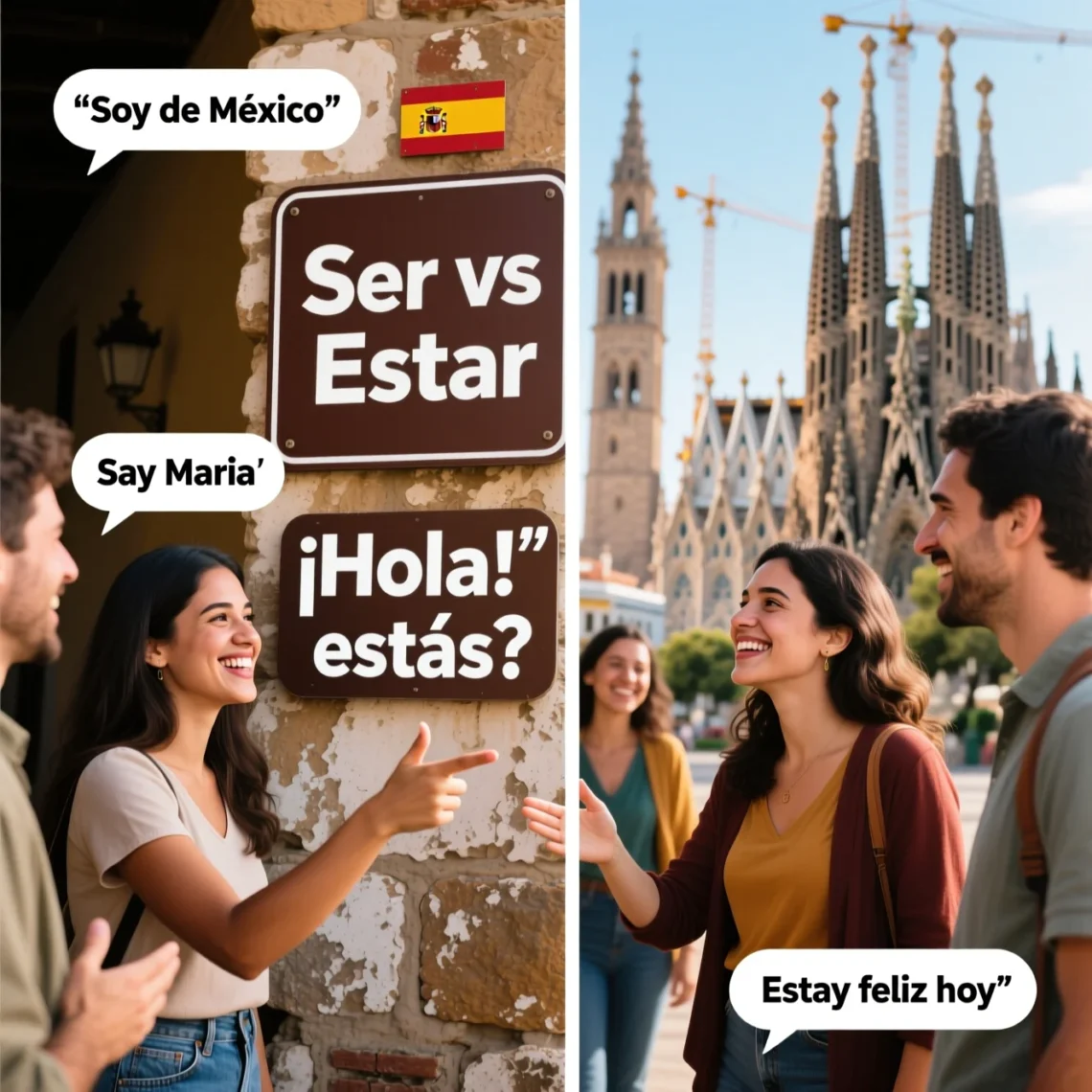
👉 “Ser” = essence, identity, origin, profession.
👉 “Estar” = emotion, place, condition, moment.
This difference is at the heart of Spanish — it’s not just grammar, it’s philosophy.
💡 Cultural Insight: “Ser” and “Estar” — The Spanish View of Being
In Spanish-speaking cultures, the difference between ser and estar reveals a deeper worldview.
- Ser expresses who you are — something essential and permanent.
- Estar shows how you are — your current state or feeling.
For example:
- Eres feliz → You are a happy person (by nature).
- Estás feliz → You are happy (right now).
It’s a subtle distinction, but it reflects a cultural truth: identity and emotion are different dimensions of being.
🗺️ “Are” Across the World: A Comparison Table
| Language | Word/Phrase for “Are” | Cultural or Linguistic Insight |
|---|---|---|
| Spanish | Eres / Estás | Distinguishes between identity and temporary state. |
| French | Es / Êtes / Sont | Comes from “être,” meaning “to be”; very formal distinctions. |
| Italian | Sei / Siete / Sono | Derived from Latin “esse”; used for both permanent and temporary. |
| German | Bist / Sind / Seid | “Sein” (to be) is core to German thought — identity and existence. |
| Portuguese | És / Está / São | Close to Spanish — shares “ser” and “estar” duality. |
| Arabic | (no direct “are”) | Often implied; Arabic doesn’t always use “to be” in the present tense. |
| Mandarin Chinese | 是 (shì) | Used for identity, not for state (similar to Spanish “ser”). |
| Japanese | です (desu) / いる (iru) | “Desu” for identity, “iru” for existence or living beings. |
| Hindi | हैं (hain) | Used for “are”; connects subjects to states naturally. |
| Swahili | Ni / Wako / Tuko | Simple system; verbs change by subject prefixes. |
| Turkish | -dir / -sin / -siniz | Often attached to the noun — very context-driven. |
| Zulu | Ngu / Kungu | Rooted in respect; used to define relation and identity. |
| Hebrew | (No present tense “are”) | Context defines meaning, showing linguistic minimalism. |
🇪🇺 European Languages: The Philosophy of “Being”
In Europe, verbs of being are central to language and philosophy.
Spanish and Portuguese share the dual verbs ser and estar, reflecting Iberian cultural nuance.
French, Italian, and German keep “to be” as one verb but change forms to show subject and tone — proof of Europe’s grammatical richness.
From “Tu es” in French to “Du bist” in German, each culture frames being differently — sometimes as a fact, sometimes as a relationship.
🌏 Asian Languages: Identity, Existence, and Respect
Asia’s approach to “being” often blends philosophy with grammar.
- Mandarin: “是 (shì)” focuses on essence; emotions use other verbs.
- Japanese: “です (desu)” expresses politeness, while “いる/ある” mark living or inanimate existence.
- Hindi: “हैं (hain)” clearly defines “are,” marking formality and plural subjects.
- Arabic: Present tense “are” is often dropped — identity is understood, not stated.
- Korean: “이다 (ida)” defines identity; it’s both simple and profound.
Asian languages show that being doesn’t always need to be spoken to be understood.
🌍 African Languages: “Are” as Belonging and Relationship
African greetings and expressions of being often focus on community over individuality.
- Swahili: “Ni” (I am) and “Wako” (you are) tie identity to connection.
- Zulu: “Nguwe” (you are) expresses recognition — “I see you.”
- Amharic: “Nehew / Nesh” (you are) connects people through warmth.
- Yoruba: “Ni” indicates existence — but also position and belonging.
- Somali: “Tahay” (you are) reflects acknowledgment and presence.
Across Africa, “are” expresses not just existence but relationship — a shared sense of life.
🌺 Indigenous & Island Languages: Existence Through Spirit and Place
Indigenous languages often connect “being” with nature and community.
- Hawaiian — “O ʻoe” (you are) links identity with Aloha — spirit and love.
- Maori — “Ko koe” expresses connection to ancestry and land.
- Cherokee — “Gvgeyu” (you are loved) intertwines emotion and being.
- Samoan — “O oe” states identity through respect.
- Tahitian — “’O oe” (you are) shows relational awareness.
Here, being is sacred — to exist is to belong, not just to be.
💬 Cultural Insight: “Being” as Identity vs. State
The reason how you say “are” in Spanish matters so much is because it reflects a worldview.
Spanish, like Portuguese, distinguishes who you are (ser) from how you are (estar).
It’s not just language — it’s philosophy in everyday conversation.
The question “¿Cómo estás?” (How are you?) isn’t small talk; it’s genuine care.
The answer defines how you’re existing in that moment — physically, mentally, emotionally.
🌸 Proverbs About “Being”
- Spanish: “Ser y estar no es lo mismo.” — “To be and to be is not the same.”
- Latin: “Cogito, ergo sum.” — “I think, therefore I am.”
- Swahili: “Mtu ni watu.” — “A person is people.”
- Turkish: “Olmak ya da olmamak.” — “To be or not to be.”
- Japanese: “生きることは美しい。” — “To live is beautiful.”
Across languages, being is not static — it’s alive, relational, and evolving.
❓ FAQs
Q1: How do you say “are” in Spanish?
It can be “eres,” “estás,” “son,” “somos,” or “están”, depending on context and subject.
Q2: What’s the difference between “ser” and “estar”?
“Ser” describes identity or permanent traits; “estar” expresses temporary states or feelings.
Q3: Is “are” always necessary in Spanish?
No — sometimes Spanish omits it entirely because verb conjugations already include it.
Q4: Why does Spanish use two verbs for “to be”?
Because it separates essence (ser) from emotion or location (estar), reflecting deep cultural awareness.
Q5: Which should I use — “Eres” or “Estás”?
Use “Eres” for who someone is, and “Estás” for how or where they are.
❤️ Conclusion: “Are” — A Tiny Word With a Giant Meaning
From “Eres mi amigo” (You are my friend) to “Estás aquí” (You are here) — this little word captures identity, presence, and emotion.
Learning how to say “are” in Spanish is about more than grammar — it’s about understanding how people view life, connection, and self.
Because every “are” — in any language — says, “You exist, and that matters.”
💬 Now it’s your turn:
How do you say “are” in your language? Share it in the comments below — let’s explore the world of being together. 🌍