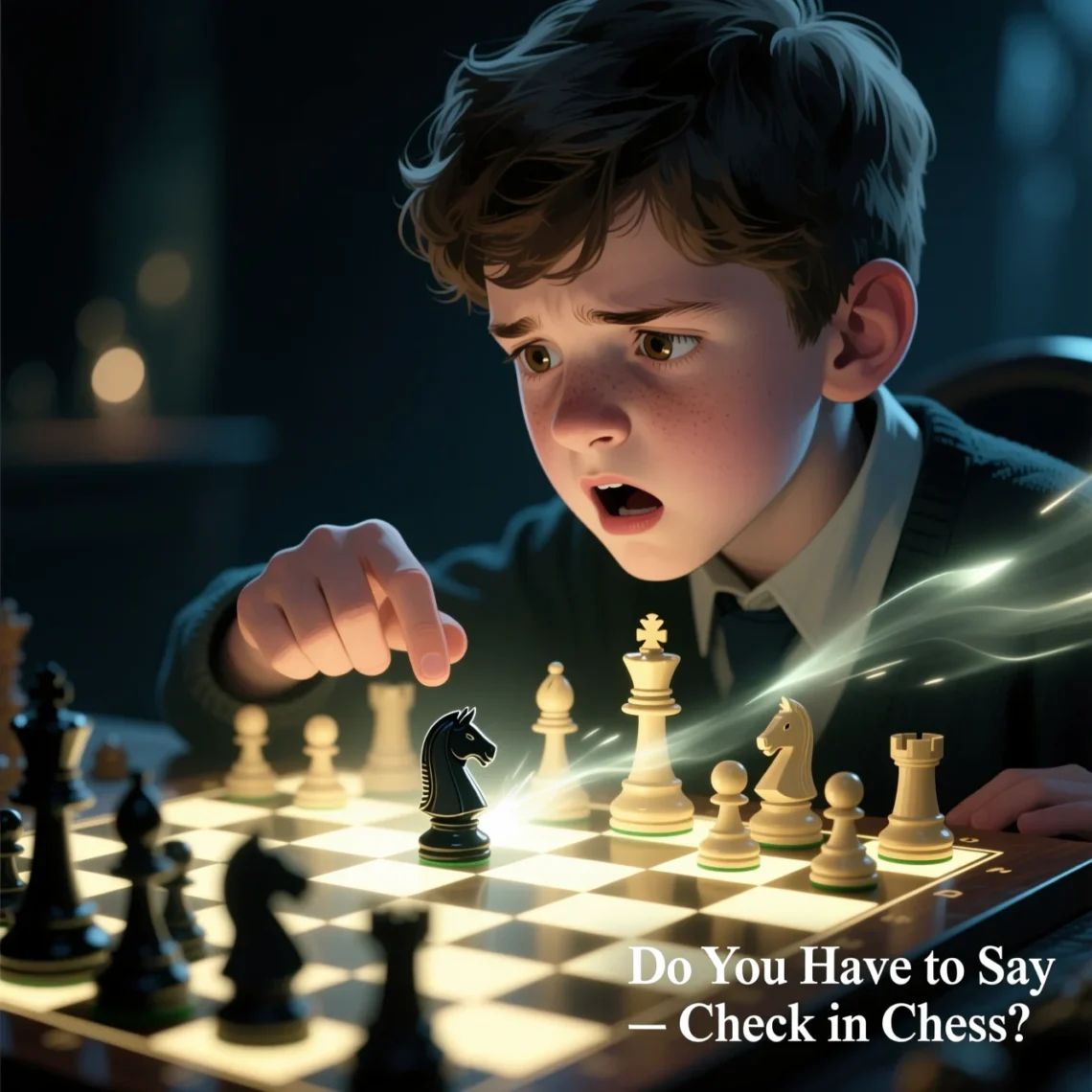
The tension in the room is quiet — only the ticking of the chess clock breaks the silence. You move your queen. Suddenly, your opponent looks up and says the word that makes every heart race — “Check.”
That tiny word has echoed through centuries of strategy, intellect, and rivalry. But as chess evolved from royal courts to international tournaments, players began to ask:
👉 Do you actually have to say “check” in chess?
This question may sound simple, but it opens the door to a fascinating world of rules, history, and cultural etiquette. Let’s explore how “check” became one of chess’s most iconic words — and whether modern players still need to say it.
🧩 What Does “Check” Mean in Chess?
In chess, the term “check” means that the king is under direct attack by an opponent’s piece. The player whose king is in danger must respond immediately by:
- Moving the king out of attack,
- Blocking the attack with another piece, or
- Capturing the threatening piece.
If no legal move can stop the attack, the game ends in checkmate — the king is trapped, and the game is over.
📜 The History of Saying “Check” in Chess
The word “check” comes from the Persian word “Shah,” meaning king.
In ancient Persian chess (Shatranj), players would call “Shah!” to announce the king was attacked. Over time, this evolved into the English word “check.”
When chess spread through Arabia, Europe, and Asia, calling out “check” became a courtesy — a way to show respect and fair play. In early European chess manuals, it was even considered rude not to say it.
However, as the game became formalized and competitive, the etiquette began to change.
⚖️ Modern Chess Rules: Do You Have to Say “Check”?
According to FIDE (the International Chess Federation) —
👉 No, players are not required to say “check.”
✅ Official Rule:
In official tournaments, players are expected to move silently and let the board speak for itself. The check is understood visually, not verbally.
Why?
Because modern chess prioritizes focus, fairness, and precision. Announcing “check” could distract, mislead, or even annoy your opponent — especially in timed games.
⚠️ Exception:
In casual or beginner games, saying “check” is still common and encouraged. It helps new players recognize threats and learn the game’s logic.
🌍 How Different Cultures Handle the Word “Check”
Chess is global, and traditions vary:
| Region | Word for “Check” | Cultural Insight |
|---|---|---|
| English-speaking countries | Check | Historically said aloud, now optional. |
| France | Échec | The root of the word “chess” (“échecs”). |
| Spain/Latin America | Jaque | Still sometimes announced casually. |
| Germany | Schach | Spoken less often in modern play. |
| Russia | Shakh (Шах) | Traditional but unnecessary in tournaments. |
| Arabic countries | Shah | Ancient Persian origin; still recognized. |
| India | Shah or Check | Rooted in historical Shatranj traditions. |
| China | Jiangjun (将军) | Means “The general is attacked!” used in Xiangqi (Chinese Chess). |
| Japan | Ōte (王手) | In Shogi (Japanese chess), players must verbally say it. |
| Turkey | Şah | Same Persian origin; often said casually in friendly games. |
In some chess variants like Shogi (Japan) or Xiangqi (China), announcing check is still a rule — proving that the concept of warning the king remains culturally significant.
🤝 Chess Etiquette: When Should You Say “Check”?
Here’s a quick guide to when and why players might say it:
| Situation | Should You Say “Check”? | Reason |
|---|---|---|
| Official tournament | ❌ No | Focus and silence are required. |
| Online chess | ❌ No | Software automatically highlights checks. |
| Casual games | ✅ Optional | Helps new players and shows good sportsmanship. |
| Teaching beginners | ✅ Yes | Reinforces learning and awareness. |
| Blitz or speed chess | ❌ No | Saying it wastes precious seconds. |
So, while not required, saying “check” is a matter of context and courtesy, not a strict rule.
⏳ Fun Fact: Why “Checkmate” Means the End
The word “checkmate” also has Persian roots:
“Shah mat” — meaning “the king is helpless” or “the king is dead.”
It’s not about literal defeat, but the symbolic idea that the king has no more moves — strategy has prevailed.
This phrase later spread across Europe, giving rise to “échec et mat” (French), “jaque mate” (Spanish), and “checkmate” (English).
🧠 Strategic and Psychological Insight
In professional chess, silence is strategy. Grandmasters rely on concentration and visual awareness. Announcing moves or checks can unintentionally reveal emotion, confidence, or intent.
That’s why serious players learn to observe without announcing, treating every “check” as a mental signal, not a spoken one.
But in the heart of the game — from playgrounds to local clubs — that proud “Check!” still carries joy, excitement, and the love of competition.
💬 Proverbs & Sayings About “Check” and Chess
- “The check that teaches is better than the check that wins.”
- Russian proverb: “Even the king must move one square at a time.”
- Turkish saying: “A smart move speaks louder than a loud word.”
- Indian proverb: “The hand that moves the pawn also moves destiny.”
Chess, like life, is about awareness — sometimes, the quietest move is the most powerful.
❓ FAQs
Q1: Do you have to say “check” in chess?
No. In official chess tournaments, you do not have to (and should not) say “check.” It’s understood visually.
Q2: Is saying “check” bad manners?
In professional play, yes — it’s unnecessary and can distract. In casual games, it’s fine and often helpful.
Q3: Why did people use to say “check”?
It began as a courtesy warning in older versions of chess and was rooted in ancient Persian customs.
Q4: What’s the difference between “check” and “checkmate”?
“Check” means the king is threatened but can still escape. “Checkmate” means the king has no escape — the game is over.
Q5: Is saying “check” required in online chess?
No. Online chess automatically indicates checks through visual highlights or alerts.
🏁 Conclusion: A Game of Respect and Awareness
So, do you have to say check in chess?
No — but understanding why the word exists helps you appreciate the game’s deep traditions.
Whether spoken or silent, “check” is more than a rule — it’s a symbol of awareness, respect, and the thrill of strategy.
Next time you play, notice how silence speaks louder than words — and let your moves do the talking. ♟️